Visa rules change all the time. Stay legal by checking requirements for Asia's Travel and Retirement Visas. Updated July 2026.
Top Must-Visit Sights in China for First-Time Travelers
Planning your first trip to China? Discover the absolute must-visit sights, from the awe-inspiring Great Wall and Terracotta Army to the pandas of Chengdu and the serene landscapes of Guilin.
TRAVELCHINA
9/27/202511 min read
I'll never forget my first time in China. It was a whirlwind of sensory overload—the sheer scale of the cities, the incredible aroma of street food, the sight of ancient temples nestled between futuristic skyscrapers. I tried to cram everything in, and I quickly realized that China isn't a country you can "see" in a few weeks. It's a place you have to experience. For a first-timer, the goal isn't to check off every single landmark, but to choose a handful of truly iconic sights that give you a taste of its history, culture, and natural beauty.
So, if you're planning your first trip, forget the exhaustive list and focus on these eight essential experiences. They are the destinations that define the country and will give you a perfect, well-rounded introduction to China's captivating essence—from its grand imperial past to its astonishing natural landscapes and its electric, forward-looking cities.
1. Beijing: The Imperial Heart of China
No first-time trip to China is complete without a stop in Beijing. This is where you can feel the weight of centuries of history. It's the political and cultural center of the country, and its most famous sights are a direct window into its imperial past.
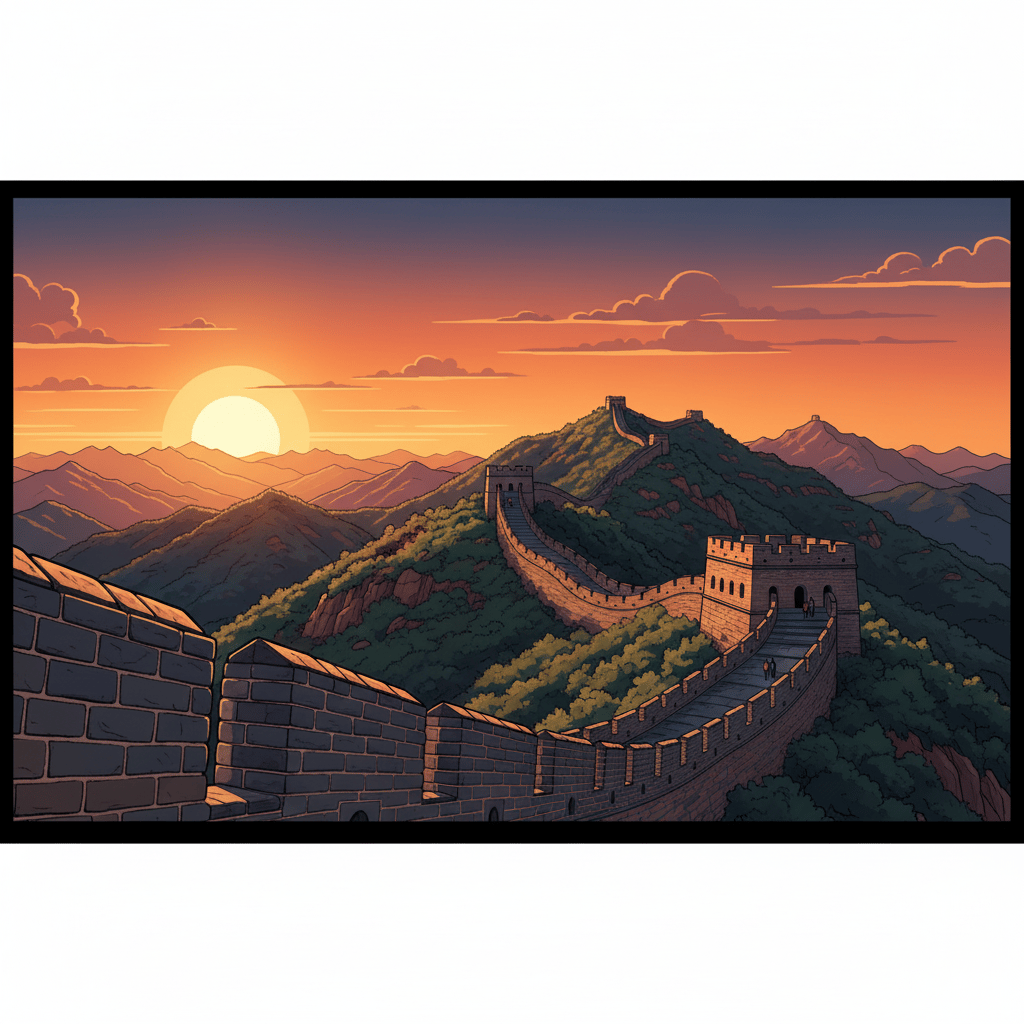
The Great Wall of China: This is the big one. It's not just a wall; it's a symbol of human perseverance and a breathtaking feat of engineering. For first-timers, the Mutianyu section is the top recommendation. It's a bit further from the city than the more famous Badaling section, but that extra travel time is worth it. It's less crowded, beautifully restored, and offers some of the most stunning views as the wall snakes through rolling green mountains. The feeling of walking on those ancient bricks is something you'll carry with you forever.
The Forbidden City & Tiananmen Square: Located at the very heart of Beijing, these two sites are intertwined. Tiananmen Square is a vast public space that has been at the center of modern Chinese history. Just beyond it lies the Forbidden City, the former imperial palace and the world's largest palace complex. Walking through its massive courtyards and gilded halls, you can almost hear the echoes of emperors and concubines who lived there for nearly 500 years. The Forbidden City has a one-way traffic flow—enter through the Meridian Gate (south) and exit from the Gate of Divine Prowess (north). Take Beijing Subway Line 1 to Tiananmen East or West Station.
Beyond the classics: Don't miss wandering through Beijing's traditional hutongs (narrow alleyways), which offer a glimpse into the city's old neighborhood life that has largely disappeared elsewhere. The Summer Palace, with its serene lake and manicured gardens, is also a worthy half-day escape from the urban bustle.
Local food tip: Try authentic Peking Duck, Zhajiangmian (fried sauce noodles), and lamb hot pot.
2. Shanghai: Where the Future Meets the Past
No article about China in 2025 is complete without Shanghai. China's most cosmopolitan city is a dazzling study in contrasts—a place where colonial-era architecture sits in the shadow of some of the world's most ambitious skyscrapers, and where rooftop jazz bars neighbor century-old tea houses.
The Bund & Pudong Skyline: The Bund is Shanghai's iconic waterfront promenade, lined with grand Art Deco and neoclassical buildings that date back to the city's days as an international trading hub. Standing on the Bund and looking across the Huangpu River at the gleaming Pudong skyline—with the needle-shaped Oriental Pearl Tower and the towering Shanghai Tower among the highlights—is one of the great urban panoramas in the world. The view is dramatic by day, but absolutely electric at night.
The French Concession: For a slower, more intimate experience, spend an afternoon wandering the tree-lined streets of the French Concession. This leafy neighborhood is packed with gorgeous Art Deco villas, boutique cafes, independent bookshops, and some of the city's best restaurants. It's the perfect antidote to the sheer scale of the rest of Shanghai.
Yu Garden: Nestled in the heart of the old city, Yu Garden is a classical Ming Dynasty garden of rockeries, ponds, pavilions, and zigzag bridges. The surrounding bazaar is a wonderful place to pick up souvenirs, though be prepared for crowds.
Getting around: Shanghai has one of the world's most efficient metro systems, with lines connecting virtually every major attraction. The Maglev train from Pudong International Airport reaches the city center in under 8 minutes—a fittingly futuristic welcome to this remarkable city.
Local food tip: Shanghai's xiaolongbao (soup dumplings) are world-famous for a reason. Join the queue at any reputable dumpling shop and order a bamboo steamer. Also try the pan-fried pork buns (shengjianbao)—crispy on the outside, juicy within.
3. Xi'an: The Cradle of Chinese Civilization
Xi'an is often called the ancient capital of China, and for good reason. It served as the capital for over 13 dynasties and was the eastern starting point of the ancient Silk Road. It's here that you'll find an archaeological marvel that is still shocking the world.
The Terracotta Army: In 1974, a group of farmers digging a well stumbled upon one of the greatest archaeological finds of all time. They unearthed an underground army of thousands of life-sized terracotta warriors and horses, built to guard the tomb of China's first emperor, Qin Shi Huang. Standing in front of the pits, looking at the silent army of soldiers—each with a unique face—is a moment that will send shivers down your spine. It's a humbling reminder of the sheer scale of ancient Chinese power and artistry. Over 8,000 figures have been uncovered so far, but thousands more are estimated to remain buried underground. When they were first excavated, the warriors were vibrantly painted, but exposure to air caused the colors to fade almost instantly.
The City Walls: Xi'an is one of the few cities in China that still has its ancient city walls fully intact. You can rent a bike and cycle along the top of the 14-kilometer-long wall, offering a unique perspective on the city's blend of ancient and modern architecture. It's a fun, active way to soak in the history.
The Muslim Quarter: Xi'an's vibrant Muslim Quarter (Huimin Jie) is a must-visit. This ancient neighborhood has been home to the Hui Muslim community for centuries, and its narrow, lantern-lit alleyways are packed with street food stalls, spice markets, and the stunning Great Mosque—one of the largest in China, built in a uniquely Chinese architectural style. The energy here in the evenings is electric.
Local food tip: Try a Roujiamo, sometimes called a "Chinese hamburger"—a savory pork sandwich tucked into a flatbread. It's cheap, filling, and utterly delicious. Also try Biangbiang noodles, wide, hand-pulled belt noodles slathered in chili oil that are famous across Shaanxi province.
4. Chengdu: Panda Paradise & Sichuan Soul
After a dose of history, it's time for some cuteness—and some serious spice. Chengdu, the capital of Sichuan province, is the undisputed home of the giant panda, but it's also a city with a fiercely proud food culture and a famously relaxed pace of life.
Chengdu Research Base of Giant Panda Breeding: This is where you can get up close and personal with China's most famous ambassadors. While you can see pandas in other zoos, the Panda Base in Chengdu is a world-leading conservation and research center. Seeing panda cubs tumbling around their enclosure is an experience that will melt even the most stoic heart. Arrive early in the morning before 10 AM, right around feeding time, when the pandas are most active. Take the Chengdu Metro Line 3 to Panda Avenue Station, then hop on a shuttle bus to the entrance.
Jinli Ancient Street & Wuhou Shrine: These two attractions sit side by side. The Wuhou Shrine is a temple complex dedicated to the heroes of the Three Kingdoms period, a particularly romanticized era in Chinese history. Adjacent Jinli Ancient Street is a lively, beautifully restored corridor of traditional wooden buildings, street food vendors, tea houses, and souvenir shops—excellent for an evening stroll.
Teahouse culture: Chengdu is famous for its teahouse culture. Locals spend hours sitting in bamboo chairs in public parks or riverside teahouses, sipping jasmine tea and playing mahjong. Join them if you can—it's one of the most authentic cultural experiences the city offers.
Local food tip: A Sichuan Hot Pot is an absolute rite of passage. The broth is a fiery, numbing cauldron of chili and Sichuan peppercorns into which you dip everything from thinly sliced beef to lotus root. Also try Mapo Tofu—silken tofu in a fiery sauce of fermented bean paste and ground pork.
5. Guilin: A Natural Masterpiece
For a completely different kind of beauty, head to Guilin in the south. The landscape here looks like it's been pulled from a traditional Chinese ink wash painting. The region is famous for its dramatic karst mountains, which rise like green dragon teeth from the flat, lush landscape.
Cruising the Li River: A leisurely cruise down the Li River is the quintessential way to experience this region. As you float from Guilin to the small town of Yangshuo, you'll be treated to a panorama of iconic scenery—Elephant Trunk Hill, solitary limestone peaks reflected in still water, bamboo groves, and lazy water buffalo wading at the riverbanks. One of the bends along the route is even depicted on the back of the 20 Yuan note. The serenity of the river is a welcome contrast to the big-city hustle. For first-timers, a 4-star cruise is highly recommended for comfortable viewing decks and English commentary.
Yangshuo: Don't rush back to Guilin after the cruise. The small town of Yangshuo is one of China's most charming destinations, surrounded by karst peaks that you can explore by bicycle or bamboo raft. West Street in the town center is great for browsing local craft shops, but venture a few minutes away and you'll find yourself cycling through some of the most beautiful rural scenery in the country.
Local food tip: Try Beer Fish (pijiu yu), a Yangshuo specialty of fresh river fish cooked with local beer, tomatoes, and peppers. Simple, hearty, and delicious.
6. Hangzhou: The Poet's City
Just 45 minutes from Shanghai by high-speed train, Hangzhou is one of China's most beautiful cities and a deeply restorative contrast to the urban intensity of its neighbor. The Song Dynasty poet Su Dongpo famously compared West Lake to the legendary beauty Xi Shi, and the comparison has stuck for a thousand years.
West Lake: The centrepiece of Hangzhou is undeniably West Lake (Xihu), a UNESCO World Heritage Site fringed by weeping willows, pagodas, and rolling hills. Walking or cycling along the lake's causeways—particularly the Su Causeway and the Bai Causeway—is one of the most pleasant experiences in all of China. The lake looks different in every season: misty in spring rain, vivid in summer, golden in autumn, and eerily ethereal when winter fog rolls in.
Longjing Tea Plantations: Hangzhou is the birthplace of China's most celebrated green tea, Longjing (Dragon Well). A visit to the tea fields in the hills just west of the city is a genuine highlight. You can watch tea leaves being hand-roasted in large woks and sip the fresh brew on the spot—pale green, grassy, and subtly sweet. Head to Meijiawu Village for the most scenic and authentic experience.
Lingyin Temple: One of China's most famous Buddhist temples, Lingyin Temple sits at the foot of forested hills dotted with ancient cliff carvings of Buddhist figures. The complex is both historically rich and strikingly beautiful, particularly in the early morning before the crowds arrive.
Getting there: High-speed trains from Shanghai Hongqiao Station run frequently to Hangzhou East Station, taking about 45 minutes to an hour. From there, the metro connects directly to West Lake.
Local food tip: Sample Dongpo Pork (dongpo rou), a meltingly tender braised pork belly dish named after the very poet who celebrated West Lake. Also try West Lake Vinegar Fish, a sweet and tangy local specialty.
7. Zhangjiajie: The Avatar Mountains
If there's one landscape in China that genuinely defies belief, it's Zhangjiajie in Hunan province. The towering sandstone pillars here—thousands of them, rising straight up from the forest floor and disappearing into clouds—are so surreal that they inspired the floating Hallelujah Mountains in James Cameron's Avatar. Standing among them is like stepping into another dimension.
Zhangjiajie National Forest Park: This is the main attraction, and it fully deserves its status as a UNESCO Global Geopark. A combination of cable cars, glass-bottomed skywalks, and forest trails takes you through a landscape of pillars, ravines, and ancient trees that is unlike anywhere else on earth. The most famous viewpoints include the Avatar Hallelujah Mountain observation deck and the Bailong Elevator—a glass-sided outdoor elevator built into the cliff face that whisks visitors up 326 meters in about 90 seconds.
Tianmen Mountain: Just outside Zhangjiajie city, Tianmen Mountain is home to one of the most dramatic attractions in China: a 99-bend mountain road, a vertical cable car (the longest in the world at over 7 kilometers), and Tianmen Cave—a natural arch in the mountain that has been sacred for centuries. The cliff-hugging glass walkway around the mountain face is genuinely heart-stopping.
Practical tip: Zhangjiajie is best reached by flying into Zhangjiajie Hehua International Airport, which has direct connections to most major Chinese cities. Plan for at least 2 full days in the park—the scale of it demands time.
Local food tip: Zhangjiajie is in Hunan province, so expect fiery Xiang cuisine. Try Mao's Braised Pork (hongshao rou), the dish Chairman Mao is said to have loved, slow-braised to a deep, glossy, amber perfection.
8. Guangzhou: The Culinary Capital of China
Rounding out this list is Guangzhou, the sprawling, energetic capital of Guangdong province in southern China. It may be less familiar to international visitors than Beijing or Shanghai, but Guangzhou is, in the estimation of many, the greatest food city in the country—and possibly the world.
Dim Sum culture: Guangzhou is the birthplace of yum cha (drinking tea) culture and dim sum, the tradition of gathering over small shared plates of dumplings, steamed buns, rolls, and pastries. The city's traditional tea houses (cha lou) are some of the most atmospheric places to eat in China. Order har gow (shrimp dumplings), siu mai (pork and prawn dumplings), char siu bao (barbecue pork buns), and cheung fun (silken rice noodle rolls) and let the trolleys come to you.
Shamian Island: In the Liwan district, Shamian Island is a quiet enclave of tree-shaded streets and well-preserved European-style buildings dating back to the colonial era when French and British merchants were granted concessions here. It's a peaceful, photogenic spot for an afternoon walk.
Chen Clan Ancestral Hall: Built in the 1890s as a place of learning and worship for the Chen clan, this extraordinary complex is now a museum and one of the finest examples of Lingnan (southern Chinese) architecture. Its roofline is decorated with elaborate ceramic friezes depicting historical scenes, mythical creatures, and folk stories—a remarkable work of folk art in building form.
Cantonese Opera & Night Markets: In the evenings, Guangzhou comes alive. Catch a performance of Cantonese Opera at the Guangdong Cantonese Opera Art Museum, or wander the vibrant night markets along Shangxiajiu Pedestrian Street for street food, local goods, and the buzzing energy of a city that genuinely loves to eat and celebrate.
Getting there: Guangzhou Baiyun International Airport is a major hub with connections throughout Asia and beyond. Within the Pearl River Delta, Guangzhou is also easily reached from Hong Kong by high-speed rail in about 45 minutes.
Local food tip: Beyond dim sum, try White Cut Chicken (baiqie ji)—poached chicken served at room temperature with a ginger-scallion oil dip that showcases the Cantonese philosophy of letting exceptional ingredients speak for themselves.
Practical Tips for 2026 Travelers
Visas: As of early 2026, China has expanded its visa-free entry policy to passport holders from around 50 countries for stays of up to 30 days. Check current requirements with your country's embassy before travel, as policies continue to evolve.
Getting Around: China's high-speed rail network is one of the great wonders of modern infrastructure. Trains are fast, punctual, comfortable, and affordable. A bullet train from Beijing to Shanghai takes about 4.5 hours; Beijing to Xi'an around 5 hours. Domestic flights are abundant and reasonably priced for longer distances, such as reaching Zhangjiajie or Guilin.
Payment: China runs predominantly on mobile payment apps (WeChat Pay and Alipay). International visitors can now link foreign bank cards to these apps, which is strongly recommended. Cash in RMB is a reliable backup but is increasingly hard to use in urban areas.
Internet: Many international websites and apps (Google, Instagram, WhatsApp) are blocked in mainland China. Download and set up a VPN before you arrive.
Best time to visit: Spring (April–May) and autumn (September–October) offer the most comfortable weather across most of the country and are the best times for sightseeing. Avoid Golden Week (October 1–7) and Chinese New Year if possible—these are when crowds and prices peak dramatically.
My Final Take: Planning Your First Trip
For a first-timer, a classic itinerary combining several of these destinations is a perfect introduction to China's immense diversity. Start in Beijing for imperial history, take a high-speed train to Xi'an for the Terracotta Army, then fly to Chengdu for pandas and Sichuan spice. From there, you can swing south to Guilin for river scenery or east to Hangzhou for lakeside tranquility, before finishing in Shanghai for a final hit of world-class urban energy.
For travelers with more time, add Zhangjiajie for truly otherworldly landscapes or head to Guangzhou for the deepest dive into Chinese culinary culture. No matter what combination you choose, China will surprise, challenge, move, and thoroughly dazzle you. It is, without question, one of the great travel destinations on earth.
Which of these iconic Chinese destinations would you be most excited to visit? Share your thoughts in the comments below!

Address
Blk 8 Cantonment Close
SIngapore