FREE AI Analytics Tool for Health Reports and Scans available.
Should Seniors Do Yoga? Why It’s the Best Exercise for Balance and Falls Prevention
Yes! Yoga is a top exercise for seniors. Discover why gentle and chair yoga boost balance, prevent falls, and relieve chronic arthritis/back pain safely.
FITNESS AND EXERCISE
1/15/20263 min read
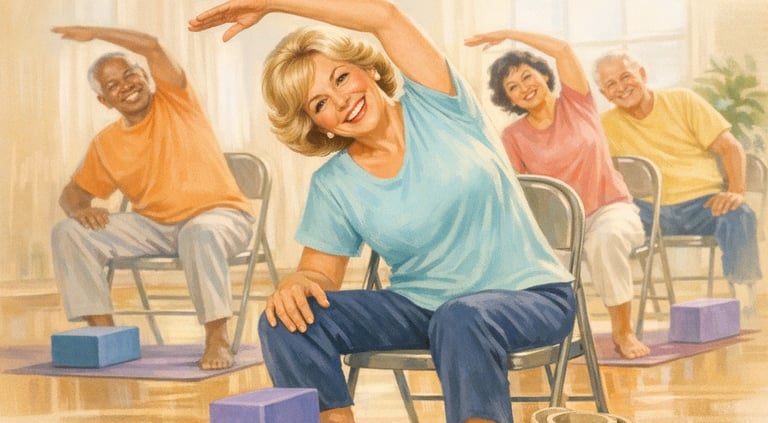
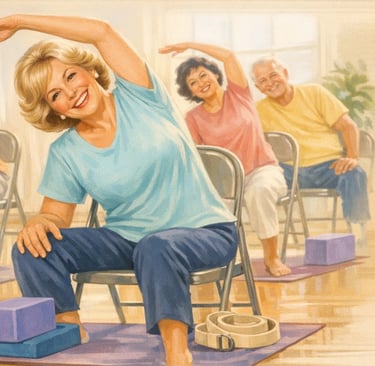
The golden years should be about freedom, not fear. But for many seniors, the fear of falling—what doctors call "fall risk"—can quickly limit mobility, independence, and overall joy. Simple daily tasks like getting out of a chair or climbing a single step can become sources of anxiety.
You’ve probably heard of yoga, but perhaps you picture young people twisting into complicated knots. So, should you take up yoga after 60? The answer, according to medical professionals and researchers, is a resounding yes, especially when looking for a gentle, all-in-one exercise for balance and stability.
I remember my Auntie Mei who, after a minor slip in the kitchen, became terrified of walking without her cane. A friend suggested 椅子瑜伽 (Chair Yoga). It seemed silly at first, but within months, she was standing taller and moving with a confidence she hadn't felt in a decade. Yoga isn't just stretching; it's smart training for life's most critical skills.
🧘 Three Proven Benefits of Yoga for Seniors
Yoga works by integrating strength, flexibility, and mindfulness—a combination few other exercises achieve. Here’s why it’s particularly effective for aging bodies:
1. It’s a Powerhouse for Balance and Fall Prevention
Falls are a global health crisis for the elderly. Yoga directly counters the factors that cause them: weak legs, stiff joints, and poor body awareness (proprioception).
Balance Data: A systematic review published in the Age and Ageing journal found that yoga interventions resulted in small to moderate improvements in balance and medium improvements in physical mobility in people aged 60+ years (Source: Youkhana et al., 2016).
Targeted Training: Poses like Tree Pose (with a wall or chair modification) and Mountain Pose train your body to maintain stability while standing, directly reducing the risk of a tumble.
2. Managing Chronic Pain (Arthritis and Back Pain)
Yoga is an incredible tool for managing the stiffness and pain associated with common age-related conditions.
Joint Function: Research shows that people with knee osteoarthritis who practiced gentle, modified yoga reported significant reductions in pain after just 8 weeks (Source: American Arthritis Foundation, 2025 study).
Spinal Lubrication: Gentle spinal movements, like the Cat-Cow stretch, safely lubricate the joints in your spine, reducing stiffness and strain caused by prolonged sitting.
3. Strength Without the Strain
Aging often involves muscle loss (sarcopenia). While traditional weightlifting is great, yoga uses your own body weight to build functional strength—the kind you need for daily life. Holding a pose like a supported Warrior II strengthens the leg muscles without the high impact or intense joint pressure of running or jumping.
🛑 How to Start Safely: The Senior's Yoga Checklist
If you are 60 or older, safety is paramount. The key to successful yoga is modification.
DO Consult your doctor first, especially if you have hip replacements or severe osteoporosis.
DO Seek out classes labeled "Chair Yoga," "Gentle Hatha," or "Restorative Yoga."
DO Use props! A chair for standing balance, blocks to bring the floor closer, or a strap for deep stretches.
DON’T Try to force or push a pose into pain. Stop if you feel sharp, shooting pain.
DON’T Start with classes labeled "Hot Yoga," "Vinyasa Flow," or "Power Yoga."
DON’T Compare yourself to others. Your practice is yours alone.
The Beginner's Essential Poses (Modified)
Here are three accessible poses perfect for the absolute beginner:
Seated Mountain Pose (Tadasana): Sit tall, feet flat on the floor. Imagine a string pulling the crown of your head upward. This instantly improves posture and spinal alignment.
Chair Cat-Cow Stretch: Sitting forward on your chair, place hands on your knees. On an inhale, arch your back gently (Cow). On an exhale, round your back (Cat). This maintains critical spinal flexibility.
Wall-Supported Tree Pose (Vrksasana): Stand next to a wall. Hold the wall lightly for balance. Place the sole of one foot against the opposite ankle (or calf, never the knee). This builds single-leg strength and balance safely.
Ready to find your balance? Look up a local "Chair Yoga" class today or check out our guide on the best props for senior beginners!
Disclaimer: This article is for informational purposes only and does not constitute professional medical advice. Always consult with your healthcare provider before starting any new exercise routine.
Address
Blk 8 Cantonment Close
SIngapore