Visa rules change all the time. Stay legal by checking requirements for Asia's Travel and Retirement Visas. Updated July 2026.
What is the Best Diet for Stroke and Heart Disease Recovery?
The Overhaul: How I Used Global Wisdom to Fight Chronic Disease
Let’s be honest: I loved food. I mean, really loved it. Before my stroke, 'overindulgence' was less an occasional treat and more a lifestyle. When you’re facing a major health crisis like a stroke, the first place you need to look is the source of energy and inflammation: your kitchen. I realized immediately: if I wanted to survive, I had to stop eating like I was bulletproof.
The goal wasn't just to lose weight; it was to find a sustainable, anti-inflammatory way to eat that would lower my blood pressure (BP) and cholesterol for good. 中风者的饮食—the stroke victim's diet—became my mantra.
The Global Blueprint: Japan Meets the Mediterranean
I decided to study the healthiest populations on Earth. Two regions consistently rose to the top: the Mediterranean and Japan. What did these two diverse cultures, separated by thousands of miles, have in common? A surprisingly similar foundation:
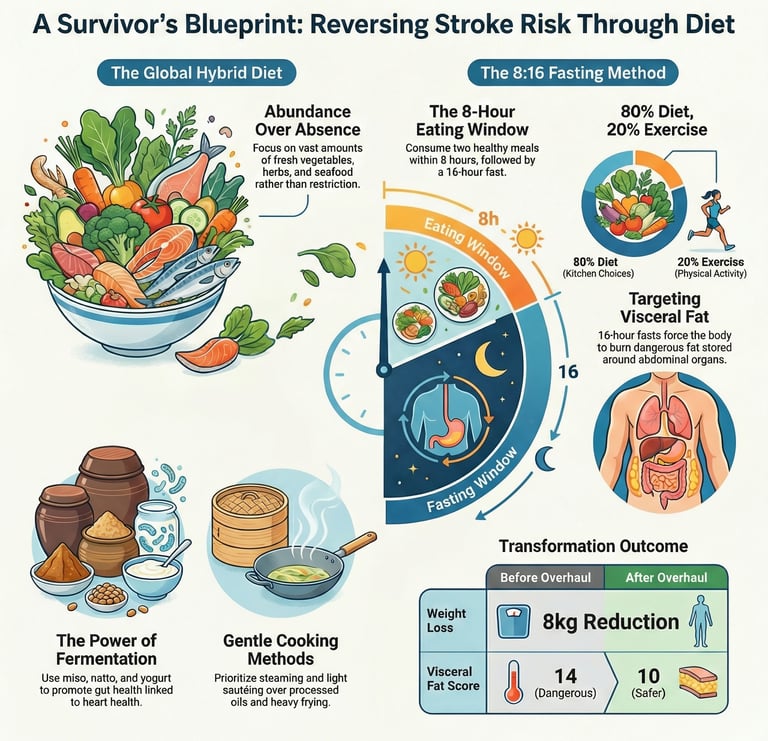
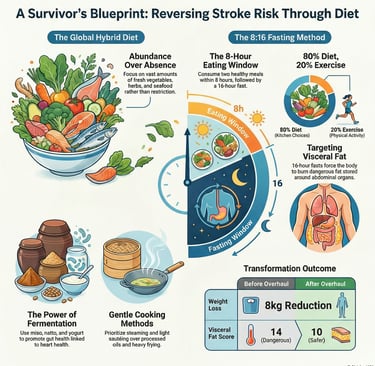
Abundance, Not Absence: They focus on consuming vast amounts of fresh vegetables, herbs, and fish/seafood.
Fermented Power: Both use fermented foods (olives, yogurt, miso, natto) to promote gut health, which is increasingly linked to cardiovascular health.
Gentle Cooking: They emphasize steaming, light sautéing, and minimal use of processed cooking oils.
Minimal Red Meat: Red meat and processed products are either rare treats or entirely absent.
Immediate Diet Changes: The Great Purge
Based on this blueprint, my diet went through a drastic, non-negotiable overhaul—the kind of change required when your life is on the line.
Personal Note: Giving up my favorite Sunday steak was tough, but the feeling of lightness I gained was worth far more than that fleeting taste.
Intermittent Fasting: The Game Changer
In addition to what I ate, I changed when I ate. I chose Intermittent Fasting (IF) because it was the easiest method to integrate without restricting the type of healthy food I consumed. I adopted the 8:16 method: two meals within an 8-hour window (Breakfast and Lunch only), followed by a 16-hour fast (no dinner or supper).
Why IF? During that 16-hour fast, your body runs out of accessible glucose and is forced to burn stored fat for energy. This is a highly effective way to target stubborn fat, especially the most dangerous kind: Visceral Fat.
Statistic 1: Visceral Fat and Risk. A 2023 study published in the Journal of the American Heart Association confirmed that a high accumulation of visceral fat (fat stored around abdominal organs) is independently associated with an increased risk of stroke and coronary artery disease, regardless of overall BMI.
The results were astonishing and rapid:
Losing 8kg and dropping my Visceral Fat score from a very dangerous 14 to a much safer 10 proved one thing: weight loss is 80% diet and 20% exercise.
Statistic 2: The IF Impact. Research on 8:16 Intermittent Fasting models, such as that reported by Johns Hopkins Medicine (2022), suggests that the method can promote cardiovascular health by improving blood sugar regulation and significantly reducing inflammatory markers.
Diet only gets you 80% of the way there. The remaining 20% is how you move. In my next article, I detail the specific, low-impact exercise routine (including 8km brisk walking!) I used during the critical recovery months.
Find out about the day I had my stroke.
And then I had a second stroke and survived again!
Find out my challenges with insurance and medical bills.
Disclaimer: I am sharing my personal journey as a stroke survivor only and does not constitute professional medical advice. Always consult with a qualified healthcare provider for any health concerns or before making changes to your health regimen or diet plan.

Address
Blk 8 Cantonment Close
SIngapore