Visa rules change all the time. Stay legal by checking requirements for Asia's Travel and Retirement Visas. Updated July 2026.
Beyond the White Face: Uncovering the Fascinating History of Kyoto's Geisha
Uncover the true history of Kyoto's Geisha (Geiko), the masters of Japanese arts. Learn the difference between a Geiko & Maiko and how they preserve ancient tradition.
JAPAN
12/22/20253 min read
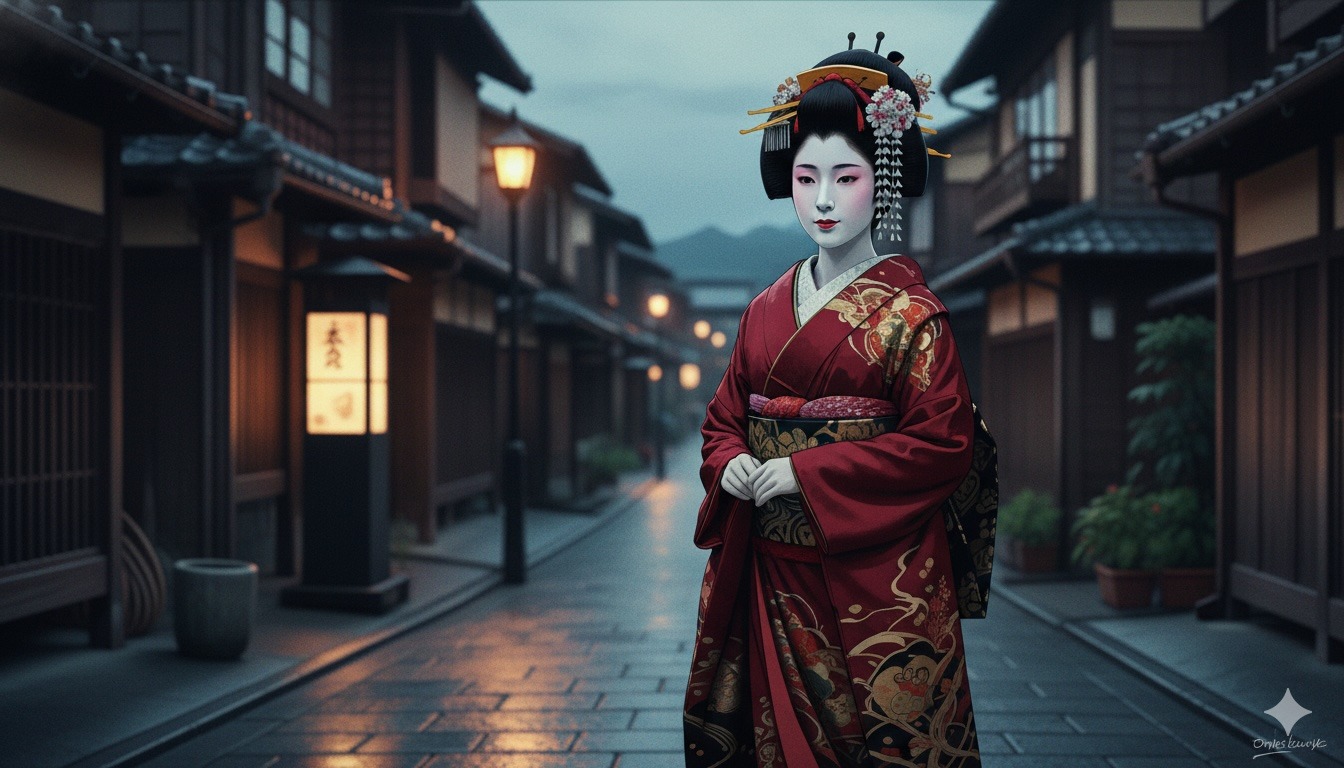
Have you ever seen a photo of a geisha—that iconic figure, pristine white makeup, elaborate hair, and stunning kimono—and felt instantly captivated? I know I have. I saw a Geisha, arriving in a taxi outside a small lane, and the grace that she came off the taxi and shuffled into a nearby Ryokan, in full geisha costume and make-up, was completely mesmerising. The image is one of the most enduring symbols of Japan, especially Kyoto.
But here’s the truth: what most people think they know about the geisha (or Geiko, as they are correctly called in Kyoto) is often a mix of fantasy and misunderstanding. They are not simply hostesses; they are highly trained artists. To truly appreciate the grace you might see gliding down a cobblestone alley in Gion, you have to look beyond the white face and delve into the fascinating history that made them who they are today.
The Original Geisha Were... Men?
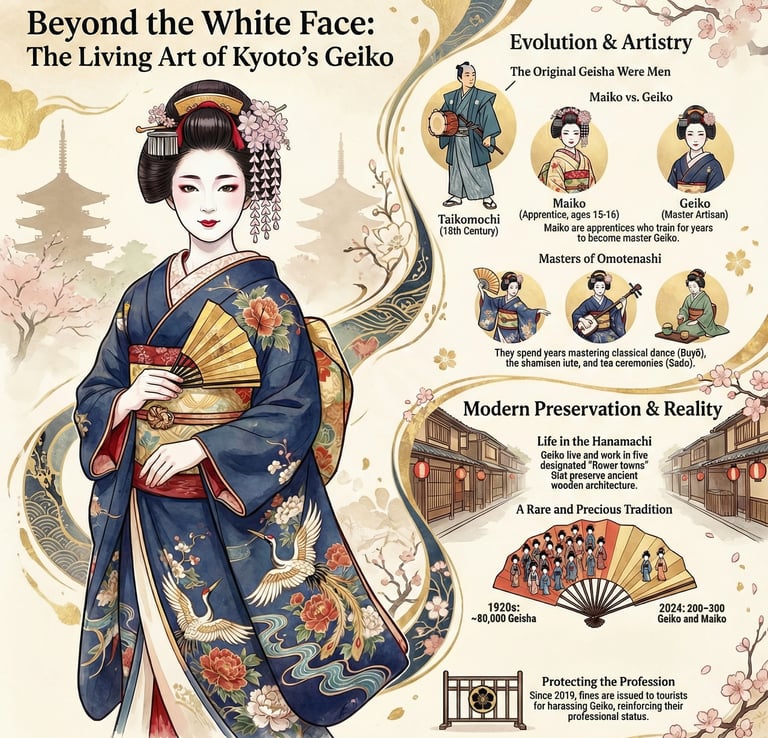
That’s right! Here’s a little secret I learned from a local friend in the Kamishichiken district: the first professionals to use the title Geisha (芸者, meaning "art person") in the 18th century were actually men known as Taikomochi (太鼓持) or hōkan. They were court jesters and storytellers, hired to entertain wealthy lords and samurai with jokes, songs, and conversational wit.
The women who followed, starting around 1750, were originally called Odoriko (踊り子, "dancing girls") and shamisen players. They quickly proved to be superior entertainers, and by 1780, the female geisha had largely taken over the profession, transforming it into the art form we recognize today.
Anecdote: I remember visiting the Kamishichiken Kaburenjo theater and seeing a historical exhibit. It felt like walking through a private gallery of masters, not just performers. It completely changed my view of their role as cultural preservationists, not just entertainers.
From Tea Houses to Cultural Custodians
The geisha's role was formalized in Kyoto’s pleasure quarters, but their function was strictly art and entertainment, not intimacy. They were, and still are, masters of Omotenashi (おもてなし), the uniquely Japanese concept of anticipating a guest's needs with wholehearted, selfless hospitality.
The Arts: Geisha training, which often starts with a young woman becoming a Maiko (apprentice) around age 15-16, is intensely rigorous. They dedicate years to mastering traditional Japanese arts, including:
Buyō Dance: Classical Japanese dance that tells subtle stories.
Shamisen: The three-stringed lute, integral to traditional music.
Sado: The Japanese tea ceremony.
Ikebana: Flower arrangement.
The Districts (Hanamachi): The geisha live and work in designated "flower towns," or Hanamachi (花街). Kyoto currently has five major hanamachi, with Gion Kobu and Pontocho being the most famous. These districts are living museums, preserving the old wooden machiya architecture and the exclusive ochaya (tea houses) where the entertainment takes place.
A Fading, Yet Resilient, Tradition
The profession reached its peak in the 1920s, with estimates suggesting around 80,000 geisha working across Japan before WWII. The war and subsequent cultural shifts caused a dramatic decline.
Today, the number is much smaller, but the tradition is fiercely protected:
According to a 2024 report by the Kyoto City Tourism Association, there are an estimated 200-300 active Geiko and Maiko primarily located in Kyoto’s five Hanamachi. This makes the tradition rare and precious.
In an effort to keep the tradition relevant, a 2023 study published by Japan’s National Institute of Informatics noted a rising trend of Geiko embracing digital communication (social media, private blogs) to respectfully share their culture while maintaining privacy.
To counter confusion and protect their working environment, the Gion district announced in 2019 that fines would be issued to tourists for aggressive behavior, such as chasing Maiko or Maiko-san (an honorific term for the apprentice) for photos, underscoring the shift toward respecting them as working professionals.
The geisha of Kyoto are not relics of the past; they are living, breathing artists who embody the ultimate expression of Japanese traditional culture. They are a testament to dedication and the relentless pursuit of beauty and refinement.
Have you had a meaningful or respectful encounter with Japanese culture? Share your story!
Disclaimer: This article is for informational purposes only and does not constitute professional advice.

Address
Blk 8 Cantonment Close
SIngapore