Visa rules change all the time. Stay legal by checking requirements for Asia's Travel and Retirement Visas. Updated July 2026.
Can Westerners Freely Practice Their Religion in Asia? The Surprising Truth
Unpacking religious freedom for Western expats in Asia. Discover which countries are tolerant (Japan, Taiwan) and where proselytizing laws can lead to serious trouble.
TRAVEL
3/28/20263 min read
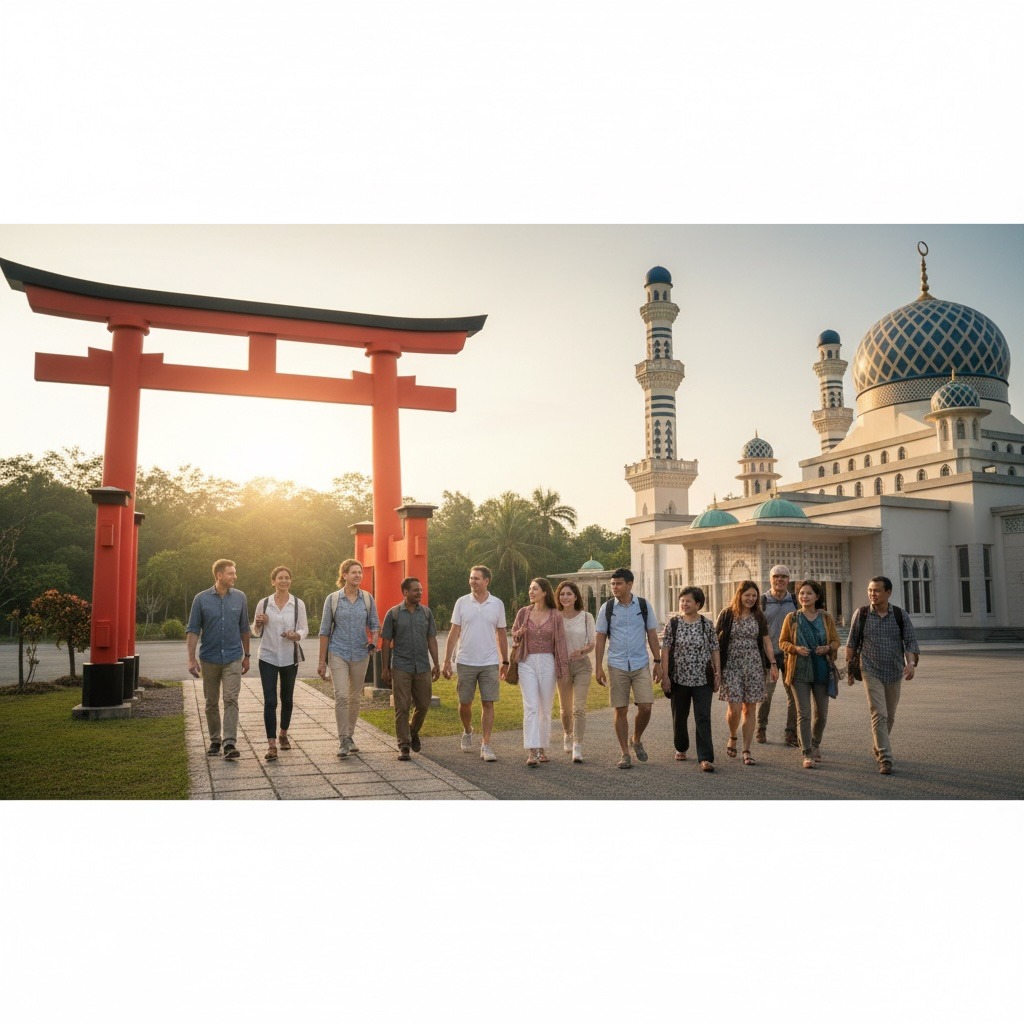
Have you ever packed your suitcase for a long trip or a new life abroad and stopped to wonder, “Wait, will I be able to go to my church/mosque/temple/synagogue there?”
It’s a question that often goes unasked until you're already on the plane, leaving the familiar freedoms of the West behind. The continent of Asia—stretching from the temples of Kyoto (京都) to the bustling markets of Delhi—is an incredible tapestry of cultures and faiths. But for a Westerner, the idea of religious freedom here isn't a simple "yes" or "no." It’s an intricate, surprising, and sometimes challenging reality.
The truth is, your experience will depend less on your faith and more on your passport, your conduct, and the specific nation you call home.
Understanding the Spectrum of Faith in Asia
The concept of "religious freedom" varies dramatically from the West (where it is generally viewed as the freedom from state interference) to Asia (where it is often viewed as the freedom to practice, provided it aligns with national unity and state security).
Asia is not a monolith. You must know where you are on the spectrum:
🟢 High Tolerance Zones (The Easy Practice)
These nations often have constitutional protections, high religious diversity, and governments that see multiple faiths as a strength, not a threat.
Examples: Japan, South Korea, Taiwan, The Philippines, and Thailand.
Reality: You can generally find organized churches, synagogues, or mosques, and practice your faith openly, as long as you respect local laws.
🟡 Regulated Zones (The Quiet Practice)
These countries have religious freedom written into their constitution but maintain strict rules to preserve national harmony or state-sanctioned versions of faith.
Example: Singapore and Indonesia. In Singapore, for instance, all religious groups are required to register with the government, and actions perceived as threats to racial or religious harmony are not tolerated (Source: Freedom House, 2024).
Reality: Your personal practice is fine, but public proselytization (sharing your faith aggressively) is often legally restricted and heavily frowned upon.
🔴 High Restriction Zones (The Discreet Practice)
These are nations where state-sanctioned ideology is paramount, and independent religious activity is viewed with suspicion, leading to severe penalties.
Examples: China, North Korea, and several Central Asian nations.
Reality: Westerners must often operate within government-approved facilities, and any activity outside of that—especially proselytizing—can lead to deportation, detention, or worse.
3 Rules for Practicing Your Faith Safely
My friend, an American expat named David, once told me about his early days in Kuala Lumpur. He wanted to start a small, informal prayer group. He checked with the local authorities first, who politely but firmly told him, "You can pray as loud as you like in your home, but the moment you put up a flyer, you are attempting to convert a local, and that's where the trouble starts."
This anecdote illustrates the golden rule: distinction between personal practice and public propagation.
1. Separate Personal Faith from Proselytization: Anti-proselytization laws are common across at least 10 countries in the East Asia and Pacific region (Source: USCIRF Anti-Conversion Laws Compendium, 2023). Westerners are expected to practice their faith privately or in recognized, established places of worship. Actively trying to convert local citizens is often illegal and is the fastest way to get deported.
2. Know the Blasphemy and Defamation Laws: Many Asian countries have strict laws against insulting or demeaning the majority religion. According to the Pew Research Center (2022 data), government restrictions on religion have remained at peak global levels, with Asia being a significant region for this (Source: Pew Research Center, 2024 Report). What is "free speech" in the West can be a criminal offense overseas. Never publicly criticize the state religion, its holy figures, or national religious leaders.
3. Look for the Numbers, Not Just the Law: While a constitution may guarantee religious freedom, the on-the-ground reality can be different. For example, Christians suffered 834 recorded attacks in India in 2024 alone, reflecting how rising ethno-religious nationalism can erode constitutional protections (Source: Aid to the Church in Need Religious Freedom in the World Report 2025). Look for high social tolerance rather than just high legal freedom.
The Bottom Line
Can Westerners freely practice their religion in Asia? Yes, but with caveats.
Your right to worship is generally respected, but your freedom to change other people's faith, or criticize established local faiths, is highly conditional and, in many places, illegal. When traveling, remember the motto of many Asian cultures: Harmony, or 和 (Wa in Japanese or Hé in Chinese), is often valued above individual expression. Be respectful, be quiet, and be mindful.
Call to Action (CTA)
Are you an expat in Asia? Share your personal experience navigating religious life in the comments below! What was your biggest surprise?
Disclaimer
Disclaimer: This article is for informational purposes only and does not constitute professional legal or travel advice. Always consult official government sources for current laws and regulations.

Address
Blk 8 Cantonment Close
SIngapore