Visa rules change all the time. Stay legal by checking requirements for Asia's Travel and Retirement Visas. Updated July 2026.
Cheatsheet: How do these 12 medical conditions impact your health after 60?
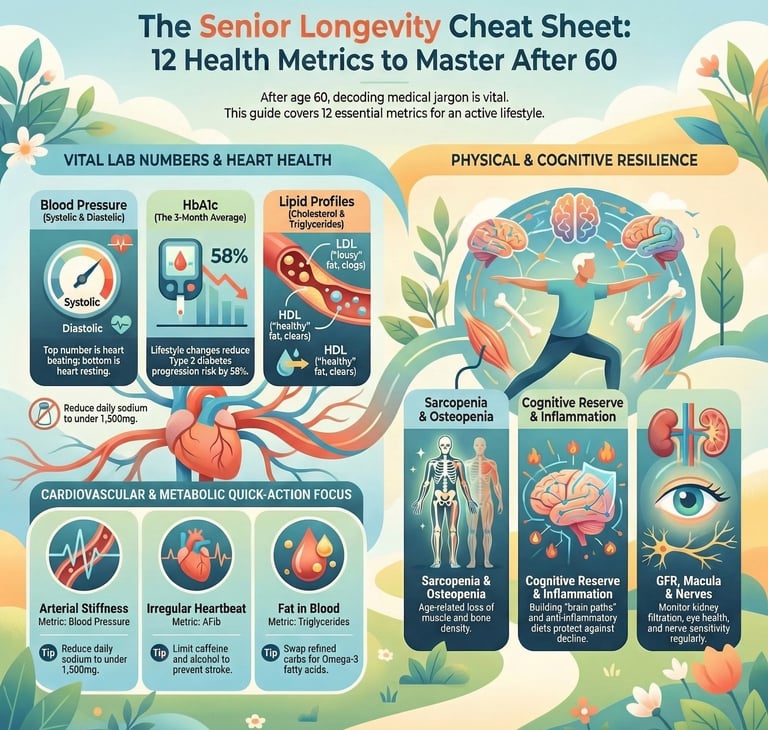
Decode the medical jargon! Learn the 12 essential health terms and metrics every senior needs to know for a longer, healthier, and more active life.
USEFUL MEDICAL KNOWLEDGE
3/6/20265 min read
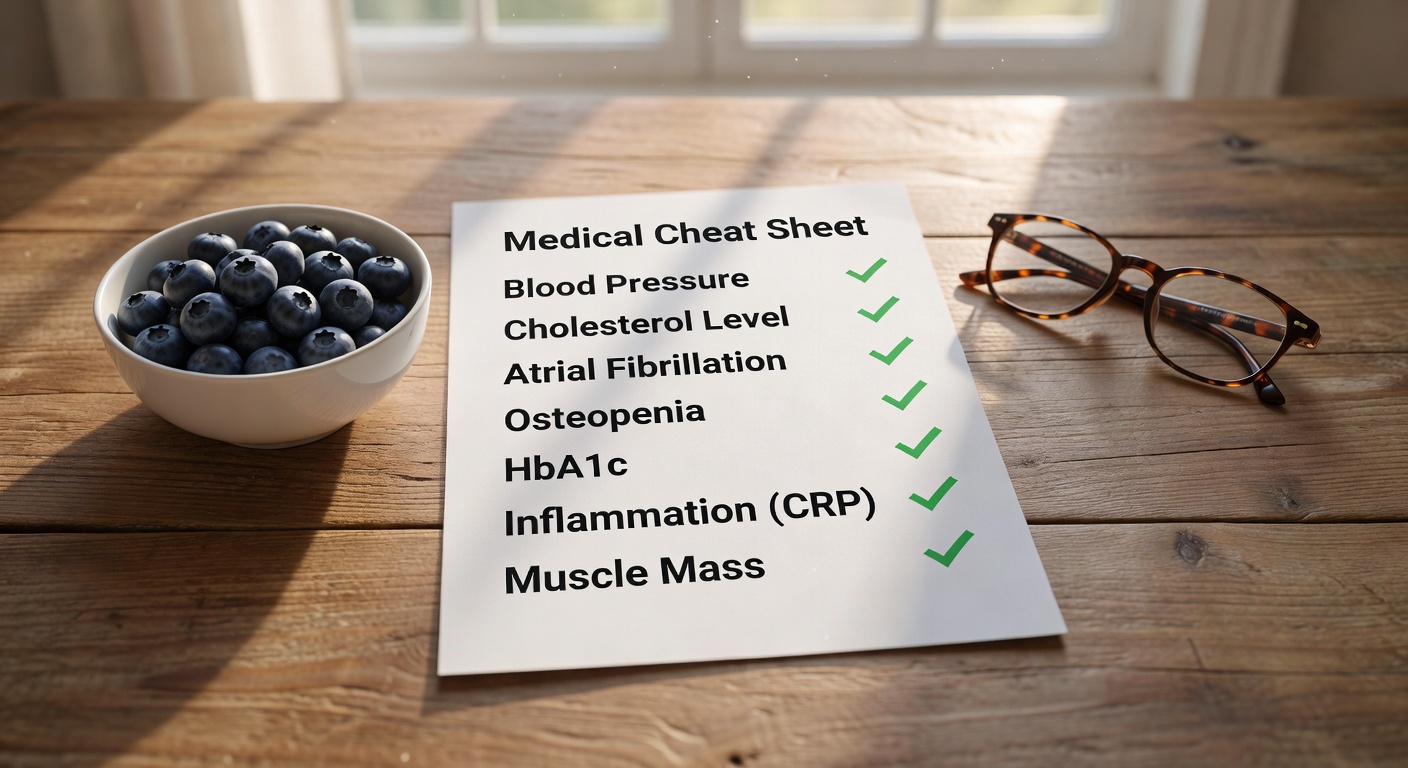
Let’s be honest: sitting in a doctor’s office can sometimes feel like you’ve accidentally wandered into a high-level physics lecture, but with more cold stethoscopes and fewer snacks. You hear words like "systolic," "sarcopenia," and "LDL," and suddenly you’re nodding along while secretly wondering if you just got diagnosed with a rare species of tropical fern.
I remember when my Uncle Arthur came home from his checkup convinced he had "Lollipop Problems." Turns out, it was just his Lipids. We laughed, but it highlighted a real issue: if we don't speak the language of our own bodies, we can't be the captains of our health.
As we cross the 60-year mark, our bodies decide to change the rules of the game. Understanding these 12 terms isn't just about passing a vocabulary test; it’s about Longevity (寿命) and staying active enough to chase the grandkids—or at least outrun the neighbor’s dog.
1. Systolic & Diastolic Blood Pressure
These are the two numbers on the monitor (e.g., 120/80). The top is the pressure when the heart beats; the bottom is the pressure when it rests.
Why it happens as you age: Your arteries naturally lose their "stretchiness" and become stiffer (arteriosclerosis). This forces the heart to pump harder, driving numbers up.
How to prevent or treat it: Reduce sodium to under 1,500mg daily. According to a 2024 report from the American Heart Association, managing hypertension effectively can reduce stroke risk by over 30%. Focus on the DASH diet (rich in fruits and veggies).
2. Sarcopenia (筋肉減少症)
This is the clinical term for age-related muscle loss.
Why it happens as you age: After 60, your body becomes less efficient at turning protein into muscle, and hormone levels that support muscle growth begin to dip.
How to prevent or treat it: Strength training is the "fountain of youth" here. A 2023 study published in the Journal of Cachexia, Sarcopenia and Muscle found that seniors who engage in resistance training twice a week can reclaim up to 10% of their lost muscle density. Aim for 1.2g of protein per kilogram of body weight.
3. HbA1c (A1c)
This is your "three-month average" blood sugar level, rather than a single snapshot.
Why it happens as you age: Cells become more "stubborn" and resistant to insulin, meaning sugar stays in your blood longer rather than being used for energy.
How to prevent or treat it: Take a 15-minute walk immediately after your largest meal. This "mopping up" of glucose helps lower your A1c. The CDC reported in 2024 that lifestyle changes can reduce the risk of progressing from prediabetes to Type 2 diabetes by 58%.
4. LDL vs. HDL Cholesterol
LDL is the "Lousy" fat that clogs pipes; HDL is the "Healthy" fat that clears them.
Why it happens as you age: Your liver’s ability to filter out LDL decreases, and metabolic changes can cause "bad" cholesterol to spike even if your diet hasn't changed.
How to prevent or treat it: Swap saturated fats (butter, red meat) for unsaturated ones (olive oil, avocado). Think of HDL as a vacuum cleaner—increase it through aerobic exercise like brisk walking or swimming.
5. Osteopenia
The middle ground between healthy bones and osteoporosis.
Why it happens as you age: You begin to lose bone mineral density faster than your body can replace it. In women, the drop in estrogen after menopause accelerates this.
How to prevent or treat it: Vitamin D and Calcium are non-negotiable. Add weight-bearing exercises (like walking or dancing) to "stress" the bones into staying strong.
6. Atrial Fibrillation (AFib)
A quivering or irregular heartbeat (Arrhythmia/不整脈).
Why it happens as you age: Over time, the heart’s internal electrical "wiring" can develop wear and tear or scarring, leading to chaotic signals.
How to prevent or treat it: Limit caffeine and alcohol, which are common triggers. If diagnosed, doctors often prescribe blood thinners to prevent clots—a vital step, as AFib increases stroke risk fivefold.
7. Glomerular Filtration Rate (GFR)
A measure of how well your kidneys are cleaning your blood.
Why it happens as you age: The number of filtering units (nephrons) in your kidneys naturally decreases as you get older.
How to prevent or treat it: Stay hydrated, but more importantly, be careful with "NSAID" pain relievers like ibuprofen, which can be tough on aging kidneys. Always check with your doctor before starting a daily pain regimen.
8. Macular Degeneration
The breakdown of the central part of the retina (the macula).
Why it happens as you age: Waste products can build up in the eye tissues (dry AMD), or abnormal blood vessels can grow (wet AMD), blurring your "straight-ahead" vision.
How to prevent or treat it: Wear UV-protective sunglasses and eat "eye-food" like kale and spinach, which contain lutein. 2024 data from the National Institute on Aging suggests that specific vitamin formulations (AREDS2) can slow progression in many patients.
9. Neuropathy
Nerve damage that usually causes tingling or numbness in the hands and feet.
Why it happens as you age: Often caused by long-term high blood sugar or decreased circulation. As we age, the protective coating on our nerves can also thin.
How to prevent or treat it: Strict blood sugar control is #1. Check your feet daily for injuries you might not feel, and ask your doctor about Vitamin B12 levels, as a deficiency can mimic these symptoms.
10. Triglycerides
A type of fat (lipid) found in your blood.
Why it happens as you age: When you eat more calories than you burn, your body converts them into triglycerides. As metabolism slows after 60, this conversion happens more easily.
How to prevent or treat it: Cut back on sugary drinks and refined carbs (white bread/pasta). Omega-3 fatty acids (found in salmon or fish oil) are highly effective at lowering these levels.
11. Cognitive Reserve
The brain’s ability to improvise and find alternate ways of getting a job done.
Why it happens as you age: While the brain may physically lose some volume, "reserve" is built through a lifetime of learning and social interaction.
How to prevent or treat it: Never stop being a student. Learning a new language, a musical instrument, or even a complex new hobby builds "new paths" in the brain that protect against symptoms of decline.
12. Inflammation (CRP)
Measured by C-reactive protein, this indicates how much "fire" or irritation is in your body.
Why it happens as you age: Known as "inflammaging," the immune system can get stuck in a low-grade "on" position as we age, contributing to joint pain and heart disease.
How to prevent or treat it: Adopt an anti-inflammatory diet. This means plenty of berries, fatty fish, and turmeric. Quality sleep (7-8 hours) is also a natural "fire extinguisher" for bodily inflammation.
Call to Action: Knowledge is power, but action is health! Pick one of these terms from your last blood test and ask your doctor: "What is one small lifestyle change I can make this month to improve this specific number?" Leave a comment below with which term you're focusing on this year!
Disclaimer: This article is for informational purposes only and does not constitute professional advice.

Address
Blk 8 Cantonment Close
SIngapore