Visa rules change all the time. Stay legal by checking requirements for Asia's Travel and Retirement Visas. Updated July 2026.
Do All Asian Countries Celebrate New Year's on January 1st? (The Surprising Truth)
The short answer is no! Discover the true diversity of Asian New Year's, from the massive Lunar New Year to the epic Songkran water festival. Learn which countries celebrate on Jan 1st and which follow ancient calendars.
TRAVEL
12/31/20254 min read
The Quick Answer: Yes, But Actually No
The short, simple answer to whether all Asian countries celebrate New Year’s on January 1st is no.
While nearly every country in Asia formally recognizes the Gregorian New Year on January 1st (often as a public holiday), the true, culturally significant, and most important New Year celebration for billions of people often falls on a completely different date.
The surprising truth is that Asia is defined by a massive diversity of calendars—lunar, solar, and lunisolar—leading to three distinct New Year periods:
Gregorian New Year: January 1st (The global standard)
Lunar New Year: Late January to Mid-February (The cultural powerhouse)
Solar New Year: Mid-April (The traditional water festivals)
The biggest confusion for visitors lies in recognizing that the Lunar New Year (like Chinese New Year) and the Solar New Year (like Thai Songkran) are often the primary, most significant, and economically powerful holidays of the entire year.
2. The Dominant Alternative: Lunar New Year (Spring Festival)
The most widely observed alternative to January 1st is the Lunar New Year, a movable feast that follows the cycles of the moon, typically falling between January 21st and February 20th. It is the single largest annual holiday period in Asia.
A Global Economic and Cultural Juggernaut
This isn't just a minor holiday; it’s an annual event of staggering scale, often called the largest annual human migration on the planet.
Global Reach: The holiday is celebrated by an estimated 1.5 to 2 billion people worldwide.
Economic Impact: In China alone, the 2024 domestic travel spending during the Lunar New Year exceeded 632 billion yuan (roughly $88 billion), demonstrating its immense economic power.
Migration: The mass movement of people returning home for family reunion dinners—known as Chunyun in China—can involve an estimated 9 billion trips, reinforcing its status as the most important family gathering of the year.
Lunar New Year Countries (Key Celebrants)
This holiday goes by many names and has distinct traditions in different countries:
China Spring Festival (Chūn Jié) Lunar Calendar (Late Jan/Feb)
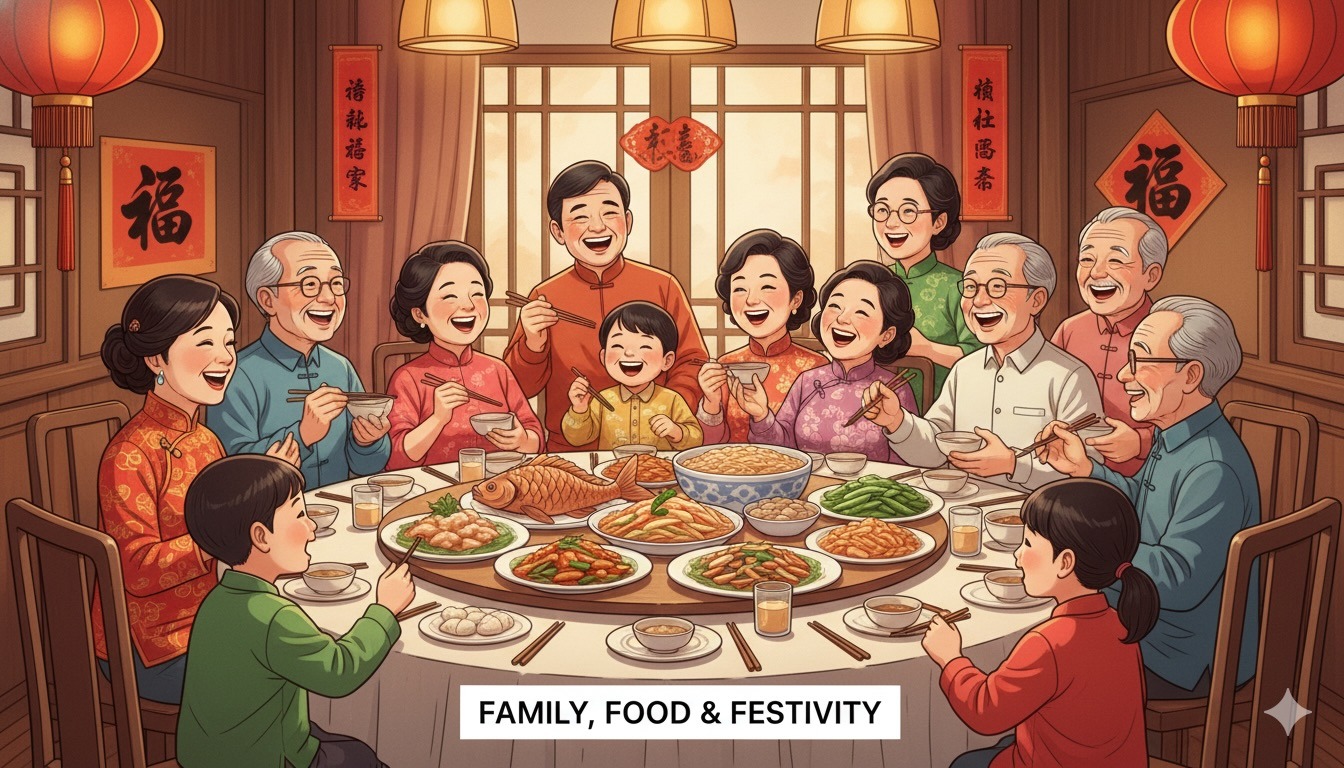
Most important family reunion. Everyone will travel home; no matter how busy or how far away to be together. In rural area, Lunar New Year is celebrated up to 14 days. In city area, perhaps 2 days to a week. Red is the colour to be seen in!
South Korea Seollal Lunar Calendar (Late Jan/Feb)
Reverence for ancestors and dressing up in traditional dress (Hanbok)
Vietnam Tết Nguyên Đán (Tết) Lunar Calendar (Late Jan/Feb)
Cleansing the home, paying debts, offering for the new year
Public Holidays Also in Singapore, Malaysia, Indonesia, Philippines, Brunei
Multi-day holidays focused on community and family
3. The Solar New Year: Songkran & Beyond (April Celebrations)
A third major New Year’s celebration in South and Southeast Asia follows the traditional Solar Calendar, marking the transition into a new astrological cycle. These holidays are fixed in mid-April.
Thailand's World-Famous Water Festival
Songkran, the Thai New Year, is perhaps the most famous of the solar celebrations. While officially a 3-day public holiday (April 13-15), the festivities often last for a week or more.
Economic Power: The 21-day Songkran festival in Thailand in 2024 generated a total tourism income of over 140 billion baht (approx. $3.8 billion), a major catalyst for the country's tourism sector.
The Ritual: The epic water-splashing is a modern take on the ancient ritual of sprinkling scented water over Buddha statues and the hands of elders to symbolically wash away bad luck and offer blessings for the new year.
Other Solar New Year Countries
The tradition of a mid-April New Year is shared across a number of countries, rooted in a shared cultural and religious heritage:
Laos: Pi Mai Lao (Water Festival)
Cambodia: Chaul Chnam Thmey (Traditional New Year)
Myanmar (Burma): Thingyan (Water Festival)
Parts of India and Sri Lanka: Celebrations like Vishu and Aluth Avurudda are celebrated in mid-April.
4. Asia's January 1st Club: Countries Celebrating the Gregorian New Year
Despite the cultural dominance of the lunar and solar holidays, there are several key Asian nations where January 1st is the undisputed, primary annual celebration.
Notes on individual country's Celebration
Japan Oshōgatsu
Since the late 19th century, Japan fully switched its New Year to January 1st, making it the most important annual holiday. It’s a time for quiet reflection, temple visits, and special food (Osechi-ryōri).
The Philippines Bagong Taon
Celebrated on January 1st with a blend of Western and local customs. Key traditions include wearing polka dots (for prosperity) and making loud noise to ward off evil spirits.
South Korea Sinjeong
While Seollal (Lunar New Year) is the main festival, January 1st is still observed as a national public holiday with some traditional elements.
China, Taiwan, Hong Kong Yuan Dan
January 1st is observed as a public holiday, but it holds significantly less cultural importance than the Spring Festival. It's often marked by international-style countdowns.
5. The Surprising Truth: Asia Often Celebrates New Year... Twice
The truly surprising and unique truth about New Year in Asia is that many countries celebrate it on two different dates, each with its own purpose and cultural weight.
January 1st: Recognized as the official global calendar New Year. This is typically marked by modern, Western-style countdowns, fireworks over city skylines (like Singapore’s Marina Bay or Bangkok's CentralWorld), and a single public holiday.
Lunar or Solar New Year: Recognized as the traditional, cultural, and family-focused New Year. This involves ancient rituals, traveling back to hometowns, visiting temples, and typically results in a multi-day national holiday.
In countries like Thailand, China, and South Korea, you are essentially offered two chances to usher in the new year—one for modern global society and one for deep-rooted family, history, and tradition.
6. FAQ: Asian New Year Celebrations
Q: What is the biggest New Year celebration in Asia?
A: Lunar New Year (Spring Festival) is the largest in terms of the number of people celebrating (over 1.5 billion) and the scale of the associated migration and economic activity. Celebrated by Chinese people all over the world!
Q: Why does the Lunar New Year date change every year?
A: It is based on a lunisolar calendar, which tracks the cycles of the moon and the sun. It always falls on the new moon between January 21 and February 20.
Q: Is there any country in Asia that only celebrates on January 1st?
A: Japan is the most prominent major Asian country that fully adopted the Gregorian calendar New Year (Oshōgatsu) in 1873, effectively consolidating its main New Year traditions into the January 1st holiday.

Address
Blk 8 Cantonment Close
SIngapore