Visa rules change all the time. Stay legal by checking requirements for Asia's Travel and Retirement Visas. Updated July 2026.
Hassle Free Travel for Seniors. How to Travel Visa-Free to Asia’s 7 Hottest Destinations?
2025 guide to Asia's visa-free travel. Check max days, K-ETA, TDAC, and SG Arrival Card rules for 7 top countries: Japan, China, Korea, Vietnam & more.
TRAVEL
12/26/20253 min read
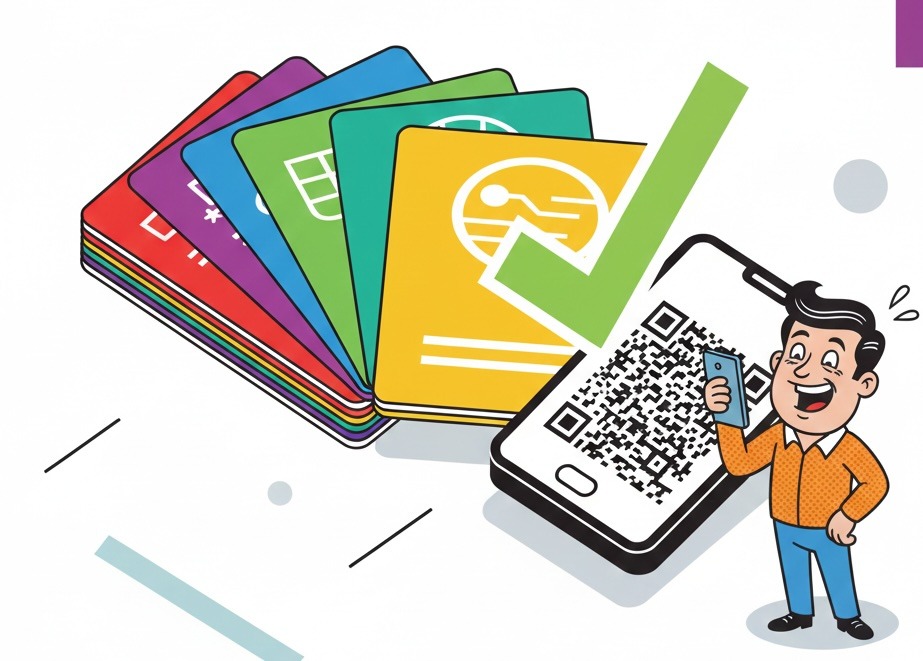

Picture this: I was once standing at a check-in counter for a flight to Thailand, luggage weighed, boarding pass ready, when the agent asked, "Did you complete your TDAC?" My mind went blank. What’s a TDAC? I frantically Googled the mandatory Thai Digital Arrival Card right there, moments before the gate closed. It was a stressful five minutes that taught me one thing: the rules of visa-free travel change faster than fashion trends in Seoul.
Asia is more accessible than ever, with most of its major tourism hubs opening their doors wide to Western travelers. However, 'visa-free' no longer means 'paperwork-free.' This guide is your cheat sheet to the latest entry rules, maximum stays, and the mandatory digital forms you must complete for China, Japan, Korea, Vietnam, Thailand, Malaysia, and Singapore.
Check out our Asia visa portal: https://www.eatruntravelretire.com/asias-visa-checker
East Asia: The Digital 90-Day Club
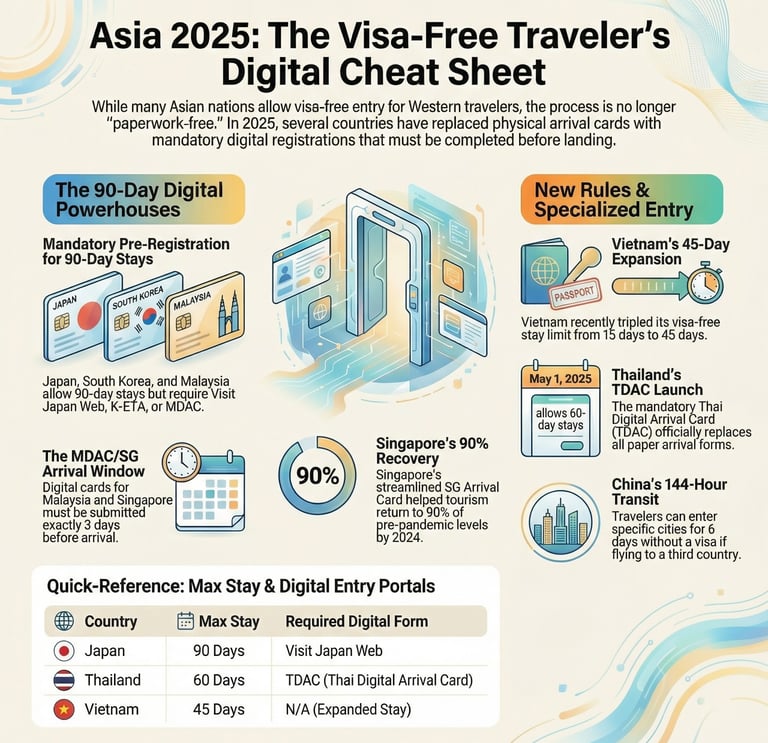
The three East Asian economic giants—Japan, South Korea, and Singapore (often grouped logistically)—have streamlined entry, favoring long stays and digital pre-registration.
🇯🇵 Japan: Visa-Free 90 DaysVisit Japan Web (Recommended for customs/immigration)
🇰🇷 South Korea Visa-Free 90 Days K-ETA (Korean Electronic Travel Authorization, mandatory for most)
🇸🇬 Singapore Visa-Free 90 Days SG Arrival Card (Mandatory, 3 days before arrival)
Key Takeaway: If you have a US, UK, or EU passport, you can spend three months in each of these stunning countries simply by filling out a quick online form (or two!). This freedom is a major reason why Singapore saw its international arrivals return to over 90% of pre-pandemic levels in 2024, according to the Singapore Tourism Board.
Southeast Asia: New Rules & Longer Stays
The Southeast Asian nations are fiercely competitive for your tourist dollars and have been actively expanding visa-free limits.
New Rules for Fun and Happiness
🇻🇳 Vietnam: The new travel champion. As of late 2024, Vietnam expanded its visa-free stay for many key markets (including the UK, France, and Germany) from 15 days to a generous 45 days. This change alone has powered their tourism surge, making it easier than ever to explore Hanoi, Ha Long Bay, and Ho Chi Minh City without an expensive e-Visa.
🇹🇭 Thailand: Land of Smiles, land of new forms. Starting May 1, 2025, the Thai government mandated the TDAC (Thailand Digital Arrival Card) for all foreign arrivals, replacing the old paper TM6. While many can stay visa-free for up to 60 days, forgetting the TDAC means a guaranteed delay at immigration.
🇲🇾 Malaysia: The easiest entry. Malaysia requires the MDAC (Malaysia Digital Arrival Card), which must be filled out up to three days before arrival. However, its implementation is smooth, and most Western travelers enjoy a straight-up 90-day visa-free stay.
The China Question: The Big Exception
🇨🇳 China: This is the wildcard. China operates several complex visa-free schemes, but the traditional L-Visa is still often required for US and Canadian citizens.
The Good News: Several European nations, as well as Singapore and Malaysia, now enjoy unilateral 15 or 30-day visa-free entry. This is a pilot program set to run until late 2026.
The Alternative: The 144-Hour Transit Without Visa (TWOV) is a popular option. It allows you to enter specific cities (like Shanghai or Beijing) for up to six days if you are flying onward to a third country.
Regardless of your status, China has rolled out a new Digital Arrival Card (2025), replacing the paper card for faster entry. According to a 2025 report from the National Immigration Administration, the digital process is now mandatory for those entering under visa-free or TWOV schemes.
🔌 Getting Connected: A Seamless Digital Tour
For a multi-country Asian trip, the single most critical logistical asset—aside from your passport—is a regional eSIM.
Traditional SIM Requires swapping tiny physical cards.Instant setup via QR code.Involves tracking down a local vendor in each airport.
Pro Tip: Download a single regional eSIM plan that covers Vietnam, Thailand, Malaysia, and Singapore, which often costs less than buying four separate local SIM cards.
Conclusion & Call to Action
Asia’s 'visa-free' status is conditional on you completing your digital homework. The trend is clear: paper is out, QR codes are in. Embrace the E-Card, enjoy the longer visa-free stays, and you will unlock the seamless trip of a lifetime.
Disclaimer: This article is for informational purposes only and does not constitute professional advice. Always check the official government website for your passport country before booking travel.

Address
Blk 8 Cantonment Close
SIngapore