Visa rules change all the time. Stay legal by checking requirements for Asia's Travel and Retirement Visas. Updated July 2026.
How Does Asia Celebrate Christmas? 5 Surprising Traditions from East to West
Uncover 5 unique Asian Christmas traditions! From Japan's KFC feast to the Philippines' 4-month season and China's "peace apples," see how East meets West.
TRAVEL
12/25/20254 min read
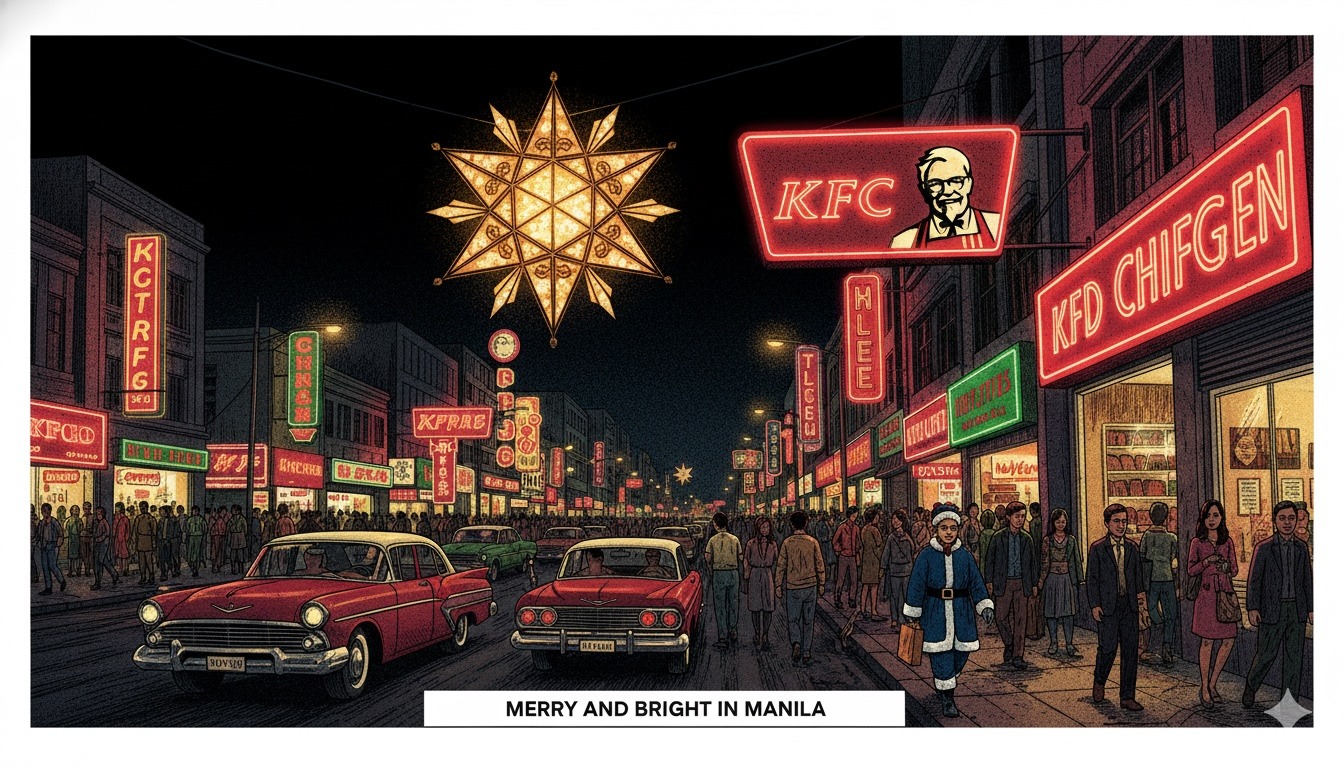
While Christmas is a predominantly religious holiday in the West, in most of Asia, it's a brilliant, dazzling blend of commercial spectacle, romantic date night, and unique cultural fusion. It’s less about a silent night and more about a sensational, brightly-lit, chicken-filled evening. Forget what you see in the movies; in Asia, the holiday is often created from the ground up, resulting in some truly unforgettable traditions.
I remember my first December in Seoul, expecting a quiet, contemplative holiday. Instead, I saw a giant, neon-lit Santa wearing what looked suspiciously like a gat (a traditional Korean hat) and realized: this isn't just a holiday; it's a party tailor-made for Asia.
Ready to explore how the East puts its own unique spin on the global celebration? Here are five of the most surprising, joyous, and delicious Christmas traditions from across the continent.
1. Japan: The Cult of the Christmas Bucket (Kurisumasu ni wa Kentakkii)
In Japan, Christmas is primarily a romantic, commercial day, not a public holiday. The biggest tradition isn't roasting chestnuts—it’s queuing up for a bucket of Colonel Sanders’ fried chicken.
The Tradition: Eating KFC for Christmas dinner.
The Story: In 1974, KFC launched an incredibly successful marketing campaign called Kurisumasu ni wa Kentakkii ("Kentucky for Christmas!"). The idea was simple: give Westerners a taste of home and give Japanese people a memorable, easy holiday meal. It worked too well.
The Data: This tradition is now a massive cultural event. KFC Japan's annual Christmas sales can reach $53 million during the Christmas period, with millions of Japanese families pre-ordering their "Party Barrels" weeks in advance (2018 report, QSR Media Asia). For dessert, they often enjoy kurisumasu keki—a light, fluffy Christmas sponge cake topped with strawberries and cream.
2. The Philippines: The World’s Longest Christmas Party (Kapaskuhan)
The Philippines is one of Asia's most predominantly Christian nations, and they don't do Christmas in moderation—they do it for four months. The season, known locally as Kapaskuhan, officially kicks off when the "Ber months" arrive (September, October, November, December).
The Tradition: The whole country lights up with beautiful, star-shaped lanterns called Paróls—symbolizing the Star of Bethlehem—that are hung everywhere.
The Religious Core: The celebration peaks with Simbang Gabi—nine dawn masses—culminating in the midnight feast, Noche Buena (Spanish for 'Good Night').
The Feast: The Noche Buena table is a lavish family spread laden with specialties like lechon (roast pig), bibingka (rice cake), and queso de bola (Edam cheese).
The Data: With over 80% of Filipinos identifying as Catholic, the religious aspect is deeply embedded, driving this globally unique, months-long celebration (Pew Research Center, 2020).
3. China: The Gift of the ‘Peace Apple’ (Ping'an Guǒ)
In mainland China, Christmas is not a public holiday, and the celebrations are highly secular. However, a charming, linguistically clever tradition has taken root on Christmas Eve, known as Ping'an Ye (Peaceful Night).
The Tradition: Friends exchange cellophane-wrapped, often heavily decorated, apples, which are called Ping'an Guǒ (Peaceful Fruit).
The Reason: The Mandarin word for apple is píngguǒ (苹果). The first syllable, píng, sounds identical to the píng in píng’ān (peaceful). Thus, gifting the Ping'an Guǒ is a silent wish for the recipient to have peace and safety in the coming year.
The Note: This cultural homophone is so popular that the price of extravagantly wrapped apples can dramatically increase in the days leading up to December 24th (various local reports).
4. South Korea: Santa Haraboji and the Christmas Date
In South Korea, where nearly one-third of the population is Christian, Christmas is an official national holiday. But unlike the West, where it is often a family-focused event, Christmas Day is one of the biggest days of the year for couples.
The Vibe: It's often compared to a second Valentine’s Day. Couples dress up, go to romantic dinners, visit elaborately decorated amusement parks, and exchange gifts.
The Icon: They have their own Santa, Santa Haraboji (Grandfather Santa), who sometimes wears a blue or green suit and a traditional Korean gat (hat), blending local aesthetics with the Western figure.
The Difference: While churches are full for services, Christmas is a rare day off for non-Christians, meaning it’s widely embraced as a day for relaxation, romance, and shopping. 30% of South Koreans identify as Christian, making it the Asian country with the highest Christian population percentage after the Philippines (Pew Research Center, 2017).
5. India: Mango Trees and Christmas Baba
Christmas in India, while celebrated by only about 2.3% of the population, is vibrant, especially in Catholic hubs like Goa and Mumbai. They have adapted the celebration by merging European influence with local necessity. Christmas Day is often referred to as Badaa Din ("Big Day") in parts of North and Northwest India.
The Decor: Since traditional pine trees are rare, Indian Christians often decorate locally available trees like mango or banana trees instead.
The Lights: Houses are often adorned with star-shaped paper lanterns hung between homes, and some families place small, oil-burning clay lamps on their rooftops to symbolize Jesus as the light of the world.
The Figure: Santa is often known as Christmas Baba, and he traditionally delivers gifts not on a sleigh, but on a horse and cart.
Conclusion: Christmas is a Cultural Kaleidoscope
From Japan's commercial chicken feast to the Philippines' marathon religious celebration and China's humble Ping'an Guǒ, Christmas in Asia is a fascinating cultural kaleidoscope. It proves that the holiday spirit isn't bound by snow or specific religious beliefs—it's about community, joy, light, and, sometimes, an unexpectedly delicious bucket of fried chicken.
Which of these traditions surprised you the most? Share your thoughts or your own unique holiday traditions!
Disclaimer: This article is for informational purposes only and does not constitute professional advice.

Address
Blk 8 Cantonment Close
SIngapore