Visa rules change all the time. Stay legal by checking requirements for Asia's Travel and Retirement Visas. Updated July 2026.
How to Buy Ginseng: Your Checklist for Quality, Forms, and Avoiding Counterfeits
Stop buying fake ginseng! Learn the 4 essential steps to check for real quality, ginsenoside content, and the actual price range of capsules, extracts, and whole roots.
USEFUL MEDICAL KNOWLEDGE
1/3/20263 min read
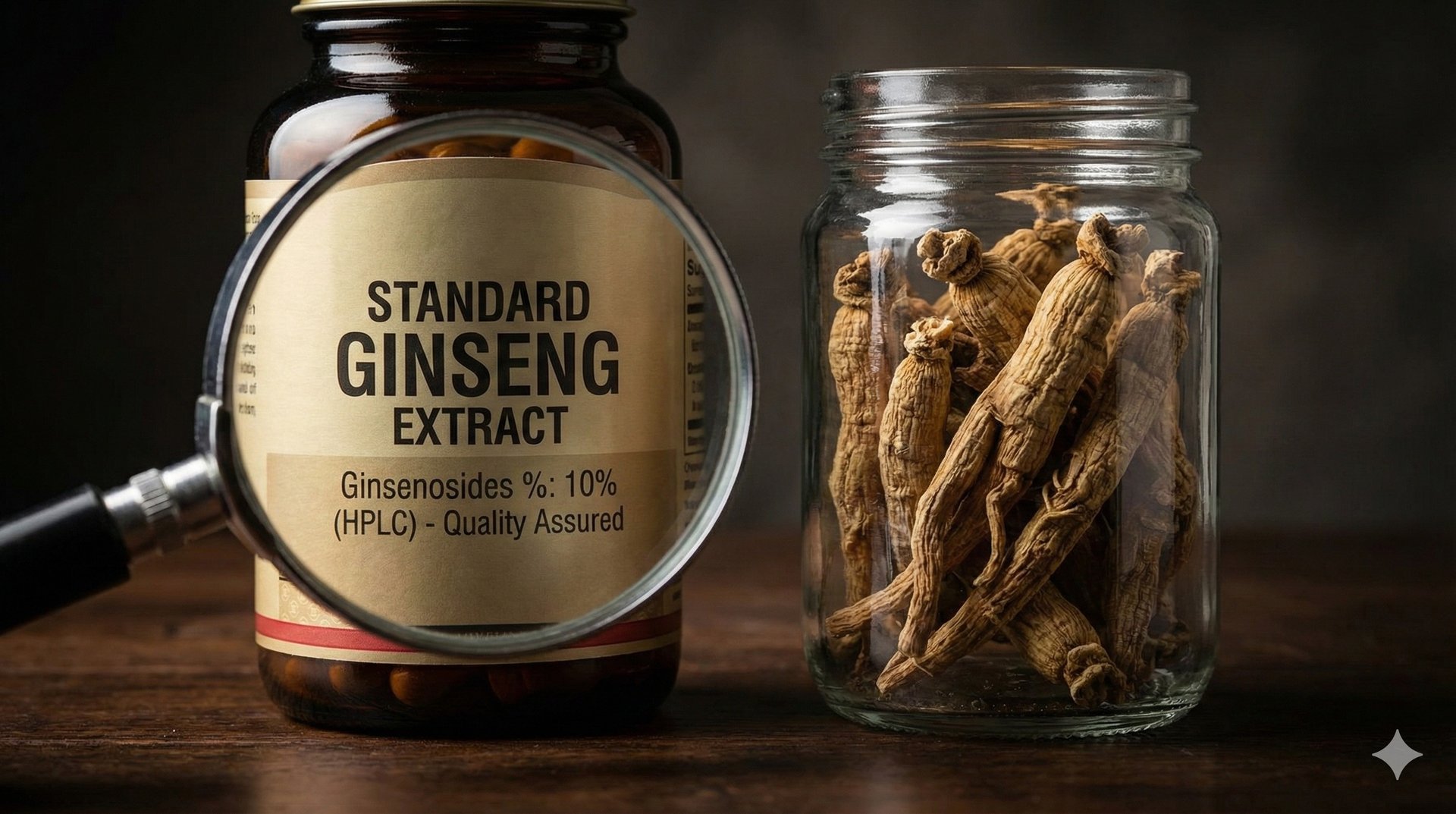
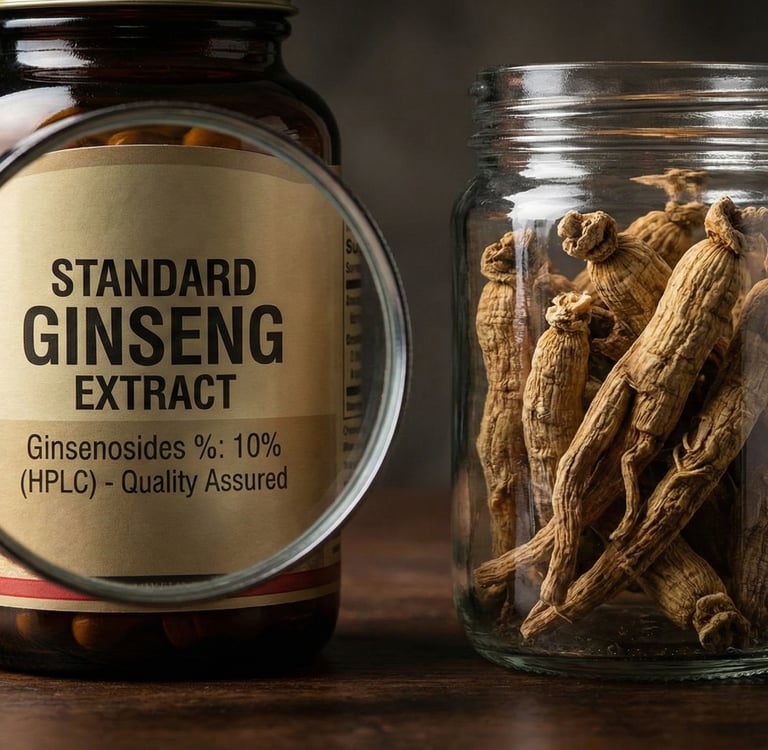
You've heard the ancient wisdom. You know ginseng (Panax genus)—the "man plant"—is celebrated for boosting vitality and focus. You're ready to buy, but standing in the supplement aisle or scrolling online, you realize it's a minefield. You see extracts, powders, capsules, and whole roots with prices ranging from $15 to $15,000. How do you find the real deal without getting ripped off or buying a dud?
I once helped a relative order a "premium" Korean Red Ginseng root online. It arrived beautifully packaged, but it tasted sickly sweet—a sign it had been boiled in sugar to increase its weight and mask low quality. That’s why you need a clear checklist. Buying ginseng isn't about the form; it's about the quality inside the form.
💊 The Three Main Forms of Ginseng Today
The way ginseng is prepared determines its convenience, potency, and often, its price point.
1. Capsules and Tablets (The Convenience King)
What it is: The root is dried, ground into a powder, and encapsulated. The best versions contain a standardized extract.
Pros: Precise, easy dosage; highly convenient for daily use. This is the most popular Western form.
Cons: If not standardized, the potency can vary wildly. You rely completely on the manufacturer’s quality control.
2. Liquid Extracts and Shots (The High-Potency Option)
What it is: The active ingredients are concentrated through an extraction process (often using alcohol or water) into a thick, syrupy liquid, or diluted into ready-to-drink shots.
Pros: High bioavailability (the body absorbs it easily); very potent.
Cons: Can be very strong-tasting; often the most expensive per dose form.
3. Whole or Sliced Root (The Traditional Choice - 人蔘)
What it is: The dried root (white ginseng) or the steamed/heat-processed root (red ginseng). It can be chewed, brewed into tea, or added to soups.
Pros: You get the complete root—traditional and often perceived as the most authentic. The taste is a good quality indicator.
Cons: Difficult to dose accurately; takes longer to prepare. High-quality, mature whole roots are very expensive.
✅ Your 4-Point Checklist for Buying Real Ginseng
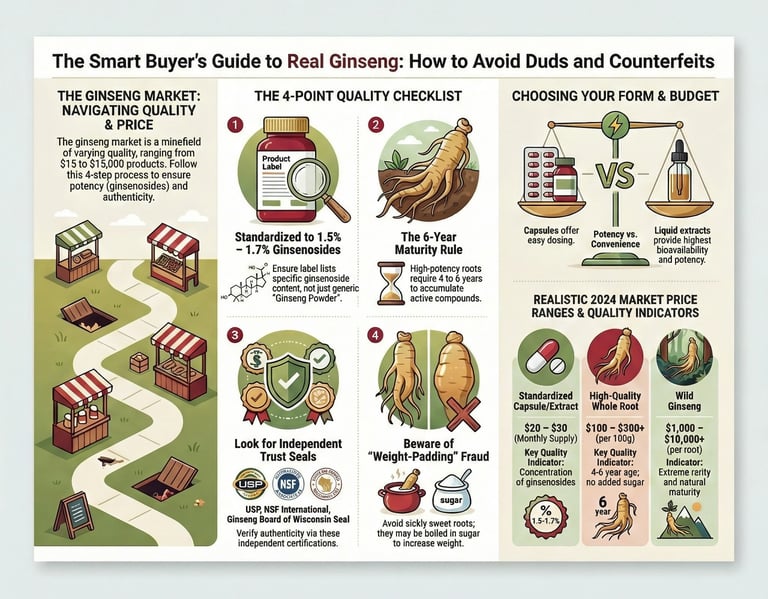
Since counterfeits are common—from low-potency substitutes to roots boiled in sugar to add weight—you must be an educated buyer. Follow these steps for peace of mind:
1. Check for Standardization (The Science)
The active compounds in ginseng are ginsenosides. A quality supplement label won't just say "Ginseng Powder"; it will say "Standardized to X% Ginsenosides" or list a specific ginsenoside content (e.g., Rg1, Rb1).
Data Point: According to the U.S. Pharmacopeia (USP) standards, quality ginseng products should be standardized to ensure a uniform concentration of key ginsenosides, often falling within the range 1.5 to 1.7% for potency. If the label doesn't list a percentage or amount, skip it.
2. Verify the Age (The Maturity Factor)
Ginseng roots accumulate ginsenosides over time. The best, most potent roots are harvested at 4 to 6 years of age. Roots harvested earlier are weaker but cheaper. Look for language like "6-Year Grown" on the packaging, especially for premium Korean Red Ginseng.
3. Look for Third-Party Certification (The Trust Seal)
Since the FDA doesn't regulate supplements the same way it regulates drugs, look for seals from independent organizations. These certifications confirm the product contains what the label claims and is free of harmful contaminants.
Look For: USP Verified, NSF International, or the Ginseng Board of Wisconsin Seal (for American Ginseng).
4. Understand the Price Range (The Reality Check)
Price is a massive quality indicator. If a supplement claiming to be a high-potency extract is selling for $10, be extremely skeptical.
Ginseng Type (2024 Estimates)
Standardized Capsule/Extract $20 - $50 per bottle (1-month supply) Concentration of ginsenosides.
High-Quality Whole Root (4-6 yr) $100 - $300+ per 100g. Age, origin, and lack of added sugar/color.
Wild Ginseng (Extreme Rarity) $1,000 to over $10,000 per root (Priced based on rarity and maturity.)
Global wholesale prices for quality dried ginseng have shown volatility, with a high price in 2024 reaching up to $37.35 USD per kilogram according to market data, but premium retail prices for standardized extracts are far higher, reflecting concentration and processing costs. A good product will not be cheap
Conclusion
Whether you choose a convenient capsule or a traditional whole root, the secret is the ginsenoside content and verified authenticity. Use the Standardization, Age, Certification, and Price checklist every time you shop. Don't waste your money on a low-quality root! And find out what is the difference between Korean and American Ginseng.
Call-to-Action: Before you buy, use our simple 'Ginseng Quality Checker' tool below to generate a printable checklist you can take to the store!

Address
Blk 8 Cantonment Close
SIngapore