Check requirements for Asia's Retirement Visas
How to visit all 9 UNESCO World Heritage sites in Vietnam?
Discover how to visit all 9 UNESCO sites in Vietnam, from Ha Long Bay to the new Yen Tu complex. A complete 2026 guide with itinerary tips and stats.
TRAVELVIETNAM
5/1/20265 min read
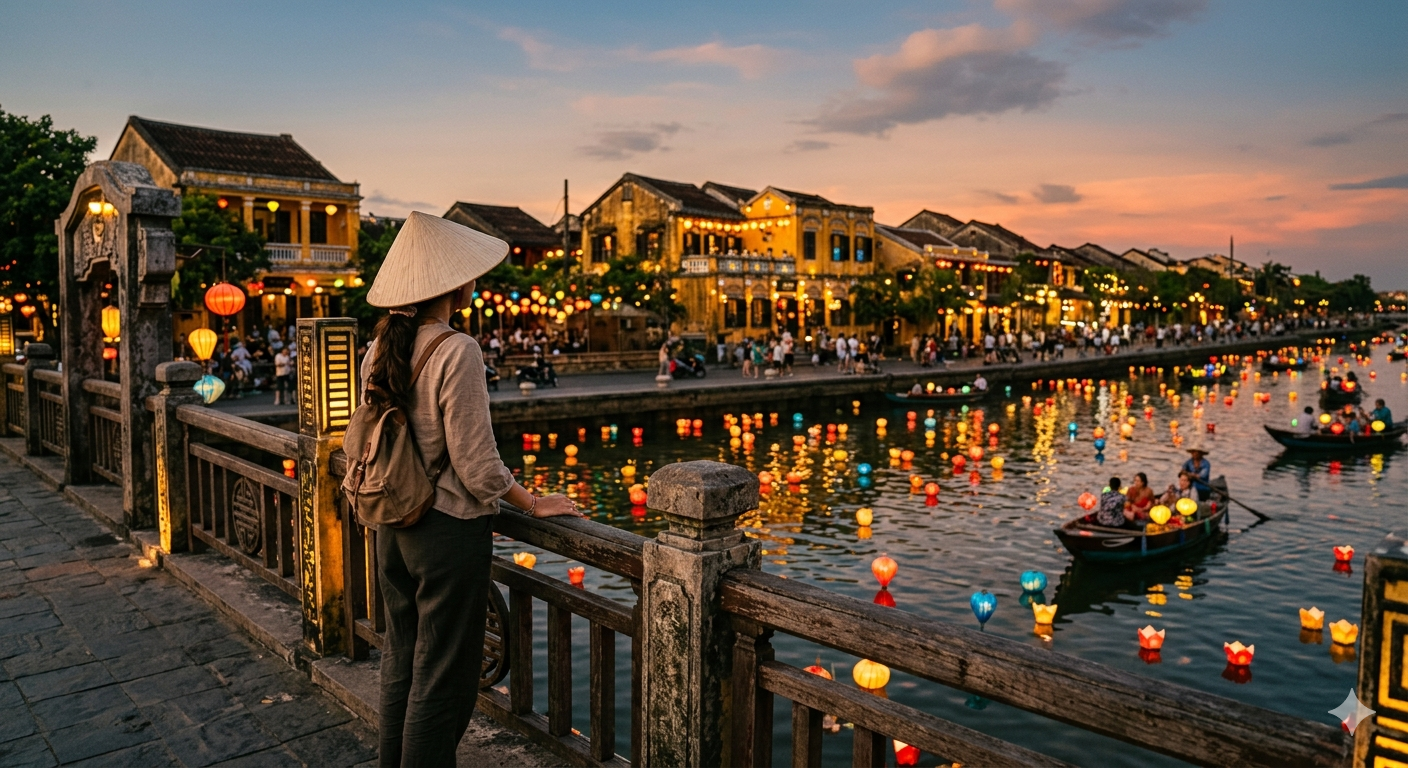

How to Visit All 9 UNESCO World Heritage Sites in Vietnam?
Let’s be honest: most of us travel to collect memories, but a small, competitive part of us wants to collect UNESCO World Heritage Sites like they’re rare Pokémon. If you’ve ever found yourself standing in front of an ancient temple thinking, "Check! That’s number four," then Vietnam is your ultimate playground.
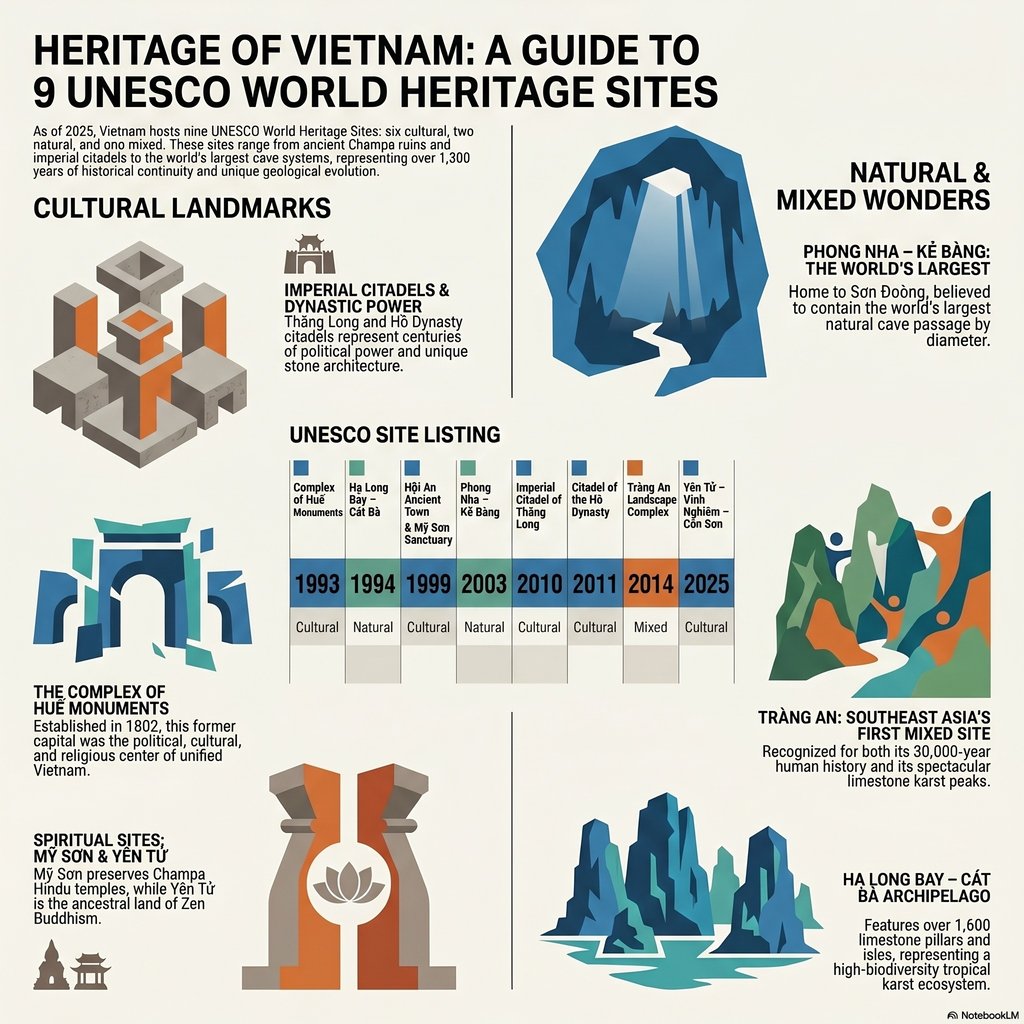
With the recent 2025 addition of the Yên Tử – Vĩnh Nghiêm – Côn Sơn, Kiếp Bạc Complex, Vietnam now boasts a whopping 9 UNESCO sites. That is a lot of history, a lot of limestone, and—if you’re anything like me—a lot of accidental detours involving delicious street food.
According to a 2026 report from the Vietnam National Authority of Tourism, the country welcomed a record-breaking 6.76 million international visitors in just the first quarter of 2026, a 12% jump from the previous year. Everyone is coming for a piece of the magic, so if you want to see all nine sites without losing your mind (or your luggage), you need a plan.
Complex of Huế Monuments (1993): This was the first site in Vietnam to be recognized. It served as the capital of unified Vietnam starting in 1802 under the Nguyễn dynasty and remains a well-preserved example of 19th-century construction.
Hạ Long Bay – Cát Bà Archipelago (1994): Originally inscribed as Hạ Long Bay in 1994 for its natural beauty, it was later extended to include the Cát Bà Archipelago and recognized for its exceptional geological values.
Hội An Ancient Town (1999): Recognized as an exceptionally well-preserved example of a Southeast Asian trading port dating from the 15th to 19th century.
Mỹ Sơn Sanctuary (1999): A cluster of Hindu temples built between the 4th and 13th centuries by the kings of Champa, reflecting the spiritual and political life of that civilization.
Phong Nha – Kẻ Bàng National Park (2003): Initially recognized for its complex karst formations and caves, it was later extended in 2015 for its significant geological and biological diversity.
Central Sector of the Imperial Citadel of Thăng Long – Hanoi (2010): Inscribed during the Millennial Anniversary of the capital, this site was the political center of the nation for over 1,300 years.
Citadel of the Hồ Dynasty (2011): Located in Thanh Hóa, this unique stone structure was built in 1397 and served as a dynastic capital and military fortress.
Tràng An Scenic Landscape Complex (2014): Recognized as the first mixed (cultural and natural) site in Southeast Asia, it is renowned for its karst peaks, valleys, and archaeological traces of human activity dating back 30,000 years.
Yen Tu – Vinh Nghiem – Con Son, Kiep Bac Complex of Monuments and Landscapes (2025): The most recent addition, this cultural site is located on the Đông Triều mountain range and is considered the homeland of the Trần dynasty and Trúc Lâm Zen Buddhism
The "Heritage Trail" Game Plan
To see them all, you’ll want to travel from North to South. It’s the most logical route, and it saves the relaxing lanterns of Hội An for the end when your feet will inevitably be screaming for mercy.
1. The Northern Powerhouse (Hanoi & Surroundings)
Start in the capital, Hà Nội. Here, you’ll find the Central Sector of the Imperial Citadel of Thăng Long.
Pro Tip: Go early to avoid the school groups. It’s a massive complex that served as the political center for 13 consecutive centuries.
From Hanoi, head northeast to the newest addition: the Yên Tử – Vĩnh Nghiêm – Côn Sơn, Kiếp Bạc Complex. This is the "cradle" of Vietnamese Zen Buddhism. I remember visiting a similar mountain temple last year; I thought I was fit until a 70-year-old grandmother carrying a basket of fruit breezed past me on the stairs. Stay humble, folks.
Next, hit the water at Hạ Long Bay – Cát Bà Archipelago. This was expanded recently to include the stunning Cát Bà islands, offering even more emerald water and karst pillars.
2. The "Halong on Land" & The Hidden Stone
Head south to Ninh Bình to see Tràng An Landscape Complex. It’s the only "mixed" site in Vietnam, meaning it’s protected for both its nature and its 30,000-year-old human history. You’ll explore it via a small rowboat.
Not far off is the Citadel of the Hồ Dynasty in Thanh Hóa. It’s often skipped by tourists because it looks like "just a big stone wall," but it’s actually the only stone citadel remaining in Southeast Asia.
3. Caves and Kingdoms (The Center)
Take a train or short flight to Quảng Bình for Phong Nha-Kẻ Bàng National Park. This is home to the world’s largest cave, Sơn Đoòng. Even if you don't trek the big one, the smaller caves are otherworldly.
Continuing south, you hit the "Triple Crown" of Central Vietnam:
The Complex of Huế Monuments: The former imperial capital. Wear comfortable shoes; the Citadel is huge. (Huế)
Hội An Ancient Town: A perfectly preserved trading port. It’s best seen at night when the lanterns are lit. (Hội An)
Mỹ Sơn Sanctuary: A cluster of abandoned Hindu temples built by the Champa kings. It’s Vietnam’s answer to Angkor Wat, just on a more intimate scale.
The Numbers Behind the Magic
Vietnam isn't just a "budget backpacker" destination anymore; it’s a global heavyweight.
In 2025, Vietnam set a new record with 21.2 million international arrivals, surpassing pre-pandemic levels by nearly 18% (Source: General Statistics Office, 2026).
The government has set an ambitious target of 25 million international visitors for the full year of 2026, fueled by simplified e-visa processes.
Tourism and services contributed over 51% to Vietnam’s GDP growth in 2025, making these heritage sites more well-maintained and accessible than ever.
Step-by-Step: How to Pull This Off
Fly into Hanoi (HAN): Spend 4 days covering the Citadel, Hạ Long Bay, and Yên Tử.
Private Car to Ninh Bình: 2 days for Tràng An and the Hồ Dynasty Citadel.
Overnight Train to Đồng Hới: 2 days for the Phong Nha caves.
Drive to Huế: 2 days to explore the tombs and the Forbidden Purple City.
The Hai Van Pass to Hội An: 3 days for the Ancient Town and a day trip to Mỹ Sơn.
Ready to start your own heritage hunt? The 9-site challenge is no small feat, but standing amidst the ruins of a thousand-year-old empire makes the flight lag totally worth it.
Disclaimer: This article is for informational purposes only and does not constitute professional advice.

Address
Blk 8 Cantonment Close
SIngapore