Check requirements for Asia's Retirement Visas
One Egg a Day Cuts Alzheimer's Risk by 27%. Are You Eating Enough of Them?
A landmark study of 40,000 people over 15 years found that eating eggs at least five times a week reduces Alzheimer's risk by up to 27%. Here's what's inside an egg that makes the difference — and why this quietly changes breakfast.
USEFUL MEDICAL KNOWLEDGE
5/19/20265 min read
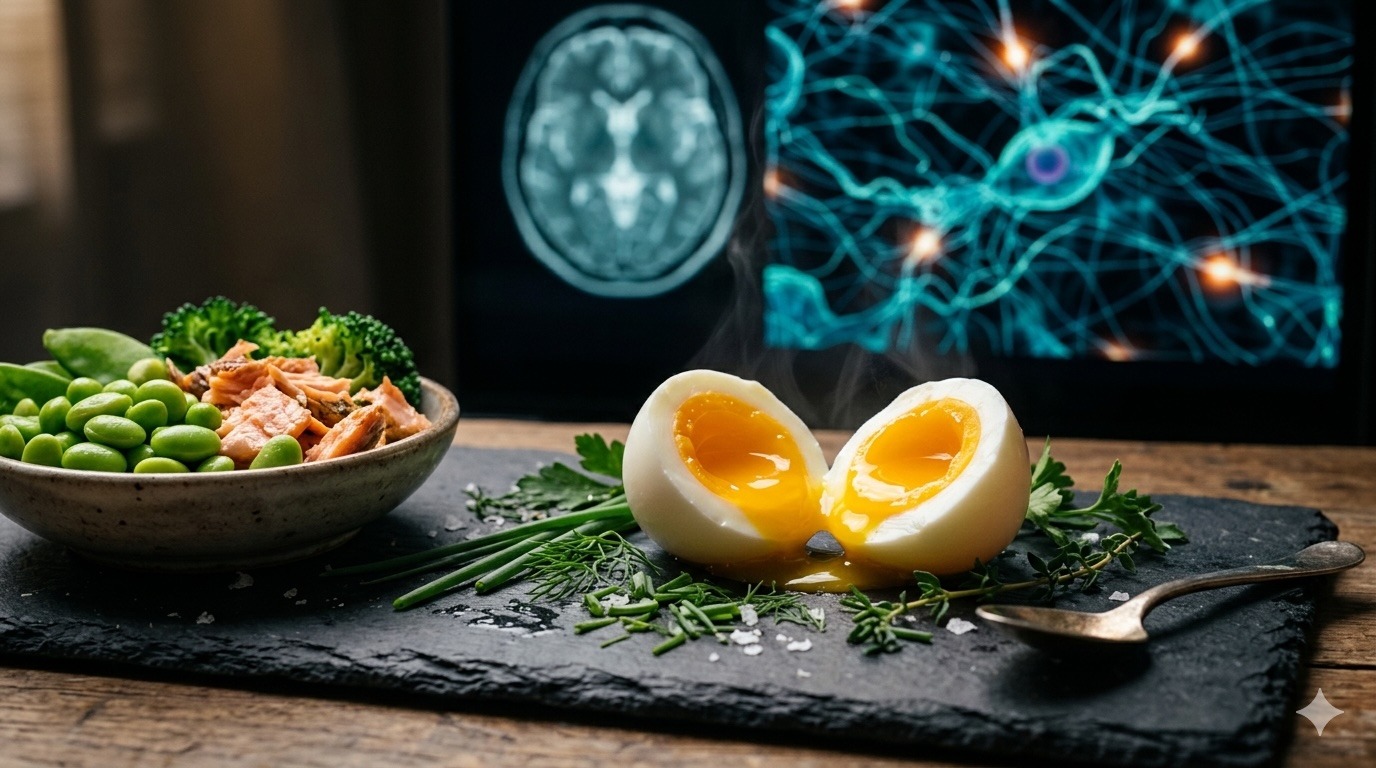
For about four decades, the egg was the villain of the breakfast table.
Doctors warned us off the yolk. Supermarkets stocked egg white cartons. Nutritionists drew little diagrams of clogged arteries. The message was clear: the egg is not your friend, especially not for your heart.
That advice turned out to be far more complicated than the headlines suggested. And now, a major new study from Loma Linda University — one of the world's most respected nutrition research centres, located inside an actual Blue Zone — has given the humble egg a rather extraordinary upgrade.
Eating eggs regularly, specifically five or more times a week, is associated with a 27% lower risk of developing Alzheimer's disease.
That's not a minor footnote. That's one of the largest food-based reductions in Alzheimer's risk ever measured in a long-term population study.
Before we go further — here's a clear 5-minute explainer video that walks through what the research actually says, without the hype:
🎬 Watch: Can One Egg a Week Lower Alzheimer's Risk?
The Study — And Why It's Worth Paying Attention
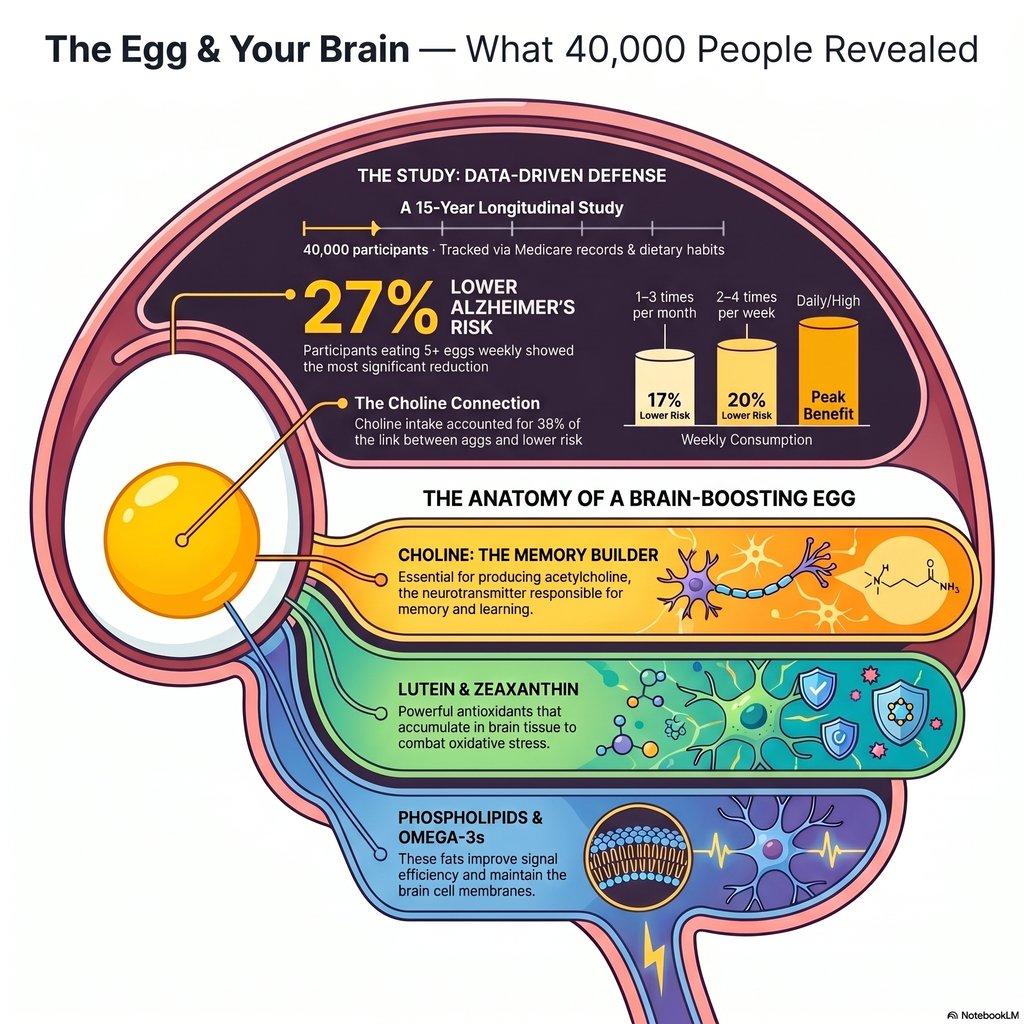
Published in the Journal of Nutrition in May 2026, the research tracked approximately 40,000 participants in the Adventist Health Study 2 cohort — with Alzheimer's diagnoses confirmed through Medicare records — over an average follow-up of 15.3 years. That's not a small weekend trial. That's one of the most rigorous long-term dietary studies ever conducted.
The findings were clear and dose-dependent. The more eggs people ate, the lower their Alzheimer's risk:
1–3 times per month: 17% lower risk
2–4 times per week: 20% lower risk
5+ times per week: 27% lower risk
"Compared to never eating eggs, eating at least five eggs per week can decrease risk of Alzheimer's," said Dr. Joan Sabaté, the study's principal investigator and a professor at Loma Linda University School of Public Health.
And there's an additional data point worth flagging: an earlier 2025 study from Tufts University and the Rush Alzheimer's Disease Center found that eating more than one egg per week was associated with a 47% reduction in Alzheimer's risk. The specific numbers vary across studies — the methodology differs — but the direction is consistent and compelling.
What's Actually Inside the Egg
This isn't magic. It's four very specific nutrients doing four very specific jobs.
Choline — the star of the show. Eggs are one of the richest dietary sources of choline available. A single large egg contains approximately 147mg of choline, mostly concentrated in the yolk. Your brain uses choline to produce acetylcholine — the neurotransmitter most associated with memory, learning, and attention. In the Loma Linda study, dietary choline accounted for 39% of the association between egg eating and lower Alzheimer's risk. That's not a minor player. That's the main mechanism.
Here's the problem: most people are significantly deficient in choline and don't know it. Most multivitamins contain little or none. It's not commonly discussed. And you'd need to eat a staggering amount of broccoli, chicken, or soybeans to match what two eggs give you at breakfast.
Lutein and zeaxanthin — the brain's antioxidants. These carotenoids accumulate directly in brain tissue over time, where they combat oxidative stress and are associated with better cognitive performance. They're the same compounds that protect your eyes from macular degeneration — and it turns out the brain benefits from them just as much as your eyes do.
Omega-3 fatty acids. Especially important for brain cell membrane integrity. Eggs from pasture-raised hens contain meaningfully higher levels of omega-3 than standard eggs — something worth considering when you're shopping.
Phospholipids. The egg yolk is nearly 30% phospholipids, which play a key role in how neurotransmitter receptors function — essentially, how efficiently signals travel across your brain.
The Catch (Because There Always Is One)
The researchers were clear, and fairness demands we say it plainly: this is an observational study. It can show association, not causation. The Adventist Health Study participants — Seventh-day Adventists — also tend to follow healthier diets and lifestyles overall, which may influence the results in ways that are difficult to fully isolate.
"Research supports eggs as part of a healthy diet," said Dr. Jisoo Oh, the study's lead author. "We want people to focus on overall health along with this knowledge about the benefit of eggs."
No single food prevents Alzheimer's. What this research tells us is that eggs, eaten regularly and as part of a generally nutritious diet, appear to be a meaningful and accessible tool in a broader cognitive defence strategy. That's not overselling it. That's just reading the evidence carefully.
A Word on Cholesterol (Since You're Probably Thinking It)
The old concern — that dietary cholesterol in eggs raises blood cholesterol and damages your heart — has been substantially revised by modern research. For most healthy adults, dietary cholesterol has a far smaller impact on blood cholesterol than saturated fat does. Current guidelines from major nutrition bodies have moved away from strict egg limits for people without specific cardiovascular conditions.
If you have existing heart disease, familial hypercholesterolaemia, or have been specifically advised to limit dietary cholesterol by your doctor, the calculus is different and those instructions stand. For everyone else: the egg's rehabilitation is largely complete.
What This Means If You're Over 55
Alzheimer's currently affects around 55 million people worldwide. There is no cure. There is no reliable pharmaceutical prevention. The research into dietary interventions — things you can actually do, at breakfast, today — is therefore worth taking seriously.
The egg is cheap. It's available everywhere from Singapore to Saigon to Santiago. It takes three minutes to prepare. It pairs brilliantly with almost every cuisine in Asia, where egg dishes form the backbone of countless everyday meals.
Protecting your brain is, of course, a multi-front effort. Movement is one of the most powerful tools we have — if you haven't read our guide on staying active in retirement through sport and exercise, it's worth pairing with this. Vascular health matters too — stroke risk and cognitive decline are more closely linked than most people realise, and we unpacked the number one way seniors can prevent a stroke in an earlier piece.
Diet, movement, and stress management don't compete. They compound.
The Bottom Line
The egg has had a long and unfair reputational crisis. The science is now, more clearly than ever, pointing in the other direction — particularly when it comes to brain health.
A study of 40,000 people across 15 years is not a fad. A 27% reduction in Alzheimer's risk is not a rounding error. And for anyone who already eats eggs regularly, already wakes up to a kaya toast and soft-boiled pair, already reaches for them without thinking — this is quietly excellent news.
Eat your eggs. The yolk included.
And if you're thinking about where else to invest in your future — one that includes a sharp mind well into your 70s and 80s — the way you structure your retirement, your food, your movement, and even where you choose to live all contribute to that outcome. The five lifestyle changes most likely to get you there are worth a read alongside this one.
Sources: Oh, J. et al. (2026). Egg Intake and the Incidence of Alzheimer's Disease in the Adventist Health Study-2 Cohort Linked with Medicare Data. The Journal of Nutrition. DOI: 10.1016/j.tjnut.2026.101541. Via ScienceDaily, May 7, 2026. Rush Alzheimer's Disease Center / Tufts University (2024–2025). Association of Egg Intake With Alzheimer's Dementia Risk in Older Adults: The Rush Memory and Aging Project. Journal of Nutrition.
Disclaimer: This article is for informational and educational purposes only and does not constitute medical or nutritional advice. Consult your doctor or dietitian before making significant changes to your diet, especially if you have existing cardiovascular conditions.

Address
Blk 8 Cantonment Close
SIngapore