Visa rules change all the time. Stay legal by checking requirements for Asia's Travel and Retirement Visas. Updated July 2026.
S$3,000 in Singapore vs. Malaysia: Where Does Your Retirement Money Go Further?
$3,000/month: In Singapore, it's basic. In Malaysia, it's luxury. We break down 2025 housing, healthcare, & living costs to see where your retirement funds stretch the farthest.
SINGAPOREMALAYSIA
1/9/20263 min read
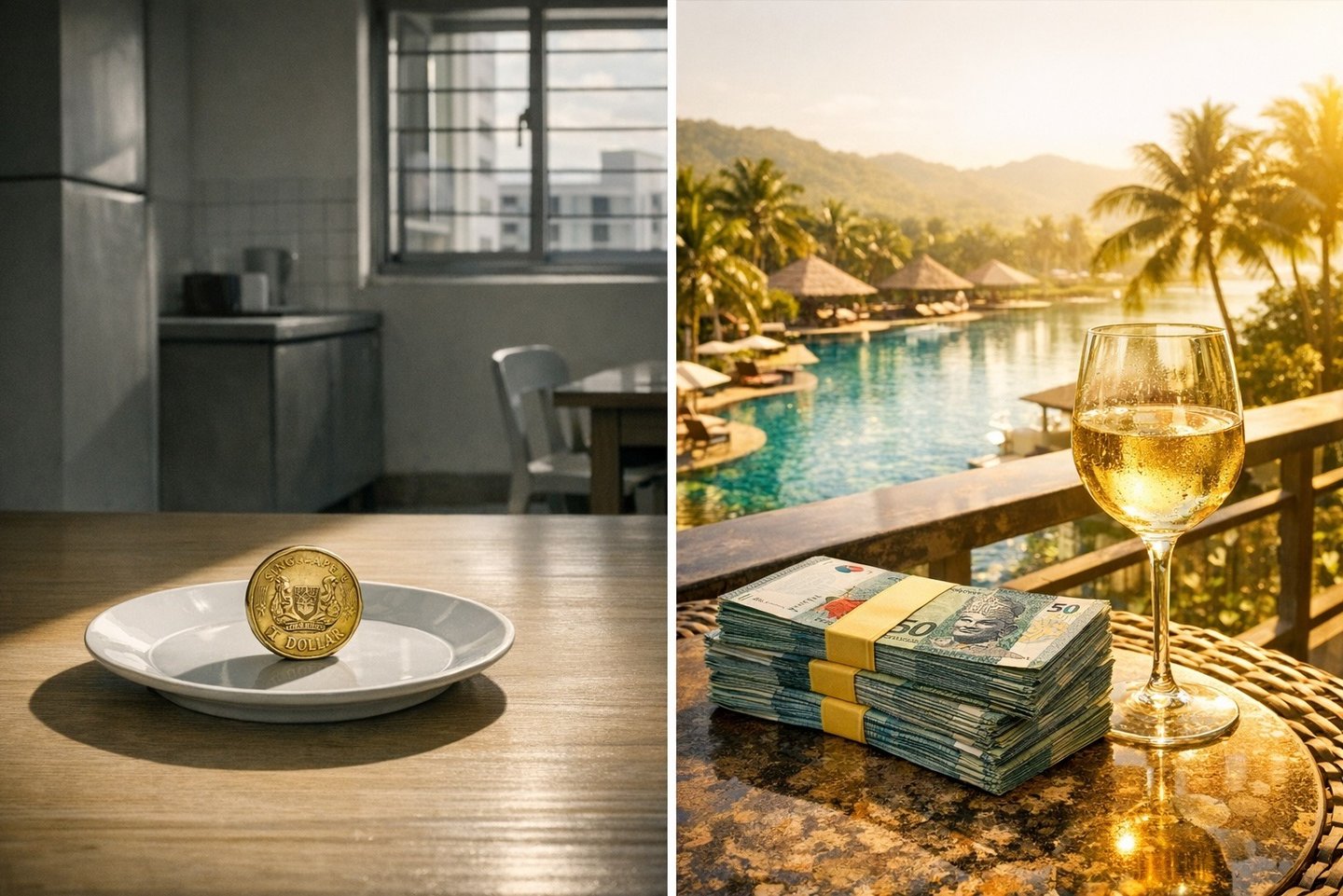
It’s the classic Southeast Asian retirement dilemma. You’ve worked hard your entire life, diligently contributed to your CPF or EPF, and now you’re sitting on a comfortable monthly retirement income—let’s say S$3,000. The question isn't if you can retire, but where you can truly thrive.
Do you stay in Singapore, the world-class city you know and love, or do you head north to Malaysia, a vibrant country promising a drastically lower cost of living? This isn't just about saving money; it’s about stretching your golden years to include travel, hobbies, and peace of mind.
I remember my uncle, Uncle Kian, who decided to retire in Johor Bahru five years ago. He told me, "In Singapore, $3,000 was surviving. In Malaysia, it was living." Let's break down the reality of making that S$3,000 work for you in both countries.
🇸🇬 The Lion City: The Price of World-Class Comfort
Singapore offers unparalleled stability, safety, and a healthcare system often ranked among the best globally. But that quality comes with a price tag. For a retiree with an S$3,000 monthly budget, you will be living modestly, likely relying on public transport and dining at hawker centres.
Housing: This is the budget killer. According to Numbeo (2025 data), the average monthly rent for a one-bedroom apartment outside the city centre in Singapore is around S$2,936. If your budget is S$3,000, rent alone will consume almost your entire payout, forcing you to rely heavily on owning a fully-paid HDB flat.
The Reality Check: An estimated S$3,000 is often cited as the minimum required for a basic monthly expenditure for a single retiree in Singapore, even with government subsidies and CPF LIFE payouts, according to the CPF Board (2022 estimates).
🇲🇾 Malaysia Boleh: The Land of Opportunity
The moment you cross the Causeway into Malaysia, the currency exchange rate ($1 SGD RM3.30 MYR) acts like a retirement turbocharger. Your S$3,000 instantly transforms into approximately RM10,000 per month.
This is where Uncle Kian's story comes to life. That RM10,000 budget in a major city like Kuala Lumpur or Penang buys you significantly more purchasing power.
Singapore vs Malaysia Monthly Expenses
Rent (1-BR, Outside City):
S$2,936 vs RM1,200 - RM1,800 (S$345 - S$515) Malaysia: 70% Cheaper
Utilities & Internet:
S$200 vs RM350 (S$100) Malaysia: 50% Cheaper
Inexpensive Meal (Hawker/Food Court):
S$12.00 vs RM16.00 (S$4.57) Malaysia: 60% Cheaper
The Cost of Living Plus Rent Index shows that the cost of living (including rent) in Singapore is over 202% higher than in Kuala Lumpur, according to Numbeo (2025).
The Non-Negotiable: Healthcare & Lifestyle
This is the key trade-off you must consider:
1. Healthcare Costs
While Singapore's public healthcare is world-renowned and heavily subsidised for citizens, the cost of private healthcare remains very high. Malaysia's private healthcare system is also excellent, often accredited internationally, but dramatically cheaper.
A consultation with a specialist in a Malaysian private hospital can cost as little as RM100 - RM200 ($30 - S$60).
The same consultation in Singapore's private sector could be three to four times higher (Source: Wise, 2025).
For a retiree, this difference is substantial. However, if you have a complex, long-term condition, the integrated structure and government support in Singapore's public system are a major benefit.
2. Lifestyle & Space (生活的空間)
The Malaysian phrase, hidup ini indah, meaning "life is beautiful," often encapsulates the retirement experience there.
With S$3,000, you are likely renting a small apartment in Singapore or maintaining a modest HDB flat. In Malaysia, that same budget allows you to rent a spacious, resort-style condominium, perhaps with a view of the mountains or the sea, or even buy a substantial home (subject to MM2H/visa rules and property price limits). You gain space and a higher degree of luxury.
The Verdict: Two Very Different Retirements
Where S$3,000 (Approx. RM10,500) Gets You
Singapore: Modest/Basic Survival (Only if housing is paid for)
Malaysia: Comfortable to High Quality of Life
Lifestyle
Singapore: Focus on budget, public transport, mainly local food.
Malaysia: Daily comfort, travel budget, spacious home, private healthcare.
Key Advantage:
Singapore: Stability, safety, integrated public healthcare.
Malaysia: Purchasing power, space, low rent, lower costs for leisure/dining.
If your primary goal is to maximize purchasing power and enjoy a comfortable, spacious lifestyle with ample funds left over for travel and hobbies, Malaysia is the clear winner for your S$3,000.
If your priority is zero-stress national stability, familiar surroundings, and highly subsidised, integrated public healthcare, then staying in Singapore is the right choice—provided your housing is already secured.
Ultimately, the choice depends on your personal trade-offs: Stability vs. Spending Power.
Planning your move or just crunching numbers? Share this article with a friend who is also considering an ASEAN retirement, and leave a comment below with your biggest concern—is it rent or healthcare?
Related Links:
How Can I Save Up To 70% on Healthcare with Medical Tourism in Kuala Lumpur?
The Unparalleled Retirement Blend: Malacca History, Nyonya Cuisine & Affordable Expat Life
The Geoarbitrage Advantage: Why Savvy Retirees are Choosing Penang, Malaysia
Johor Bahru (JB), Malaysia - A Little Known Geo-Arbitrate City
Disclaimer: This article is for informational purposes only and does not constitute professional financial, legal, or immigration advice.

Address
Blk 8 Cantonment Close
SIngapore