Visa rules change all the time. Stay legal by checking requirements for Asia's Travel and Retirement Visas. Updated July 2026.
Tea for health? What Are the Real Health Benefits of Chinese Tea? A Complete Guide to Oolong, Green, and Pu-erh
Unlock the proven health benefits of Oolong, Green, and Pu-erh Chinese teas. Learn how each variety boosts metabolism, focus, and heart health, backed by modern science.
HEALTHY RECIPES
12/11/20253 min read
Have you ever found yourself in an Asian grocery store, staring at walls of beautiful, cryptic tins of tea—Pu-erh, Oolong, Green—and wondered, "Am I drinking the right one? Or is this just fancy leaf water?"
For centuries, Chinese tea hasn't just been a beverage; it's been a cornerstone of traditional medicine and a pillar of daily life. While Western science has been catching up, the truth is that your daily cup of Chinese tea is packed with potent compounds. But the benefits aren't one-size-fits-all. A smoky Pu-erh does very different things for your body than a light, floral Oolong.
Forget the general "tea is good for you" advice. Let's dive deep into the real, scientifically-backed benefits of the three titans of the Chinese tea world.
The Trio of Wellness: Green, Oolong, and Pu-erh
All three teas come from the same plant, Camellia sinensis, but it’s the level of oxidation and fermentation that gives them their unique powers.
1. Green Tea: The Metabolism Booster
In China, Green Tea is often unroasted (unlike many Japanese varieties), keeping its profile sharp and fresh. Its minimal processing preserves high levels of catechins, especially Epigallocatechin gallate (EGCG), a powerful antioxidant.
Antioxidant Power: EGCG helps combat oxidative stress and cellular damage.
Metabolic Support: Green tea is a popular choice for weight management. According to a 2025 analysis of tea and anti-obesity research, current studies are zeroing in on tea components' roles in boosting fat oxidation and increasing metabolic rate.
Brain Function: It contains L-Theanine, an amino acid that works synergistically with caffeine to promote "calm focus," reducing the jitters often associated with coffee.
2. Oolong Tea: The Energy & Digestive Regulator
Oolong sits perfectly between unoxidized Green tea and fully oxidized Black (or "Red") tea. This partial oxidation is what creates its complex flavor and its unique health profile, focusing on lipid metabolism.
Boosting Energy Expenditure: Oolong is excellent for people looking for a mild metabolic lift. A study on Japanese females showed that oolong tea consumption significantly increased resting energy expenditure (REE) by up to 10% over a period of 120 minutes, an effect greater than that of green tea (Source: ResearchGate, 2024 analysis).
Fat Oxidation: It’s known to help the body burn fat more effectively. Oolong's polymerized polyphenols are believed to be key players in stimulating fat oxidation.
Happy Tummy: It is traditionally used to aid digestion, particularly after heavy or fatty meals.
3. Pu-erh Tea: The Gut & Heart Health Champion
Pu-erh (Pǔ'ěr) is unique because it's fermented and often aged, sometimes for decades. This process introduces microbes that break down the leaves, creating compounds you won't find in other teas, like Theabrownin and a natural statin called Lovastatin.
Cholesterol Management: Theabrownin, a dark pigment developed during fermentation, has been shown to improve lipid metabolism. A 2025 study highlighted that Pu-erh tea may help reduce 'bad' LDL cholesterol and triglyceride levels in obese animal models, suggesting a protective effect on heart health (Source: EurekAlert!/Beverage Plant Research, 2025).
Gut Health: The fermentation process creates a beneficial environment for gut microbiota. Pu-erh can help to alleviate dyslipidemia and improve intestinal barrier damage, making it a great daily brew for a healthier digestive tract.
Your Simple Guide to Maximum Benefit
Choosing the right tea is easy once you know your goal:
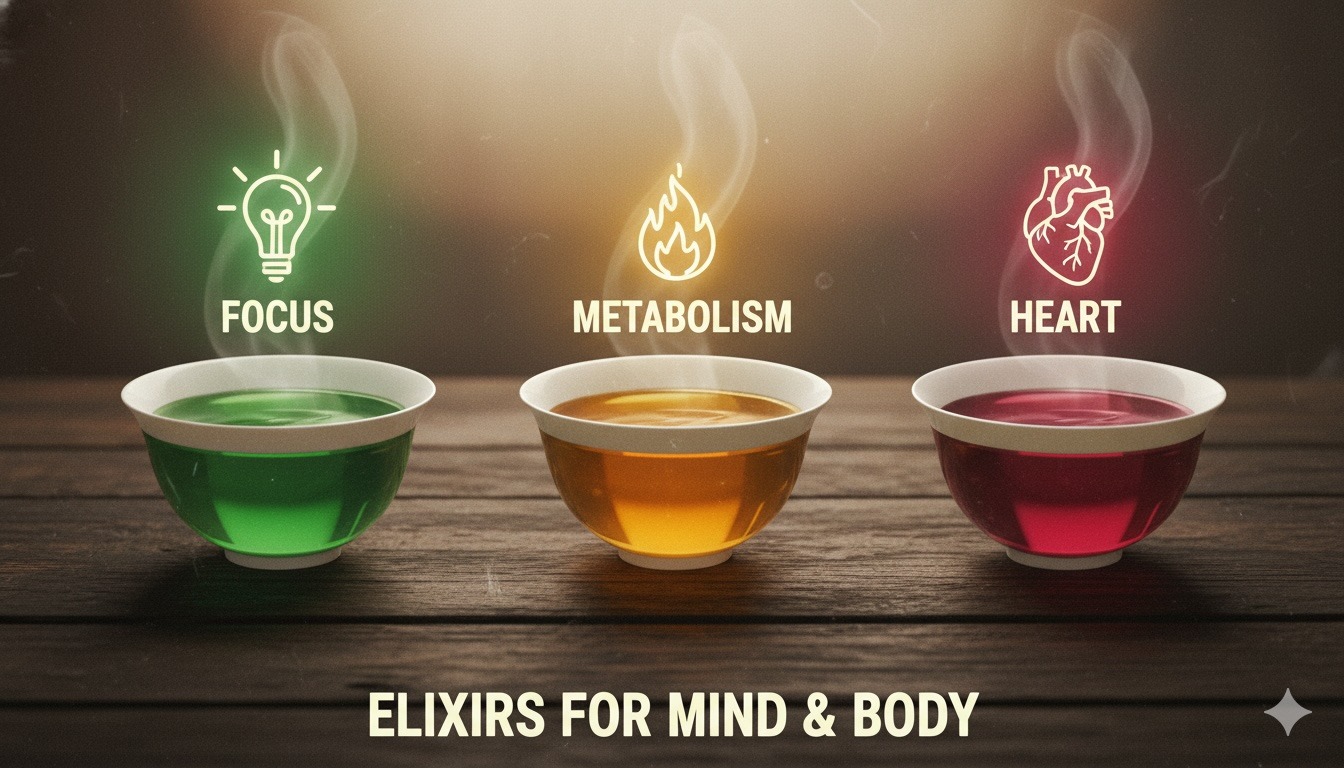
Need Focus and Antioxidants? Go for a light Green Tea.
Want a Post-Meal Digestive Aid? Brew a semi-oxidized Oolong Tea.
Looking for Heart & Gut Support? Sip on a dark, earthy Pu-erh Tea.
A Quick Story: I remember when my Laolao (grandmother) insisted on Pu-erh every night. As a kid, I thought it tasted like dirt! But she never had a single digestive issue. Now, science is proving what she knew instinctively: that the aged, fermented brew was regulating her internal system long before 'gut health' was a buzzword. It's a testament to the wisdom in these ancient leaves.
Start your journey with these incredible Chinese teas and feel the difference that hundreds of years of tradition—backed by modern science—can make.
Which of these three teas is already in your cabinet? Share your favorite type of Chinese tea and how it makes you feel!
Disclaimer: This article is for informational purposes only and does not constitute professional advice. Consult with a qualified healthcare provider for any health concerns.

Address
Blk 8 Cantonment Close
SIngapore