Visa rules change all the time. Stay legal by checking requirements for Asia's Travel and Retirement Visas. Updated July 2026.
The Anti-Aging Powerhouse: 5 Proven Ways Blueberries Boost Heart & Brain Health for the Elderly
Discover the science behind blueberries as a superfood. Learn how anthocyanins fight cognitive decline, lower blood pressure, and reduce chronic inflammation in seniors.
HEALTHY RECIPES
3/3/20263 min read
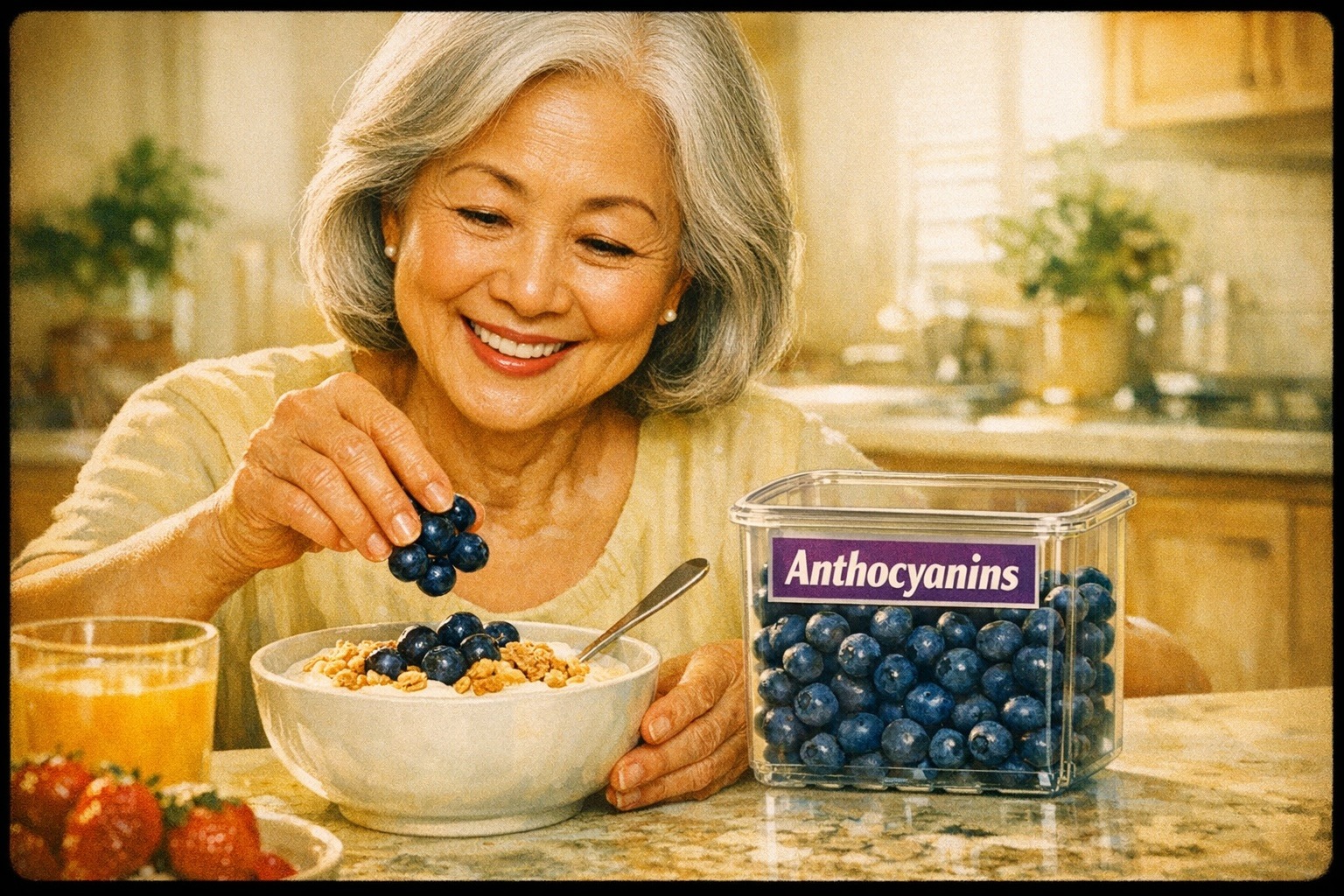

The search for the "fountain of youth" often leads to exotic, expensive supplements. But the truth is, one of the most powerful anti-aging tools is found right in your freezer aisle: the humble blueberry.
For seniors, the biggest health threats are often grouped into what scientists call the "Big Three" of aging: chronic inflammation, cardiovascular disease (CVD), and cognitive decline.
Decades of research have confirmed that blueberries are not just a healthy snack; they are a bioactive powerhouse, capable of influencing the core mechanisms of aging. The secret lies in their deep blue pigment.
Here is a scientific breakdown of how regular blueberry consumption can help you fight the Big Three and support a longer, healthier life.
The Active Ingredient: Anthocyanins
The vibrant blue and purple colour of blueberries comes from anthocyanins, a group of potent polyphenol antioxidants. Unlike many other nutrients, anthocyanins are highly effective at crossing the blood-brain barrier and influencing key biological processes related to aging.
1. Fighting Cognitive Decline (The Brain Booster)
Cognitive decline, often characterized by memory loss, slower processing speed, and decreased executive function, is a major concern in the golden years. Blueberries offer direct neuroprotection.
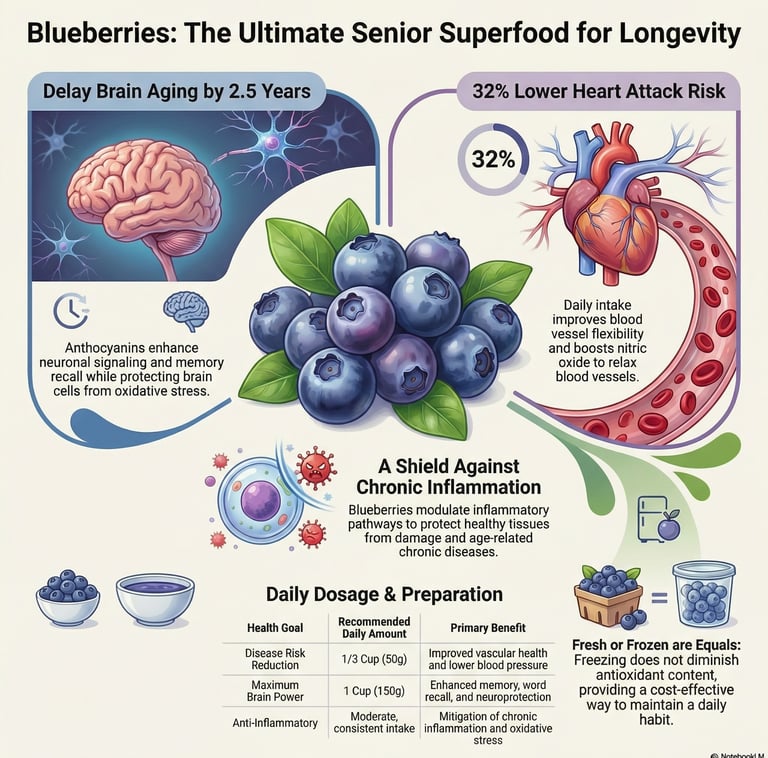
How They Work: Anthocyanins work to neutralize free radicals and reduce oxidative stress, which accelerates the brain's aging process and damages neural cells. They also enhance neuronal signaling in brain regions critical for memory, particularly the hippocampus.
The Evidence:
Studies have shown that regular blueberry consumption can improve memory and word recall in older adults with early memory changes (Krikorian et al., 2010).
Long-term epidemiological studies suggest that a higher intake of blueberries may delay cognitive aging by up to 2.5 years in the elderly (Devore et al., 2012).
The Key Takeaway: Blueberries don't just protect the brain; they actively enhance blood flow and improve communication between brain cells.
2. Fighting Heart Disease (The Vascular Protector)
Cardiovascular disease remains the leading cause of death globally. Blueberries directly address several major risk factors for heart attack and stroke.
How They Work: Blueberries enhance endothelial function—the ability of blood vessels to dilate (open up) and improve blood flow. They boost the production of nitric oxide (NO), a molecule that tells blood vessels to relax, reducing stiffness.
The Evidence:
Higher anthocyanin intake is associated with a reduced risk of coronary artery disease and a 32% lower rate of myocardial infarction (heart attack) (Epidemiological Studies, 2020).
Clinical trials show that daily blueberry intake can lead to a significant reduction in systolic blood pressure, a major risk factor for CVD, and improve overall blood vessel flexibility (Rodriguez-Mateos et al., 2023).
The Key Takeaway: Regular blueberry consumption acts like a tune-up for your entire vascular system, helping to keep blood pressure low and blood flow optimal.
3. Fighting Chronic Inflammation (The Anti-Aging Agent)
Chronic, low-grade inflammation is not always obvious, but it is the silent driver behind almost all age-related chronic diseases, including diabetes, arthritis, and neurodegeneration.
How They Work: Blueberries possess powerful anti-inflammatory properties, modulating the pathways (like NF-κB) that trigger inflammatory responses. By mitigating this chronic inflammation, they protect healthy tissues from damage.
The Evidence: Blueberry polyphenols actively help the body mitigate oxidative stress and inflammation, which are closely linked to the development of chronic conditions, including Type 2 Diabetes and specific cancers (Frontiers in Nutrition, 2024). They also influence the gut microbiome, which further aids in metabolic and immune regulation.
The Key Takeaway: By tackling inflammation at the cellular level, blueberries contribute to greater cellular resilience and overall longevity.
The Dose Matters: How to Get Your Daily Benefit
The good news is that you don't need excessive amounts to see an effect. Studies show that even moderate, consistent intake provides health benefits.
The Recommended Dose: Epidemiological studies link the intake of approximately one-third cup (around 50g) of blueberries daily with significant disease risk reduction.
For Maximum Brain Benefit: Some clinical trials linking blueberries to cognitive improvements have used the equivalent of one full cup (150g) of fresh blueberries per day.
Fresh or Frozen? Both are excellent! Freezing blueberries does not significantly diminish their anthocyanin content, making frozen blueberries a cost-effective and convenient daily choice.
Simple Ways Seniors Can Incorporate Blueberries
Breakfast Booster: Stir a half-cup of frozen blueberries into your morning oatmeal or Greek yogurt.
Smoothie Power: Blend frozen blueberries with banana, spinach, and milk/water for a quick, nutrient-dense meal replacement.
Simple Snack: Eat a small handful of fresh blueberries on their own as a powerful mid-morning or afternoon brain tonic.
Are you ready to make blueberries a daily habit? Share your favorite way to incorporate them into your routine (e.g., in a smoothie, yogurt, or by the handful)
Disclaimer: This article is for informational purposes only and does not constitute medical advice. While blueberries offer powerful health benefits, consult with your doctor or a registered dietitian regarding your specific diet and health management plan.

Address
Blk 8 Cantonment Close
SIngapore