Visa rules change all the time. Stay legal by checking requirements for Asia's Travel and Retirement Visas. Updated July 2026.
What Does Durian Really Taste Like? (And How to Try It for the First Time)
Durian is known for its infamous smell, but what about the taste? Uncover the complex, creamy, and controversial flavor of the King of Fruits and get a beginner's guide on how to try it successfully.
TRAVELFOOD
12/17/20254 min read
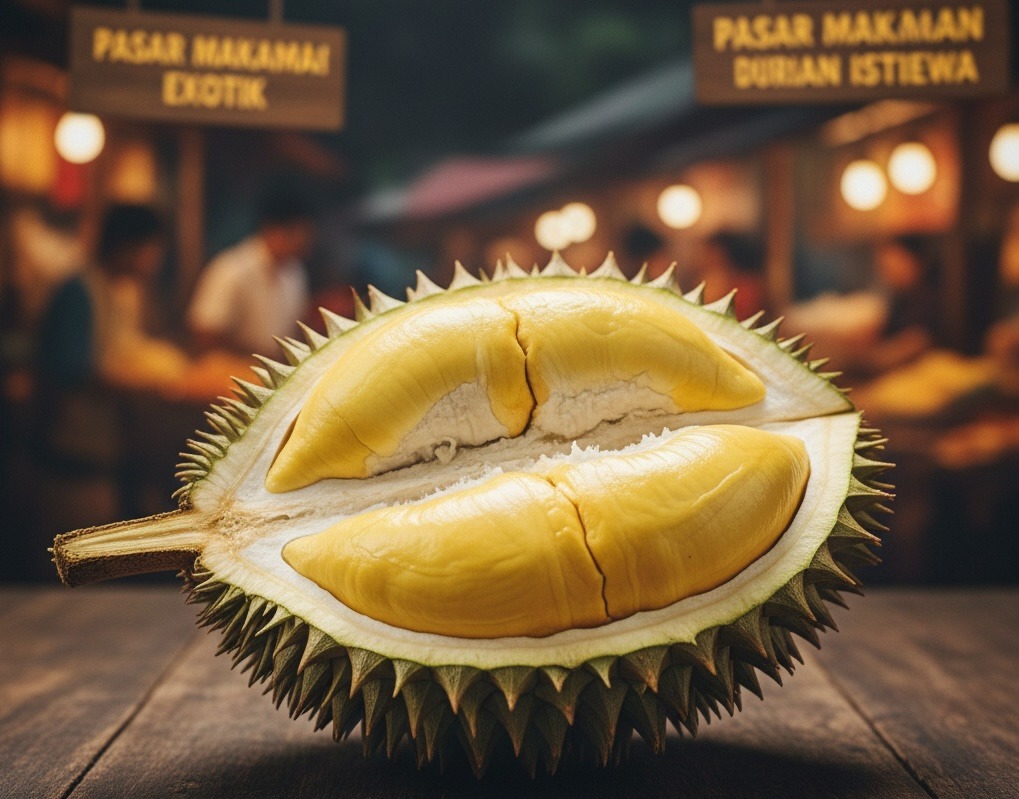
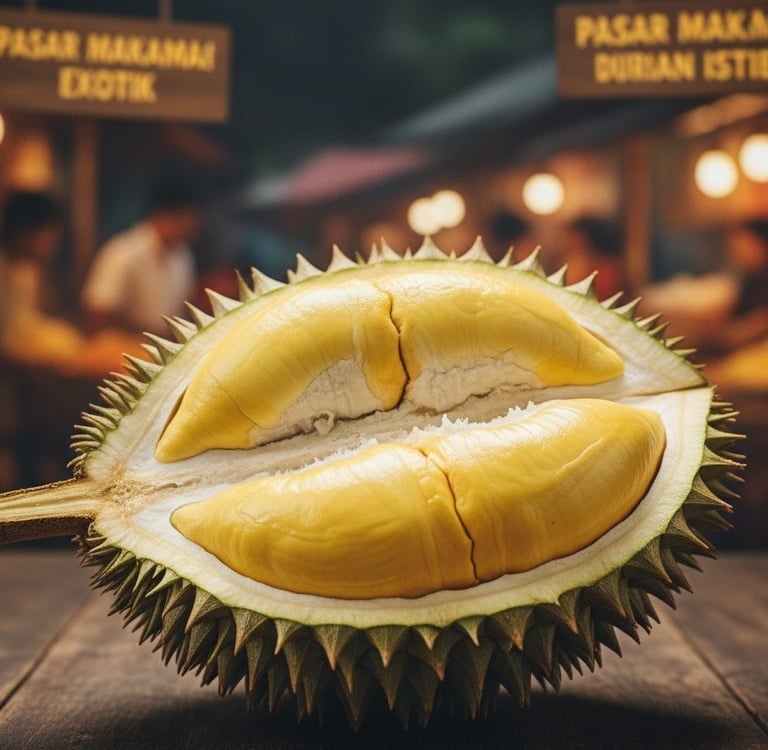
It's durian season in Singapore and Malaysia! This is the time to gorge yourself silly if you are local as prices are lower than usual. This season is expected to last for couple of months and than you will need to wait for half a year before the next durian season..
If you've spent any time traveling through Southeast Asia, you’ve heard the whispers, seen the signs, and probably—definitely—smelled the culprit. We’re talking about the Durian, the massive, spiky, and utterly polarizing King of Fruits.
For a first-timer, the experience is a gauntlet. You step off the metro in Singapore and see a sign that reads: “No Durians Allowed.” Your friend describes it as “heavenly custard,” while an internet article calls it “vomit-flavored custard.” What on earth is waiting for you inside that intimidating, armored shell?
Forget the conflicting reviews for a moment. This article is your guide to getting past the hype (and the smell) to genuinely understand what this fruit tastes like, and more importantly, how to take your first successful bite.
There are 2 durian seasons; first one is June-August and second one is Nov-Dec in Malaysia and Singapore. That means right now! You will find both pop-up stalls and durian cafes having a busy time especially towards late afternoon to evening. Visit Malaysia for a taste of the King of Fruits!
The Smell vs. The Sensation: Why the Divide?
The number one hurdle isn't the taste—it's the aroma. The durian's smell is so powerful because of its unique profile of volatile sulfur compounds, including ethanethiol, which can be detected miles away. This is why it's banned in public spaces like hotels, public transport, malls, hospitals across Singapore, Malaysia, and Thailand.
But here’s the trick: the smell is not the taste.
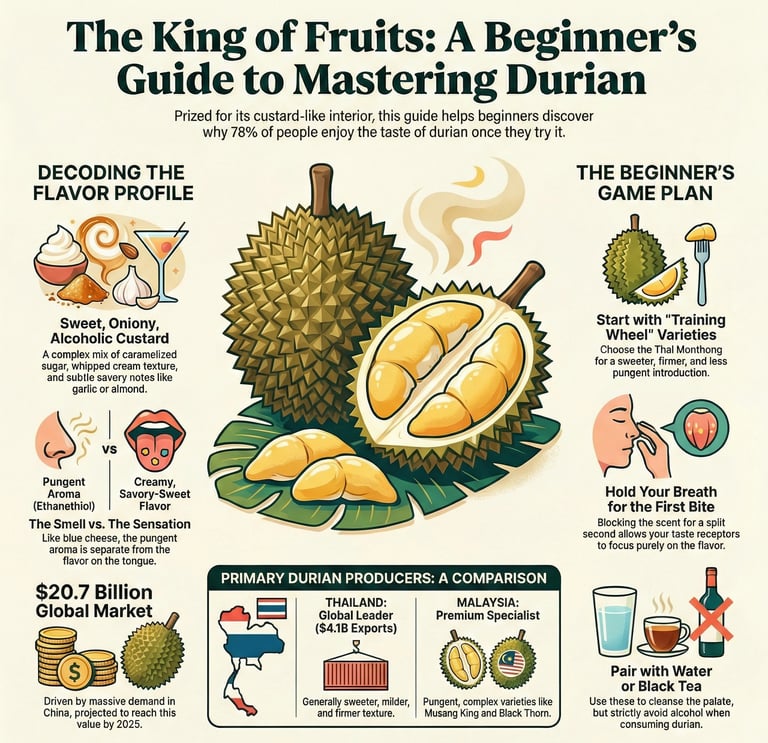
Think of a strong blue cheese. The aroma might be pungent and feet-like, but the taste is salty, complex, and deeply savory. Durian works the same way. The overpowering "onion/sewer" smell hits your nose first, but when the creamy flesh touches your tongue, your taste receptors focus on the flavor compounds, not just the odor.
👅 The Unofficial Tasting Notes: What You Will Taste
The flavor of durian is less like a fruit and more like a savory, alcoholic dessert. It’s an incredibly rich experience that coats your mouth, delivering a complex profile that changes as you chew.
Taste profile and what you should be looking out for:
Sweetness Caramelized Sugar, Rich Honey. Present in almost all varieties of durians (Monthong, D13).
Texture Ultra-thick Custard or Whipped Cream. Ranges from firm/buttery (Musang King) to wet/gooey (XO).
Savory/Umami Subtle Garlic, Fermented Onions, Nutty Almond. The controversial layer that makes it polarizing.
Bitterness/Alcohol Dry Sherry, Cognac, Coffee. A desirable trait in premium, older-tree varieties.
The best description? Imagine a sweet, oniony, alcoholic almond custard. It's a flavor bomb that is sweet and creamy on the inhale, and savory or bittersweet on the exhale.
📊 The Global Obsession is Real (and Growing)
Despite the controversial smell, the global appetite for durian is booming.
The global durian fruit market is expected to reach $20.7 billion in 2025, driven largely by demand in China, according to a 2025 analysis by Fact.MR.
Thailand alone secured over $4.1 billion in fresh durian export value in 2023, showcasing its dominance in the market (Tridge, 2024).
A 2023 study by the University of Singapore showed that while 63% of Western participants initially found the aroma off-putting, 78% enjoyed the taste after actually trying it (Alibaba Spices research).5
The secret is out: it’s not just a stinky fruit; it’s a global commodity!
🥇 Your First Durian: A Beginner’s Game Plan
Don't dive straight into the most pungent variety, the revered Musang King (貓山王) Start with a "training wheel" durian.
Choose the Right Variety: Ask for a milder, sweeter type. Monthong (Golden Pillow) from Thailand is widely available, sweeter, less pungent, and has a firmer, less mushy texture—perfect for beginners. Red Prawn (Udang Merah) is also a great option, known for its milder, jelly-like texture and sweet flavor.
Go Frozen (If Necessary): If you are outside Asia, you’ll likely find frozen durian pulp. Freezing subtly mutes the more offensive sulfur compounds and gives the fruit an ice-cream-like texture. It’s a less intense starting point.
Hold Your Breath (The First Second): Seriously. Take your piece, bring it to your mouth, and hold your breath for the fraction of a second until it hits your tongue. Once the flavor takes over, the olfactory (smell) receptors often become secondary.
Pair It Right: Eat it with a piece of plain, room-temperature water or a sip of unsweetened black tea afterward to cleanse the palate. Avoid alcohol, as traditional Asian wisdom (and science) suggests it doesn't mix well with durian.
The best durians come from Malaysia; especially their top varieties including Musang King, Black Thorn and XO. Thailand also produce a great variety of durian but in my taste profile, not as good as the Malaysian varieties. I invite you to try a durian, if you have never tasted one before. Hold back the prejudice, do not spit it out straightaway. Take a small bite... and you will find yourself taking the next... and the next! Exactly like Cheese!
Find out whether fruits is a source of nutrient - or not!
Ready to try the King of Fruits? Are you a durian lover or a hater? Share your first bite story below!
Disclaimer: This article is for informational purposes only and does not constitute professional advice.

Address
Blk 8 Cantonment Close
SIngapore