Visa rules change all the time. Stay legal by checking requirements for Asia's Travel and Retirement Visas. Updated July 2026.
What is the spiritual significance of fasting during Ramadan 2026?
Discover the deep spiritual meaning of the Ramadan 2026 fast. Learn about Taqwa, the "Soul Detox," and how $2.1B in Zakat is changing lives this year.
FESTIVALS
2/25/20267 min read
Imagine going from sunrise to sunset — no food, no water, no coffee — and doing it every day for a whole month. For nearly two billion Muslims around the world, this is Ramadan. But here's what surprises most newcomers: the people doing it aren't miserable. Many describe it as the most meaningful, peaceful month of their entire year. So what's really going on?
First Things First: Why Do Muslims Fast?
Fasting during Ramadan is not a diet. It is not a punishment. It is one of the Five Pillars of Islam — the five core practices that form the foundation of a Muslim's faith — and it is considered a profound act of worship and devotion to God (Allah).
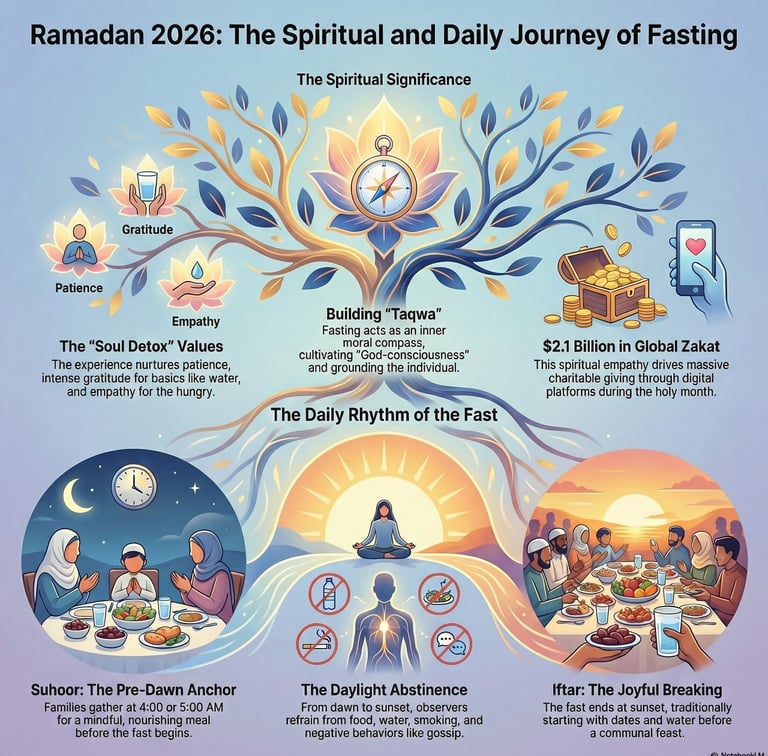
The Arabic word for fasting is Sawm, and its primary purpose is to build what Muslims call Taqwa — a beautiful concept that roughly translates to "God-consciousness." Think of it as an inner moral compass, a quiet internal voice that keeps you honest and grounded even when nobody is watching. In a world full of noise, notifications, and constant distraction, Ramadan is essentially a month-long exercise in tuning all of that out and reconnecting with what truly matters.
The Quran itself says that fasting has been prescribed so that believers "may attain Taqwa." In other words, the hunger is not the point — it is simply the vehicle.
What Exactly Does Fasting Involve?
For the entire month of Ramadan, observing Muslims abstain from the following from the first light of dawn until the sun sets each evening: eating or drinking anything (including water), smoking, and engaging in negative behaviours such as gossip, harsh language, or anger.
That last part often surprises people. Ramadan fasting is not just about the stomach — it is about the whole person. Refraining from unkind words is considered just as important as refraining from food.
What Muslims CAN do during fasting hours: work, study, exercise lightly, pray, read the Quran, and go about normal daily life. Most people do exactly that, though energy levels naturally dip in the afternoon.
The Daily Rhythm: Suhoor and Iftar
A fasting day follows a beautiful, structured rhythm that anchors the entire month.
Suhoor is the pre-dawn meal eaten before the fast begins, usually in the very early hours of the morning — sometimes as early as 4:00 or 5:00 AM. It is a quiet, still moment. Families gather in the dark, share a nourishing meal, and prepare themselves spiritually for the day ahead. There is something genuinely moving about this ritual — the world is silent, phones are down, and the focus is entirely on the day ahead.
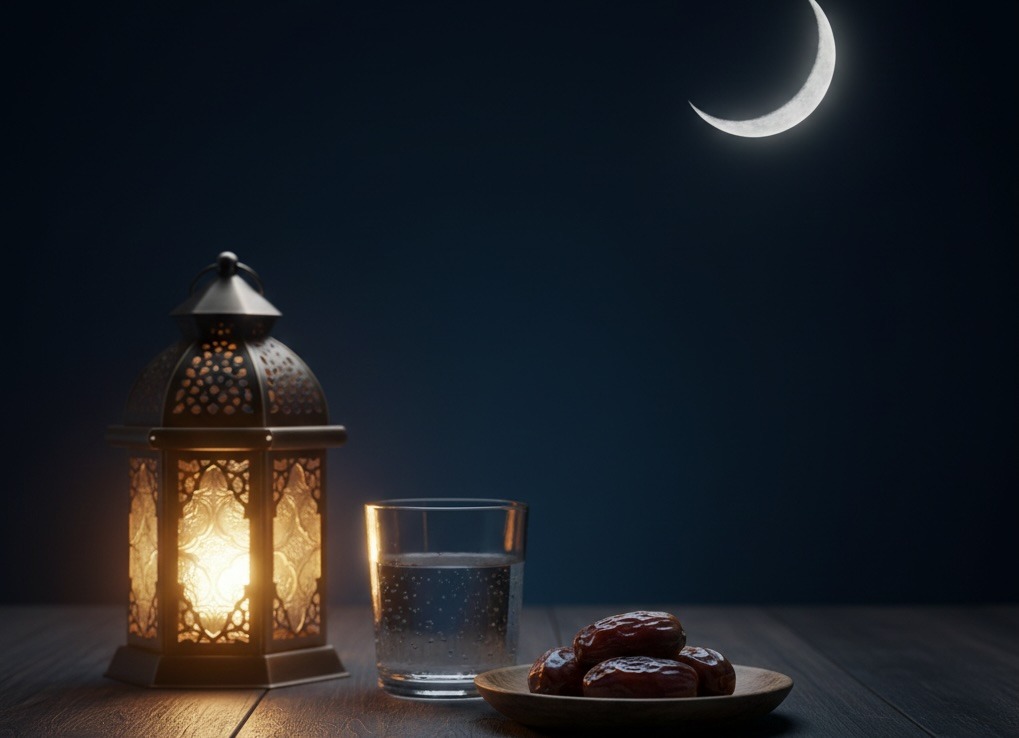
Iftar is the meal that breaks the fast at sunset — and it is one of the most joyful moments of the Muslim day. Traditionally, the fast is broken first with a date and a glass of water, following the practice of the Prophet Muhammad. Then comes the main meal, which varies enormously by culture and country but is almost always a generous, communal spread shared with family and friends.
That first sip of water at Iftar? Muslims often describe it as nothing short of a spiritual epiphany. It turns something as ordinary as a glass of water into a moment of deep gratitude.
The Deeper Values Fasting Builds
Beyond the physical act, fasting during Ramadan is really a month-long character-building exercise. Here are the core values it nurtures:
Patience is perhaps the most immediate lesson. When hunger and thirst set in during the afternoon, the only option is to breathe through it. Over 30 days, this builds a remarkable capacity for calm under pressure.
Gratitude follows naturally. When you cannot eat or drink for 12 to 16 hours, the first bite of food at Iftar becomes extraordinary. Things we take completely for granted — clean water, a warm meal, a full table — suddenly feel like genuine gifts.
Empathy is where fasting becomes something bigger than the individual. By experiencing hunger voluntarily, Muslims are reminded viscerally of those for whom hunger is not a choice. This is why Ramadan is also the most generous month of the year — charitable giving surges dramatically, with digital Zakat (obligatory charity) platforms facilitating billions of dollars in donations during the month globally.
Self-discipline of speech is the lesser-known dimension. Many Muslims make a conscious effort during Ramadan to avoid complaining, gossiping, or speaking harshly — not just to those around them, but in their internal self-talk too.
How Do Muslims Actually Cope With It?
This is one of the most common questions non-Muslims ask — and honestly, it is a fair one. The answer is: better than you might expect, and here is why.
The body adapts relatively quickly to the new eating schedule, particularly when Suhoor is eaten mindfully with slow-releasing foods like oats, eggs, whole grains, and plenty of water. Experienced fasters know that a well-planned Suhoor makes an enormous difference.
Most Muslims also find that the spiritual momentum of the month carries them through the difficult hours. Knowing that over a billion people around the world are doing the same thing simultaneously — and that there is a deep purpose behind the discomfort — makes the hunger feel meaningful rather than merely miserable.
The social support structure helps enormously too. Iftar is rarely eaten alone. Whether it is a family table, a mosque community meal, or a gathering of friends, breaking fast together transforms what could be a gruelling individual experience into something warm and collective.
That said, the 3:00 to 5:00 PM window is genuinely the hardest stretch for most people. Energy is low, focus can waver, and patience is thinner. A little extra grace from colleagues and friends during those hours goes a very long way.
Where in Asia Is Ramadan Celebrated?
Asia is home to the overwhelming majority of the world's Muslim population, and Ramadan looks and feels a little different depending on where you are.
In Southeast Asia, Ramadan takes on a festive, deeply communal character. Singapore's Geylang Serai and Kampong Gelam neighbourhoods transform into glowing night bazaars, packed with food stalls, families, and an electric sense of community.
Indonesia, the world's most populous Muslim-majority country, has the beloved tradition of Ngabuburit — spending the late afternoon at local markets browsing Takjil (snacks and drinks for Iftar) while waiting for sunset.
Malaysia similarly erupts into Ramadan bazaars in every city, filled with the aromas of grilled fish, traditional cakes, and pulled tea.
In South Asia, the mood is more quietly devotional. Pakistan and Bangladesh fill their mosques for Tarawih — special extended night prayers unique to Ramadan — and the call to prayer at Iftar time carries across cities in a way that is genuinely moving even for visitors of other faiths.
In Central Asia — Kazakhstan, Uzbekistan, Kyrgyzstan — Ramadan blends Islamic tradition with rich local culture, and community Iftar meals are central to the month's spirit.
How to Support a Friend or Colleague Who Is Fasting
If someone in your workplace or social circle is observing Ramadan, a few small gestures make a real difference.
Be mindful but not awkward about it. You do not need to hide your lunch or apologise for eating near someone who is fasting — most experienced Muslims are completely used to it and will actively encourage you not to worry. However, eating directly in front of someone during the 3:00–5:00 PM slump, when hunger peaks, is worth being a little considerate about if you can.
Don't schedule demanding meetings or deadlines in the late afternoon if you can avoid it. Cognitive load is genuinely higher during fasting hours, and showing flexibility is a sign of respect.
Ask, don't assume. Some Muslims may have exemptions from fasting due to health conditions, travel, or pregnancy — Islamic law makes thoughtful provisions for all of these. Never make someone feel they need to explain their personal religious practice to you.
A simple acknowledgement goes a long way. Saying Ramadan Mubarak (Blessed Ramadan) or Ramadan Kareem (Generous Ramadan) to a Muslim colleague is a warm, respectful gesture that will genuinely be appreciated.
You've Been Invited to an Iftar Dinner — What Do You Do?
Being invited to break fast with a Muslim friend or family is one of the most generous invitations you can receive. Here is how to make the most of it.
Accept enthusiastically. An Iftar invitation is an act of genuine hospitality and openness. Saying yes is itself a gesture of respect and friendship.
Arrive on time — or slightly early. The timing of Iftar is fixed by sunset, so the meal begins at a specific moment. Arriving after the fast has been broken means missing the most significant part of the experience.
Follow the lead of your host. The meal will typically begin with dates and water. Wait for your host to begin before eating. This is not just etiquette — it honours the ritual significance of that first moment of breaking fast.
Expect generosity on a grand scale. Iftar tables are almost universally abundant. Do not be shy — eating well is considered a blessing, and your enjoyment of the food is a genuine compliment to your host.
Dress modestly. Particularly if the Iftar is held at a mosque or in a more conservative household, covering shoulders and knees shows respect for the occasion.
Be present. Put your phone away. Iftar is a moment of real connection — conversations tend to be warm, reflective, and meaningful. Lean into it.
You may wish to avoid alcohol. This will not be served at most Iftar gatherings, and arriving having drunk alcohol beforehand may feel disrespectful in more traditional settings. Use your judgement based on what you know of your host.
After the meal, your host may excuse themselves briefly for the evening prayer (Maghrib). This is normal and expected — simply wait comfortably and enjoy the occasion.
A Final Thought
Ramadan is often described from the outside as a month of restriction. From the inside, Muslims consistently describe it as a month of freedom — freedom from distraction, from overconsumption, and from the noise of ordinary life. It is, as one writer put it beautifully, less about emptying the stomach and more about making room for the soul.
Whether you are fasting yourself for the first time, supporting a loved one through the month, or simply sitting down to your first Iftar dinner as a guest — you are participating in something that connects nearly two billion people across the globe. That is worth showing up for, with curiosity, respect, and an empty stomach.
Ramadan Mubarak.
Disclaimer: This article is for informational purposes only and does not constitute professional advice.


Address
Blk 8 Cantonment Close
SIngapore