Visa rules change all the time. Stay legal by checking requirements for Asia's Travel and Retirement Visas. Updated July 2026.
Why is the Family Reunion Dinner (年夜饭) the Most Important Night of Chinese New Year?
Discover why billions travel for the Reunion Dinner (Nian Ye Fan). We explore the symbolism, the 9-billion trip Chunyun migration, and modern CNY traditions.
CHINAFESTIVALS
1/29/20265 min read
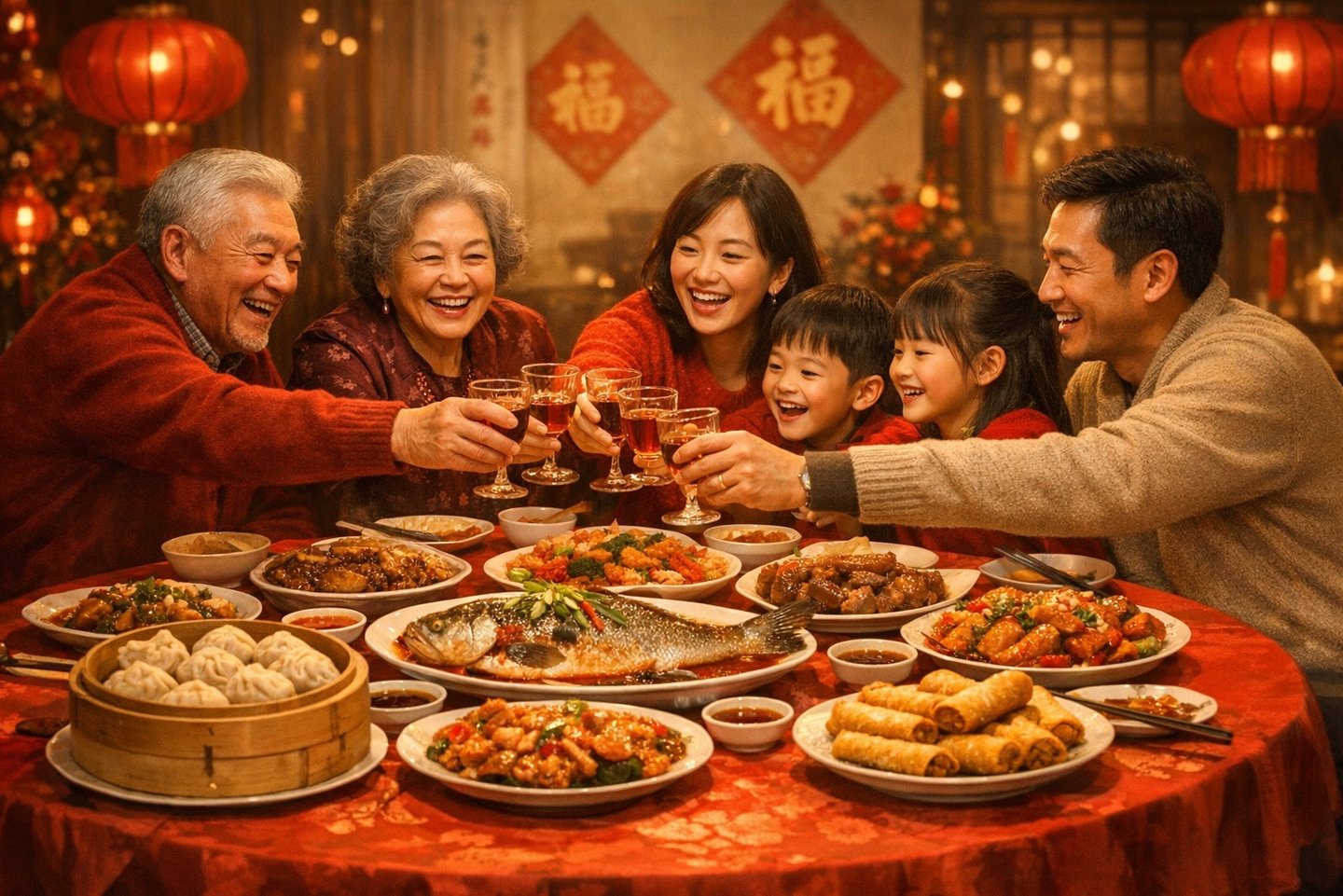
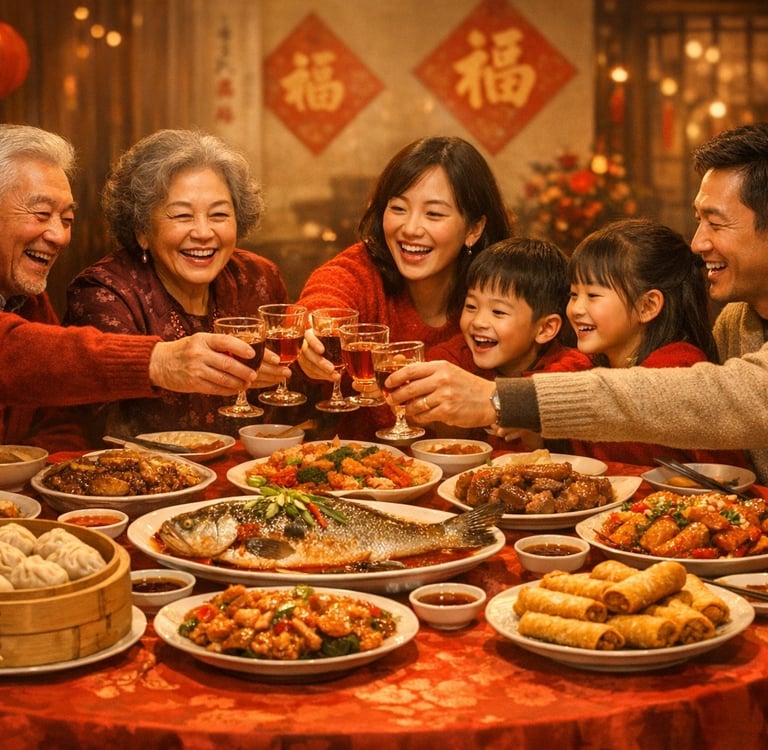
Yup. It's the time of the year again for the great human migratory journey.
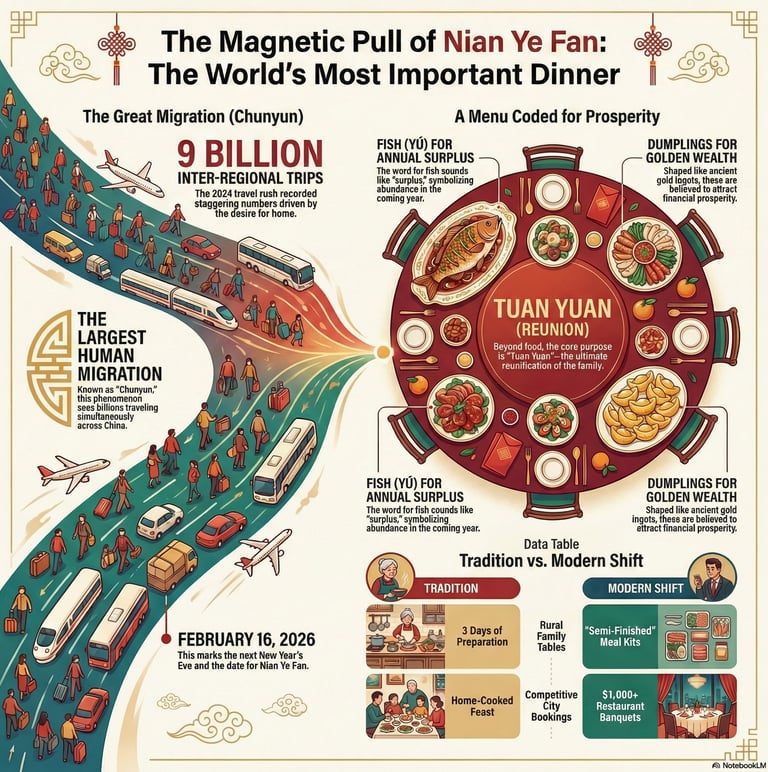
Imagine the entire human population of Earth deciding to pack their bags and travel at the exact same time. It sounds like the plot of a sci-fi movie, but in China, it’s just called the annual trip home. This is Chunyun (春运)—the Spring Festival travel rush—and it is the largest annual human migration on the planet.
Why do billions of people endure crowded trains, jammed highways, and sky-high ticket prices to travel thousands of miles? They aren't going on vacation. They are racing home for one specific meal: the Family Reunion Dinner, or Nian Ye Fan (年夜饭).
More Than Just a Meal. In the West, Christmas dinner is important, but the Reunion Dinner carries a weight that is almost spiritual. Occurring on New Year's Eve (which falls on February 16 in 2026), it is the anchor of the entire 15-day festival. It represents the closure of the past year and the welcoming of the new one, but most importantly, it reaffirms the unity of the family clan.
For many Chinese workers who live in bustling cities far from their rural hometowns, this dinner might be the only time in the entire year they see their parents or children. The empty seat at the table is not just a missed RSVP; it is a rupture in the family circle.
No matter the distance, be it across the country or across the globe, every Chinese will do their best to return home. Shops will close, factories shut, schools closed as every one will be on their way home one week before CNY. Only critical services like the Police, hospitals, utility companies and services will continue to operate
The Menu: A Code for Prosperity You won’t find random dishes on a Reunion Dinner table. Every plate is a delicious edible code designed to manifest luck for the coming year.
Fish (鱼 - Yú): This is the VIP of the table. The word for "fish" sounds exactly like the word for "surplus" (余). The head and tail are often left intact to symbolize a good start and finish to the year. Pro tip: Don't flip the fish! It's superstitiously linked to capsizing a boat.
Dumplings (饺子 - Jiǎozi): Shaped like ancient gold ingots, these are legendary wealth magnets. Legend has it that the more dumplings you eat, the more money you’ll make in the New Year.
Spring Rolls (春卷 - Chūnjuǎn): Fried to a golden crisp, these resemble gold bars. (Are you sensing a theme here? It’s all about prosperity!)
The 9 Billion Trip Phenomenon The commitment to this dinner drives staggering numbers. According to official data reported by Xinhua in 2024, the travel rush saw a record-breaking 9 billion inter-regional trips across China. That is a testament to the magnetic pull of the Nian Ye Fan. Even with the rise of high-speed rail and better infrastructure, the sheer volume of humanity moving toward their family tables is a logistical miracle.
Modern Shifts: From Home-Cooked to Haute Cuisine While the sentiment remains ancient, the execution is modernizing. The days of spending three days prepping ingredients are fading for younger, urban generations.
The "Semi-Finished" Boom: Pre-made meal kits for Reunion Dinners have exploded in popularity, allowing families to steam a luxury fish dish in 15 minutes rather than hours.
Dining Out: Booking a restaurant for New Year's Eve has become a competitive sport. In major cities like Beijing or Shanghai—and even in diaspora hubs like Kuala Lumpur or Singapore—tables for 2025 were likely fully booked months in advance, with set menus costing upwards of $1,000 USD for a single table.
After the last bite of the Reunion Dinner (Nian Ye Fan) is finished and the table is cleared, the atmosphere shifts from the intensity of the feast to a more relaxed, communal spirit.
In keeping with your preference for exploring local life and movement-rich storytelling, here are the traditional and modern festivities that happen once the dinner plates are put away.
1. Shou Sui (守岁) – The Vigil of Longevity
One of the most important post-dinner traditions is Shou Sui, or "guarding the year."
The Custom: Family members stay awake until midnight (or even until dawn) to usher in the New Year.
The Movement: Picture a living room filled with the scent of mandarin oranges. There is a subtle flick of a hand as someone deals mahjong tiles, the tapping of a finger on a phone screen as digital hongbaos are sent, and the occasional muscle twitch of a sleepy child trying to keep their eyes open.
The Belief: It is traditionally believed that the later the children stay up, the longer their parents will live.
2. The Distribution of Ya Sui Qian (压岁钱)
While some give red packets during dinner, the formal exchange often happens immediately after.
The Ritual: Younger family members offer auspicious greetings (Gong Xi Fa Cai) to their elders. In return, elders hand out red envelopes to "suppress" the mythical demon Sui and protect the children.
The Sight: You’ll see a change in gaze—the respectful, lowered eyes of the younger generation meeting the warm, crinkled smiles of the grandparents as the red packets change hands.
3. Entertainment & Media
CCTV New Year's Gala: In many households (especially those with roots in Mainland China), the television remains on the "Chunwan" gala. It's a four-hour marathon of singing, dancing, and comedy that serves as the background noise for the evening.
Games: Mahjong and card games are the "competitive sports" of the night.
4. Midnight Rituals & Spiritual Visits
As the clock nears midnight, the energy peaks.
Temple Visits: For many locals, the first "activity" of the New Year is heading to a temple (like the Buddha Tooth Relic Temple in Chinatown) right at midnight to be among the first to offer incense sticks for blessings.
The Atmosphere: Large-scale fireworks starts at midnight, you might find local community hubs hosting smaller light displays or lion dance rehearsals.
The Heart of the Tradition Whether it’s a Michelin-starred banquet or a simple hot pot in a rural village, the core of the Nian Ye Fan remains untouched. It is about Tuan Yuan (团圆)—reunion. In a world that moves faster every day, this dinner is the one night where time stops, and the only thing that matters is the people sitting next to you.
So, as the Year of the Horse approaches, ask yourself: Who would you travel 1,000 miles just to have dinner with?
Other China Links:
What Does the US State Department's China Travel Advisory Really Mean for American Tourists?
The Great Chinese Race: High-Speed Train vs. Domestic Flight – Which Wins?
Hassle-Free Hotels in China: The Ultimate Guide for First-Time Foreign Travelers
The Ultimate Guide to Payments in China (2025/2026): Cash, Card, or Code?
The 8 Major Great Cuisines of China: A Beginner's Guide
The Best China Cities for Your First-Time Retirement Trip
Disclaimer: This article is for informational purposes only and does not constitute professional cultural or travel advice.


Address
Blk 8 Cantonment Close
SIngapore