Visa rules change all the time. Stay legal by checking requirements for Asia's Travel and Retirement Visas. Updated July 2026.
How to Master Chinese Cooking: The Essential Tools, Sauces, and Techniques
A beginner's guide to authentic Chinese cooking. Learn about the Wok, Chinese Cleaver, the power of Light vs. Dark Soy Sauce, and the secret to Wok Hei.
FOOD
2/5/20264 min read
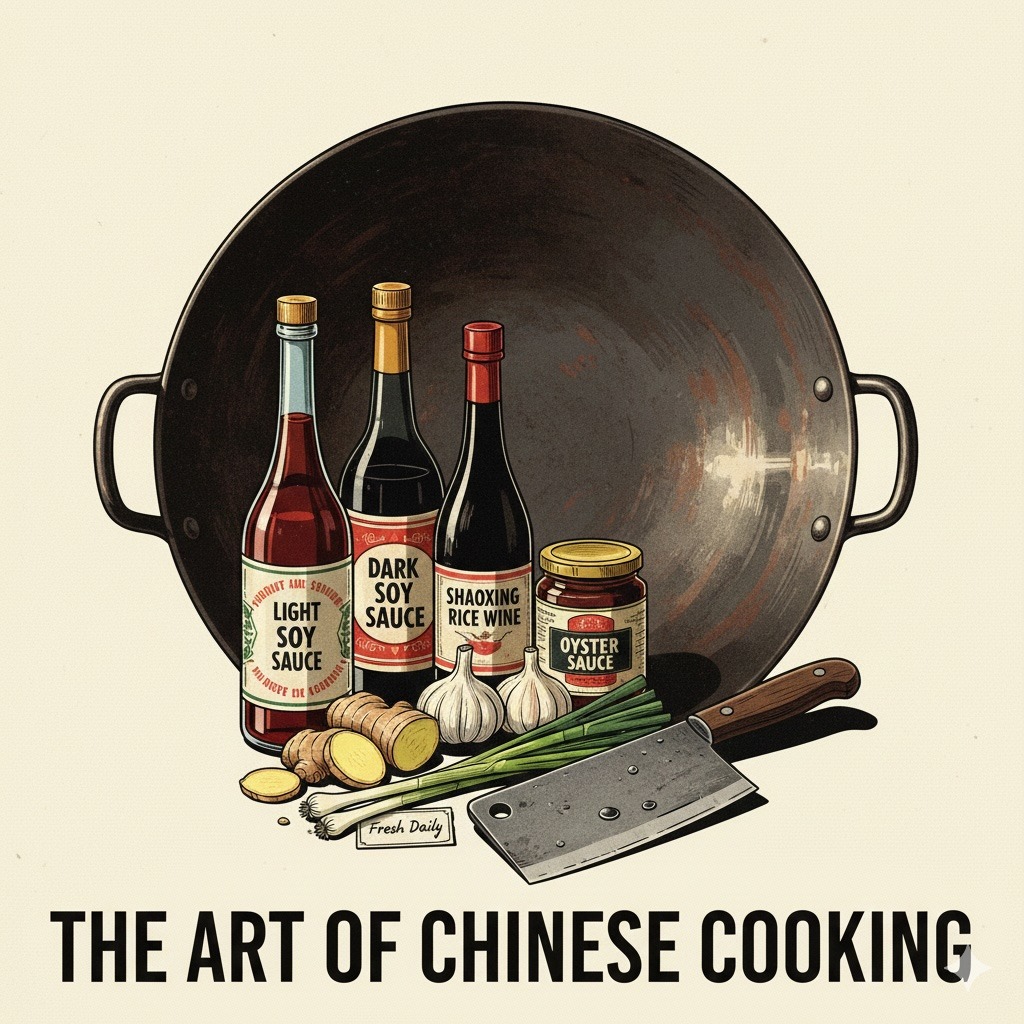
Many home cooks are intimidated by Chinese cuisine, assuming they need specialized training and commercial-grade burners. The truth is, mastering this delicious style of cooking—which ranges from the fiery heat of Sichuan to the delicate steaming of Cantonese—relies on understanding just a few essential tools, three core techniques, and a handful of powerful sauces.
I cook a lot. In fact, since my retirement, I have been cooking for the whole family. I wasn't a good cook, and started from scratch upon retirement. Chinese cooking seems complex and mystical; requiring lots of 'secret recipes', lots of 'sauces and condiments' and plenty of 'age old techniques'. But I found over time, it is not necessarily so. Cooking from the heart, and a few simple techniques, are all you need to do the basic dishes.
This guide is your beginner’s blueprint to unlocking authentic flavor and efficiency in your Chinese kitchen.
Part 1: The Essential Utensils (The Holy Trinity of Tools)
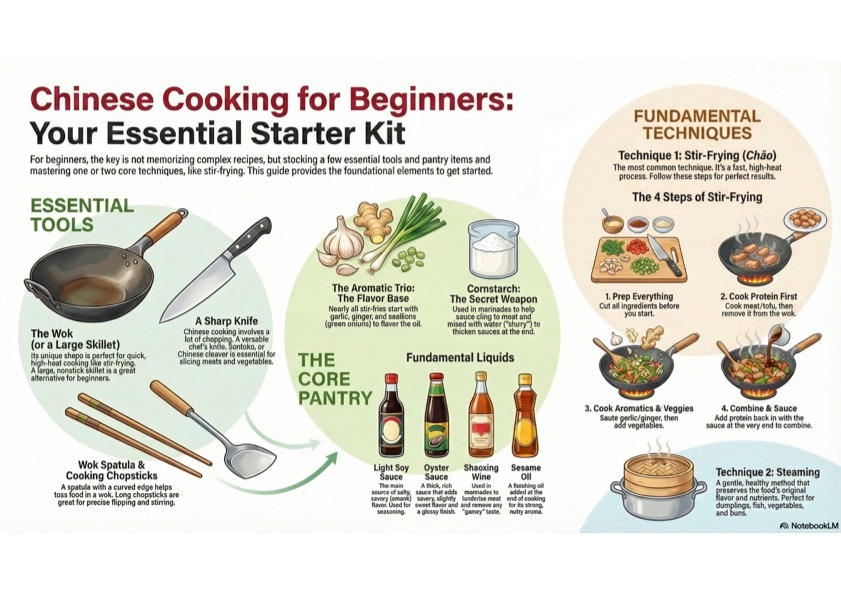
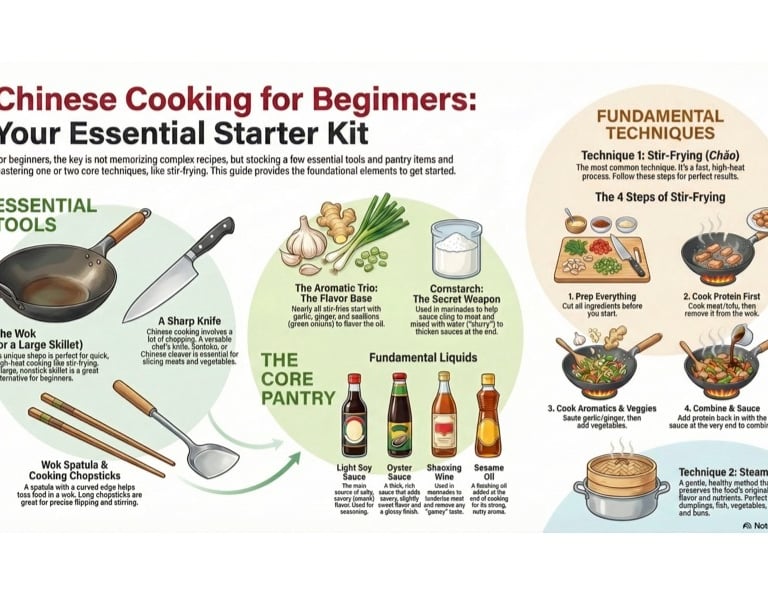
In Chinese cooking, fewer tools do more work. You don't need a drawer full of gadgets; you need three versatile workhorses.
1. The Wok for Stir-Frying, Steaming, Deep-Frying. The undisputed king. Its deep, sloped sides concentrate intense heat at the bottom (for searing) while providing a cooler area on the sides (for resting ingredients). Opt for carbon steel—it heats faster and develops patina (a natural non-stick layer) over time.
Do you need to get a Chinese Wok to start cooking Chinese food? In truth, no. As long as you have a pan that has a deeper depth, that's good enough.
2. Chinese Cleaver for Chopping, Slicing, Crushing, Scooping. An all-in-one knife.The wide, thin blade is perfect for rapidly slicing vegetables and scooping prepped ingredients into the wok without changing tools. The flat side is used to smash garlic and ginger. Choose a lighter Chinese chef’s knife (not a heavy meat cleaver) for delicate prep work.
3. Bamboo Steamer for Steaming Buns, Fish, and Vegetables. Creates a moist, hot environment that preserves the food's natural flavor, shape, and nutrients better than boiling. It is ideal for dishes like Dim Sum.Place the steamer over a wok filled with simmering water. Line the bottom with parchment or cabbage leaves to prevent sticking.
Part 2: The Core Techniques
Chinese cooking efficiency relies on preparations, followed by rapid, high-heat execution.
1. Stir-Frying (Chăo 炒)
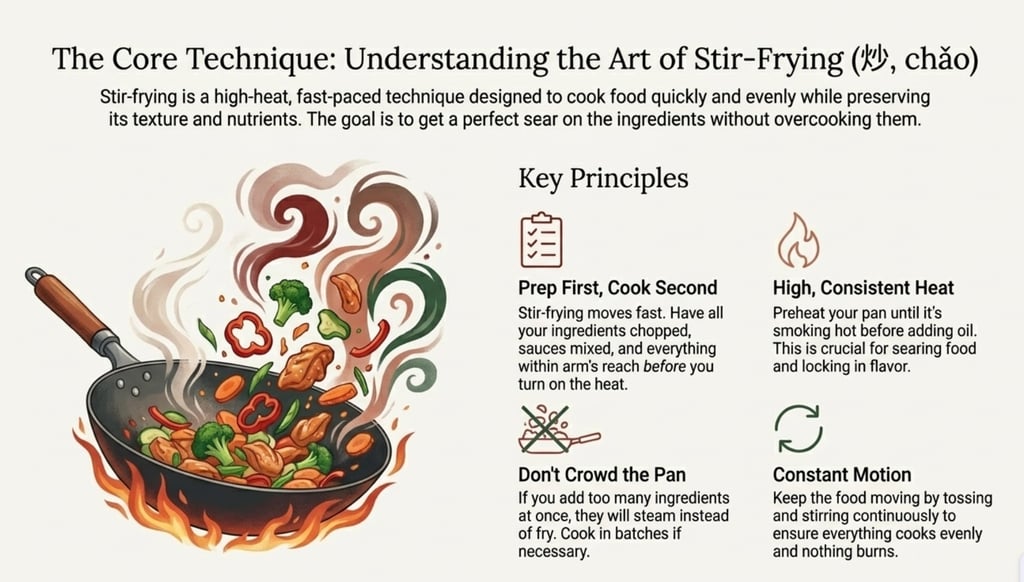
This is the most famous technique. It involves tossing small, uniformly cut ingredients in a small amount of very hot oil.
The Goal: To cook ingredients quickly while preserving their texture and developing Wok Hei (鑊氣, or the "breath of the wok")—a complex, smoky flavor unique to food cooked in a properly seasoned wok over high heat.
How to Master It: Work in small batches. If you overcrowd the wok, the temperature drops, and the food steams instead of searing. Heat the wok before adding the oil.
Remember the mantra: Hot Wok, cold oil. You will not have food sticking to the wok once you master this.
2. Braising and Red-Cooking (Hóngshāo 红烧)
This technique involves shallow-frying ingredients briefly, then simmering them slowly in a deeply flavored liquid—usually a mix of stock, dark soy sauce, and aromatics—until the liquid reduces to a glossy glaze.
The Goal: To tenderize tough cuts of meat (like pork belly or short ribs) and infuse them with deep, savory flavor and a rich, appealing mahogany color.
3. Steaming (Zhēng 蒸)
Used extensively in Cantonese and coastal cuisines, steaming is the preferred method for delicate foods.
The Goal: To cook food gently and quickly, retaining maximum freshness and moisture.
Signature Dishes: Steamed whole fish, Char Siu Bao (steamed pork buns), and steamed eggs.
Part 3: The Essential Pantry: Sauces and Condiments
Before you turn on the heat, your Chinese pantry needs these five foundational ingredients. They are the flavor builders, the color agents, and the umami source.
The Core Trinity (Sauces)
1. Light Soy Sauce (Shēng Chōu) The main seasoning agent.Lighter in color, thinner consistency, and significantly saltier than dark soy. Used to add primary saltiness and umami without darkening the dish.When a recipe says "soy sauce," it almost always means Light Soy Sauce.
2. Dark Soy Sauce (Lǎo Chōu) The coloring agent.Darker, thicker, less salty, and slightly sweet (due to added caramel). Used primarily in braises and stews to give a rich, deep mahogany or reddish-brown hue.Use only a small dash. Do not use it for main seasoning, or your dish will be too dark and sweet.
3. Oyster Sauce (Háo Yóu) The Umami and Glaze agent.Thick, syrupy, savory, and sweet. Made from oyster extracts, salt, and sugar, but does not taste "fishy."Essential for glossy stir-fried vegetables (like broccoli or bok choy) and enhancing the richness of meats.
The Flavor Drivers (Condiments)
Shaoxing Rice Wine (Huā Diāo Jiǔ): This is the cooking wine of China. It adds a crucial layer of depth, complexity, and aromatic sweetness that cannot be replicated. It is not meant to be sipped; it is meant to be cooked.
Chinkiang Black Rice Vinegar (Zhèn Jiāng Cù): Aged, smoky, slightly sweet, and tangy. This dark vinegar adds a sophisticated sourness—a splash is essential in dipping sauces and to cut the richness of meaty dishes (like dumplings).
Conclusion
Chinese cooking is not a mystery; it is a system of efficiency and flavor layering. Start simple: invest in a decent carbon steel wok, master the difference between light and dark soy sauce, and practice your high-heat stir-fry technique. Soon, you'll be creating dishes that rival your favorite takeout.
Learn about the 8 great cuisines in China.
Find out about the Chinese New Year Reunion dinner
Wanton Noodles: Simple, yet delicious everyday noodle
Making a simple and healthy Chinese Recipe - Steam Egg Dish
Ready to start? What single Chinese dish will you attempt first with your new wok?
Disclaimer: This article is for informational purposes only and does not constitute professional cultural or travel advice.

Address
Blk 8 Cantonment Close
SIngapore