Visa rules change all the time. Stay legal by checking requirements for Asia's Travel and Retirement Visas. Updated July 2026.
Is Kobe Beef Worth the Hype? A First-Timer's Guide to Eating Wagyu in Kobe, Japan
Planning to splurge on Kobe Beef in Japan? Get a first-timer's guide on price, authenticity, and how to get the real, melt-in-your-mouth experience in Kobe City.
TRAVELFOOD
12/20/20253 min read
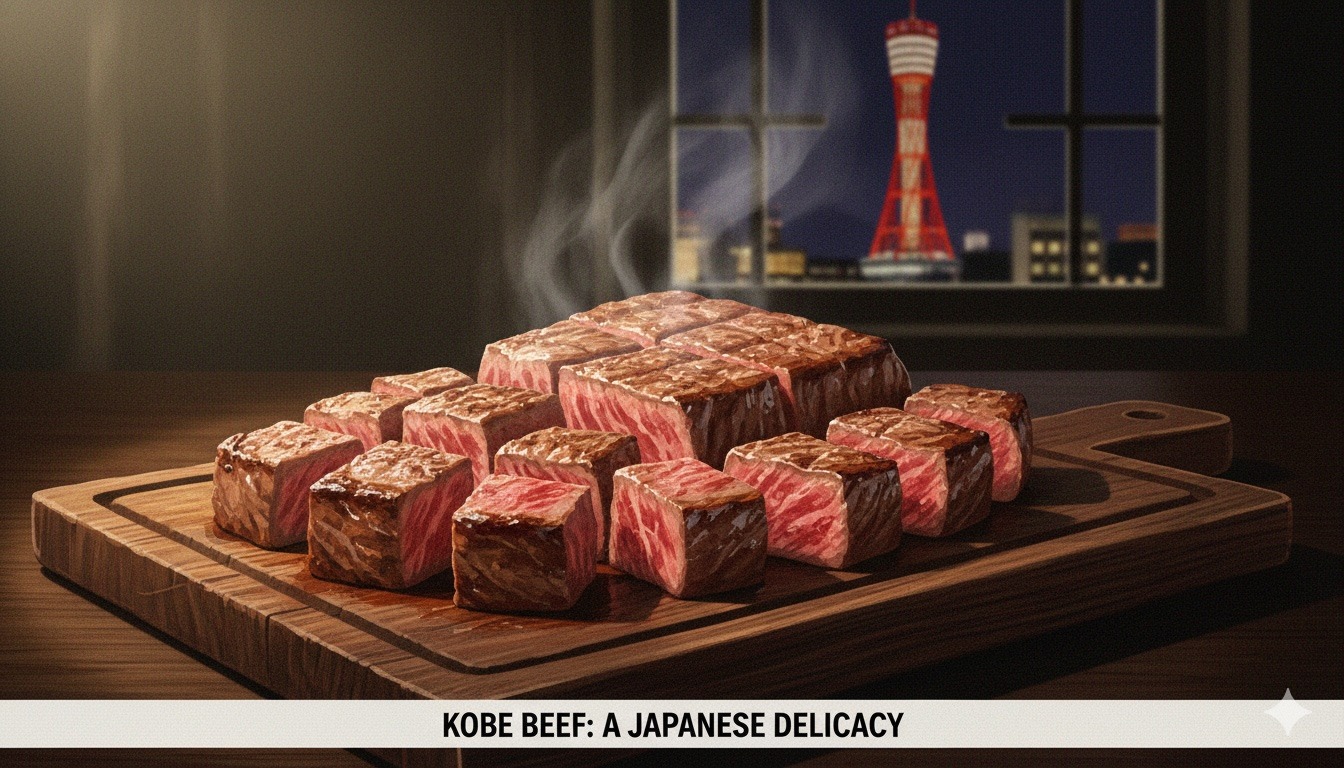
Have you ever spent more on a steak than you did on your plane ticket? If you’re standing on the streets of Kobe, Japan, reading this, that thought is probably crossing your mind right now. You’re in the birthplace of the world’s most famous, most luxurious, and most expensive beef: Kobe Beef 神戸ビーフ.
Everyone has heard the legends: the cows are massaged, they drink beer, and the meat melts like butter. But as a first-timer, you have one burning question, or as we say in Japanese, a deep 疑問 (gimon - question): Is it actually worth the hefty price tag? Hmmm...
Short answer: Yes, but only if you know what you’re paying for.
The Myth vs. The Melt: Why Kobe is Different
Before you even take a bite, you need to understand the fundamental difference between Wagyu and Kobe Beef.
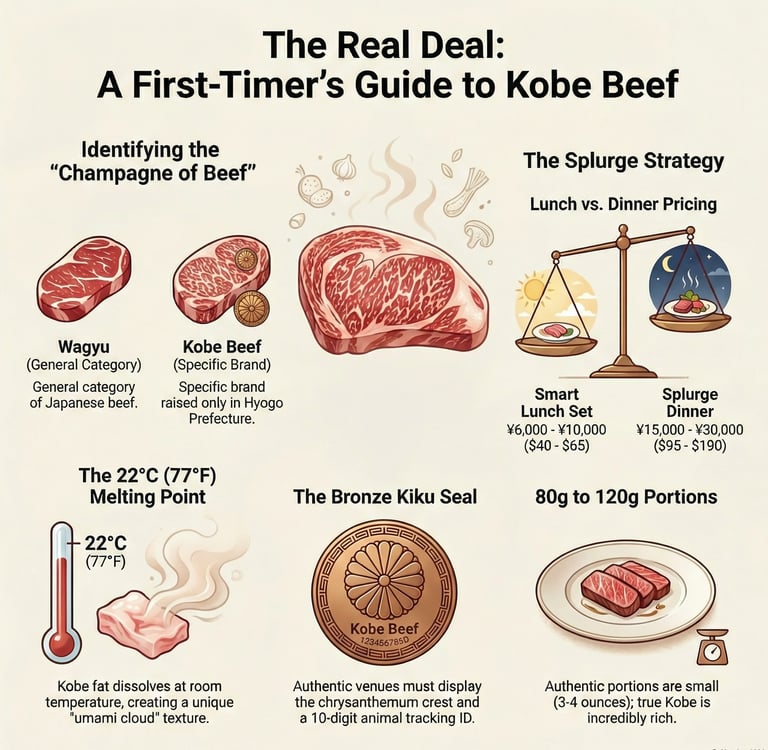
Wagyu (literally "Japanese Cow") is the general term for four breeds of cattle in Japan. Think of it as the category.
Kobe Beef is a prestigious brand name—the Champagne of beef. It comes only from the Tajima strain of Japanese Black cattle, and they must be born, raised, and processed right here in Hyogo Prefecture (where Kobe City is located).
The difference in taste comes down to a simple, wonderful thing: fat science.
Kobe Beef is famed for its extreme marbling, but the real secret is the fat's composition. It's exceptionally high in oleic acid—the same healthy monounsaturated fat found in olive oil.
📊 Data Point: According to research conducted at Kobe University, the fat in premium Wagyu, like Kobe Beef, has a lower melting point, often around 22C (77F). This is significantly lower than regular beef, which is why it literally dissolves on your tongue, giving you that rich, non-greasy, buttery flavor.
How to Guarantee You’re Getting The Real Deal
The sad truth is that most "Kobe Beef" sold outside of Japan is a lie, often being "Kobe-style" American Wagyu. Even in Kobe, a tourist trap can charge too much. Here’s how to find certified quality:
Look for the Kiku Seal: Every genuine Kobe Beef restaurant or butcher displays a bronze chrysanthemum seal (the Kiku-sui crest) and a 10-digit ID number. This number tracks the animal back to its farm and lineage.
Ask for the Certificate: A reputable place will proudly show you the Certificate of Authenticity. If they can't, walk out.
Mind the Portion: True Kobe is incredibly rich. A real portion is usually 80g to 120g (about 3-4 ounces). If a menu is selling you a massive 10-ounce Kobe steak, it's likely a lesser cut or fake.
The Price Check: Your First-Timer Budget
So, back to the price. Is it worth it? Yes, if you treat it as an experience, not just a meal.
Splurge Dinner (Teppanyaki): Expect to pay ¥15,000 - ¥30,000 JPY ($95 - $190 USD) per person for a full A5 Kobe course dinner, often cooked on a flat grill right in front of you. This is the ultimate show.
Smart Lunch (The Secret): For the best value, go at lunchtime. Many top-tier restaurants offer the exact same cuts in a set-menu (teishoku) format for a fraction of the price, often starting around ¥6,000 - ¥10,000 JPY ($40 - $65 USD).
🌍 Global Context: Only a tiny fraction of the certified Kobe Beef produced in Hyogo Prefecture is exported. Out of approximately 5,000 certified carcasses each year, the majority stays in Japan, which is why it is so rare and costly overseas. (Source: Kobe Beef Marketing and Distribution Promotion Association, updated figures).
A brief, true confession: I remember my first bite in Kobe. I’d built up the hype so much I was sure I'd be disappointed. Instead, it wasn't a chew; it was a dissolve. It tasted less like "beef" and more like an umami cloud. It was a singular moment that justified the splurge.
Final Verdict: The Answer Is in the Experience
Is Kobe Beef worth the hype? If you can afford the lunch set, absolutely. It's a once-in-a-lifetime experience that is intrinsically linked to the city of Kobe itself—a taste of Japanese precision, quality, and culinary heritage. Go for the lunch set, get the certificate, and enjoy the melt. I promise you won't regret it.
Planning your trip? Check out our other guides to the best (non-Kobe) Wagyu restaurants in Tokyo and Osaka!
Learn the basics of types of Japanese Ramen.
How to order Ramen at a Japanese Ramen store using a Ramen Machine
Disclaimer: This article is for informational purposes only and does not constitute professional advice.

Address
Blk 8 Cantonment Close
SIngapore