Visa rules change all the time. Stay legal by checking requirements for Asia's Travel and Retirement Visas. Updated July 2026.
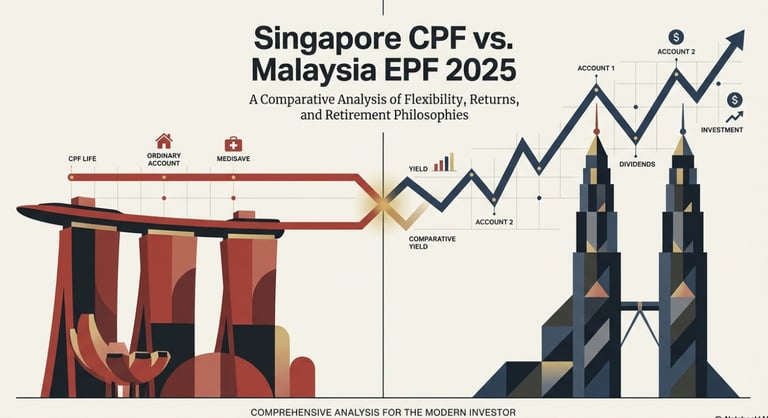
Singapore CPF vs Malaysia EPF 2025: Which Retirement System Wins for Flexibility and Returns?
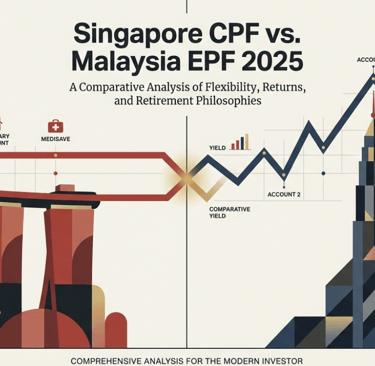
Compare Singapore CPF and Malaysia EPF 2025 rules. We break down the pros/cons of high contribution rates, EPF's high dividends vs. CPF's guaranteed 4%, and the flexibility of EPF Account 3.
SINGAPOREMALAYSIA
1/8/20263 min read
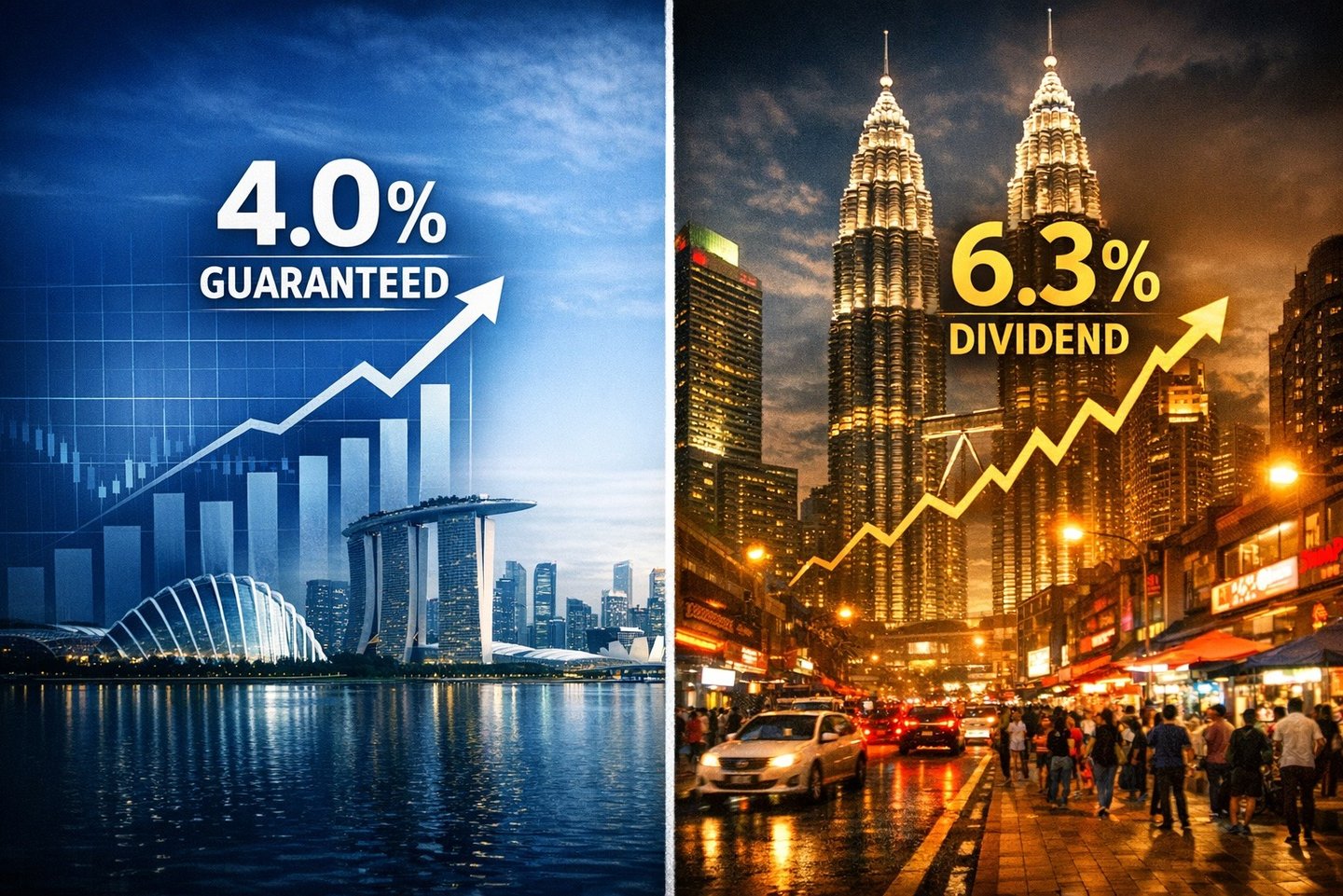

Let's explore Singapore and Malaysia Retirement Plans. They are fundamentally similar and yet so different. It kind of reflect the political system in each country; Singapore - where the government lay out your life plan to a T and Malaysia - where the government takes care of things to a point and then it's all up to the individual.. Let me know which one you prefer.
The choice between the Singapore Central Provident Fund (CPF) and the Malaysia Employees Provident Fund (EPF - Kumpulan Wang Simpanan Pekerja) is not just a matter of geography—it's a choice between two fundamentally different philosophies of national savings: Certainty and Structure (CPF) versus Flexibility and Growth (EPF).
With significant changes in 2025, including EPF's new Account 3 and CPF's increased salary ceiling and SA closure, the contrast has never been sharper. Let's compare the systems across three key battlegrounds: Contributions, Returns, and Withdrawal Flexibility.
1. The Savings Mandate: Contributions and Ceiling
The amount you save is the first critical difference. Singapore’s system prioritizes mandatory savings at a high rate, while Malaysia’s system offers uncapped contributions for high earners.
Singapore CPF
Total Mandatory Rate (Age up to 55)
37% (20% Employee + 17% Employer)
Monthly Salary Ceiling (2025) Capped at S$7,400 (rising to S$8,000 in 2026)
Malaysia EPF (KWSP)
Total Mandatory Rate (Age up to 55)
23%–24% (11% Employee + 12%–13% Employer)
Monthly Salary Ceiling (2025) No Cap on mandatory contributions for high earners
Conclusion CPF ensures a high, forced savings rate, maximizing tax relief up to the capped ceiling. EPF allows high earners to contribute unlimited amounts, sheltering a larger portion of income from personal tax.
Analyst Note: The CPF's high, mandatory 37% rate ensures retirement adequacy for the median earner, but the contribution cap means high-net-worth individuals must find alternative investments for income above S$7,400
2. The Return Battle: Interest vs. Dividends
This is where the financial philosophies diverge: safety versus market performance.
CPF: Stability and Certainty
CPF provides guaranteed, risk-free interest rates, making it an extremely secure foundation.
Ordinary Account (OA): Guaranteed 2.5% p.a.
Special, MediSave, and Retirement Accounts (SA, MA, RA): Guaranteed 4.0% p.a. (floor rate extended through to 2026)
Extra Interest: An additional 1%–2% is paid on the first S$60,000 of combined balances, pushing returns on smaller balances up to 6%
EPF: Market-Driven Dividends
EPF's returns are market-driven "dividends" based on the fund's investment performance in equities, fixed income, and real estate
Historical Average: Over the past decade, EPF's dividends have averaged 5.9% to 6.3%
2024 Dividend: EPF declared a robust 6.30% for both conventional and shariah savings
Verdict: EPF typically offers higher historical returns, making it a stronger growth engine in your younger years. However, CPF guarantees a higher minimum rate, providing superior protection during global market downturns.
3. Withdrawal: Lifelong Income vs. Lump Sum Control
The final difference is in how the systems release your money in retirement. Retirement is a time where the Singapore government is involved very much down to a T while the Malaysian government has a more "freer" attitude on medical, living and retirement funds. Which is better?
Singapore CPF
Pre-Retirement Access:
Highly restricted (Housing, Education, Healthcare via specific accounts)
Full Retirement Age (Age 55):
You must set aside the Full Retirement Sum (FRS) (S$213,000 in 2025) before accessing any excess funds.
Post-65 Payouts:
CPF LIFE is mandatory for all members (who meet FRS), providing lifelong, inflation-adjusted monthly payouts.
Malaysia EPF (KWSP)
EPF Account 3 (Akaun Fleksibel):
Allows members below 55 to withdraw savings anytime for short-term needs
Full Retirement Age (Age 55):
Members can withdraw all or part of their consolidated savings (Akaun 55) at age 55
Post-65 Payouts:
Members can choose between full lump sum withdrawal or periodic withdrawals. No mandatory annuity scheme is required.
Conclusion: Who Wins?
The "winner" depends on your financial personality:
🏆 CPF Wins for Security and Adequacy: If you prioritize guaranteed returns, structured lifelong income (via CPF LIFE), and integrated healthcare (MediSave) that provides peace of mind, CPF is the superior system.
🏆 EPF Wins for Flexibility and Growth: If you are comfortable with market volatility, demand maximum access/control over your money (EPF Account 3 & full withdrawal at 55), and wish to maximize contributions without a cap, EPF is the clear choice.
Given the 2025 changes, which system do you believe offers the best path to retirement for a cross-border professional?
Complete Singapore CPF accounts review
The complete Singapore Retirement Roadmap
Disclaimer: This article is for informational purposes only and does not constitute professional financial or tax advice. Consult a certified financial advisor for personalized planning.

Address
Blk 8 Cantonment Close
SIngapore