Visa rules change all the time. Stay legal by checking requirements for Asia's Travel and Retirement Visas. Updated July 2026.
The Art of the Steam Fish: A Guide to Choosing, Preparing, and Mastering a Chinese Classic
A nutritious and healthy Chinese classic dish: Steam Whole Fish
HEALTHY RECIPES
7/5/20255 min read
In Chinese culinary tradition, few dishes carry as much weight, both on the palate and in the heart, as a perfectly steamed whole fish. To those unfamiliar with Chinese cooking, the sight of a whole fish—head, tail, and eyes intact—may be intimidating. Yet, this presentation is the ultimate symbol of abundance and prosperity. The Mandarin word for fish, yú, is a homophone for the word meaning "surplus" or "extra". Serving a fish whole expresses a wish for a year that begins and ends with plenty, embodied by the phrase nián nián yǒu yú: "May you have a surplus year after year".
For the home cook, mastering this dish is a gateway into the core philosophy of Cantonese cuisine: using precise, minimalist methods to allow the natural, "sea-sweet" flavors of fresh ingredients to blossom. It is healthy, requires almost no oil during the cooking process, and can be prepared from start to finish in less than 30 minutes.
Step 1: The Selection—Five Senses of Freshness
The success of a steamed fish dish depends almost entirely on the quality and freshness of the fish itself. Because steaming is such a gentle method, it cannot hide the "funky" or "fishy" taste of an older catch.
When shopping at a market or well-stocked fish counter, use your senses to find the best candidate:
The Eyes: Look for eyes that are clear, bulging, and dark. Cloudy eyes where the pupil is obscured are a surefire sign of age.
The Gills: If the fishmonger allows, peek inside the gills. They should be a vibrant, bright red. As a fish sits, the gills will oxidize and turn brown or black.
The Smell: A truly fresh fish should smell like the sea—salty and clean. Any foul or overly "fishy" odor is a signal to keep looking.
The Scales and Skin: The skin should be smooth and metallic, and the scales should feel firm and tightly attached. If scales slide off easily under your touch, the fish isn't fresh.
The Touch: Poke the flesh; it should feel firm and spring back. The tail should be nimble and flexible rather than brittle.
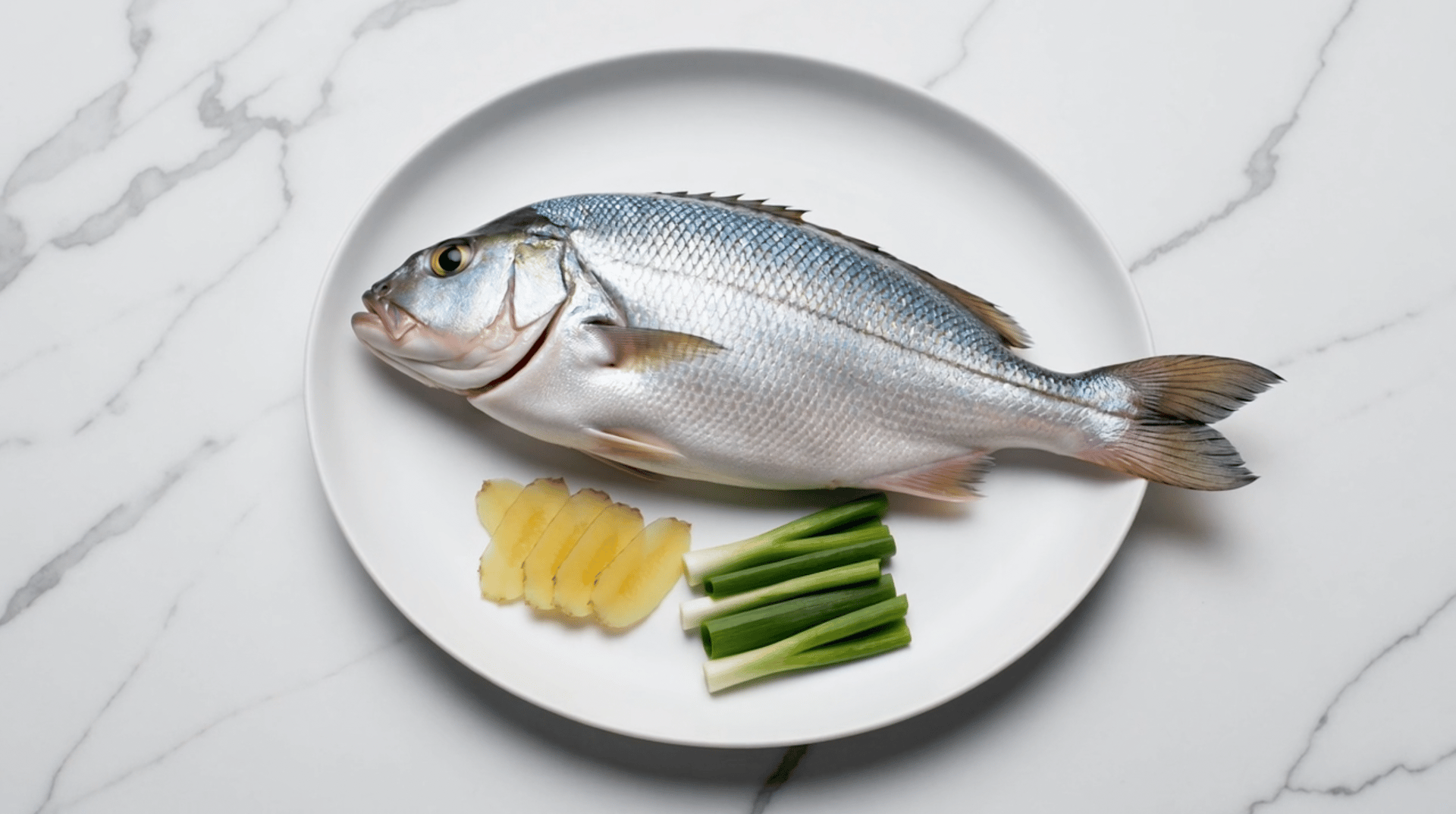
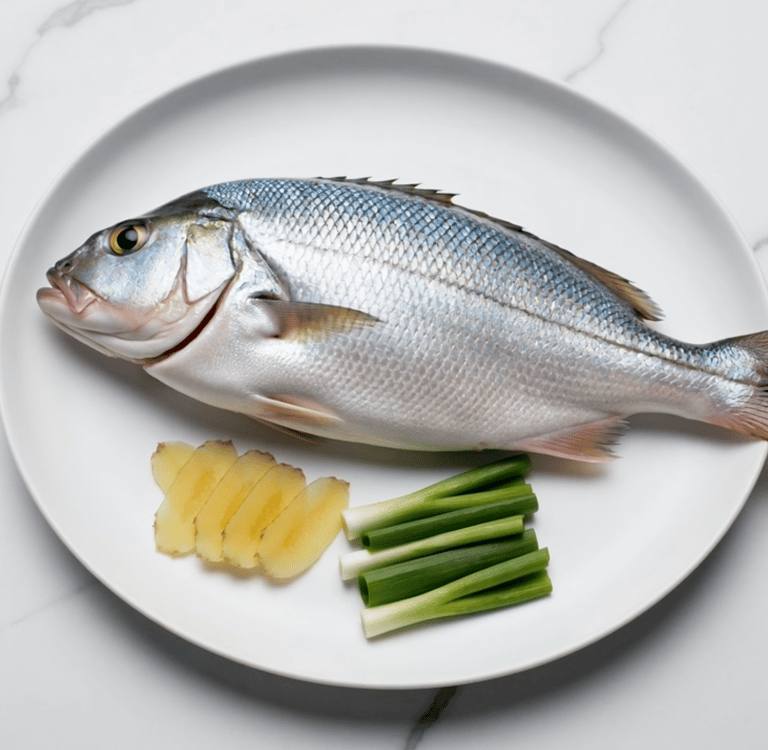
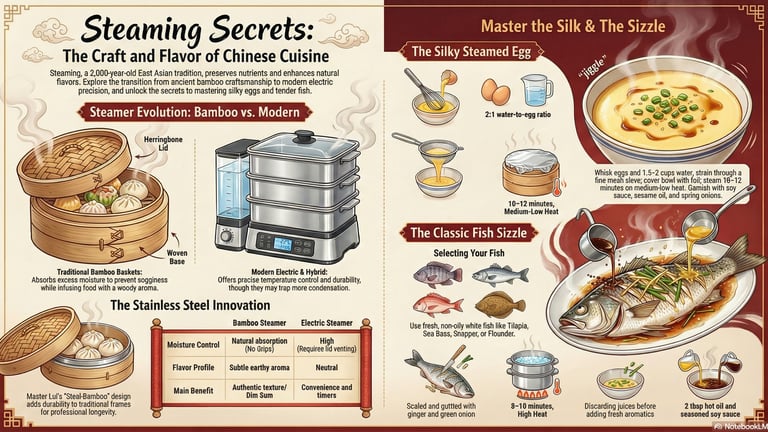
Which fish to buy? For beginners, a flaky white-fleshed fish that is not overly oily is ideal. Branzino, sea bass, tilapia, and red snapper are excellent choices. Aim for a fish around 1 to 1.5 pounds (500g–700g), which will cook quickly and stay juicy.
Step 2: Preparation—Cleaning and Aromatics
While you can ask your fishmonger to scale and gut the fish, a few additional steps at home will ensure the cleanest flavor:
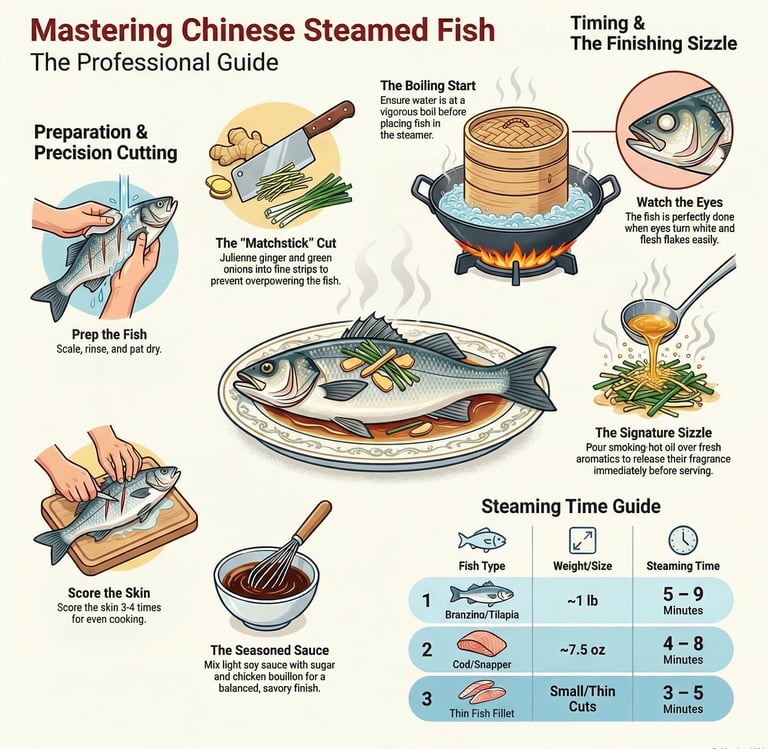
The Bloodline: Rinse the cavity under cold water and use a small knife or your finger to scrape away any clotted blood along the spine. This is the primary source of "fishy" odors.
The Lining: Ensure all dark stomach linings are removed.
Scoring: Use a sharp knife to make three to four diagonal cuts (about one inch apart) on both sides of the fish. This increases surface area, allowing the steam to cook the thickest parts evenly.
Drying: Pat the fish thoroughly dry with paper towels.
For aromatics, you need only two essentials: fresh ginger and green onions. Slice half the ginger into thin rounds and the other half into delicate matchsticks (julienned). Cut the green onions into long sections, reserving some to be finely shredded for the garnish.
Step 3: The Steaming Setup
You do not need an expensive built-in steam oven to achieve restaurant results. A large wok with a lid is the traditional and most versatile tool.
The Rack: Place a steaming rack or trivet in the center of the wok. If you don't have one, you can crisscross "sacrificial" wooden chopsticks on the bottom of the wok to hold your plate above the water.
The Plate: Place the fish on a heatproof plate that fits inside your wok.
Pro Tip: Lay a few sections of green onion on the plate first to act as a "bed" for the fish. This prevents the fish from sticking and allows steam to circulate underneath it.
Step 4: The Recipe—Execution and Sizzle
Ingredients:
1 whole fish (approx. 1.1 lb / 500g)
2 inches fresh ginger (half sliced, half julienned)
3 green onions (sections and shredded)
2 tablespoons Shaoxing wine (optional, for depth)
1/2 teaspoon salt
2 tablespoons seasoned soy sauce for seafood (or regular soy sauce mixed with a pinch of sugar and bouillon)
2 tablespoons peanut or neutral vegetable oil
Instructions:
Marinate Briefly: Rub the fish cavity and skin with salt and Shaoxing wine. Stuff the ginger slices and green onion sections into the cavity and the scored cuts.
Boil the Water: Fill the wok with 1–2 inches of water, ensuring it remains below the level of your steaming rack. Bring the water to a vigorous boil first—starting with cold water will throw off your timing.
Steam on High: Place the plate of fish onto the rack, cover tightly, and steam over maximum heat. A 1.1 lb fish typically takes 5 to 8 minutes.
Check for Doneness: The fish is ready when the eyes have popped out or turned white, and the flesh easily flakes away from the bone when tested with a fork. Do not overcook, or the meat will turn tough and rubbery.
Clean the Plate: Carefully remove the plate from the wok. You will notice accumulated liquid on the plate; pour this liquid off and discard it, as it can contain the "funk" released during cooking. Discard the cooked ginger and onions from the top of the fish.
The Dramatic Finish: Scatter the fresh julienned ginger and shredded green onions over the cooked fish.
The Sizzle: In a small saucepan, heat the oil until it is shimmering and smoking hot. Carefully pour the hot oil directly over the fresh ginger and onions; you should hear a satisfying sizzle as the heat releases their fragrant aromas.
The Sauce: Immediately drizzle the seasoned soy sauce over the fish. Serving the sauce after the oil ensures the flavors remain concentrated rather than being washed away.
Step 5: How to Serve and Eat
Steamed fish should be served immediately while the oil is still sizzling and the flesh is at its most tender. It is traditionally placed in the center of the table to be shared.
Etiquette: If dining with elders, the head of the fish is often angled toward the oldest or most revered person as a sign of respect.
The Bone Trick: To serve, cut along the middle of the fish to expose the spine, then lift the meat away from the bones. In traditional households, the head and tail are left on the plate, and "OGs" (experts) often prize the meat off the spine and the tender cheek meat.
The Sauce: Since the fish is steamed in its own juices, the meat won't "hold" the sauce well; make sure to dip each morsel of flaky fish into the pool of soy sauce and oil on the plate as you eat.
By following these steps, you are not just making a meal; you are participating in a 2,000-year-old ritual of health, skill, and hospitality. Serve it with a side of white rice and a simple vegetable dish, and you have achieved the shining example of Cantonese elegance
Learn more Chinese cooking techniques.
China's Great 8 Cuisines
Wanton Noodle: Simple yet delicious everyday Chinese meal
Disclaimer: This article is for informational purposes only and does not constitute professional cultural or travel advice.


Address
Blk 8 Cantonment Close
SIngapore